
Dental crowns are the standard fix. These custom caps restore a tooth's shape, strength, and appearance, and dentists worldwide rely on them daily — including clinics near the US-Mexico border, where many American and Canadian patients now travel for crown and full-mouth restoration work.
This guide covers crown types, what the procedure actually involves, realistic costs, aftercare, and how crowns stack up against veneers.
Key Takeaways
- Crowns restore strength and appearance, typically lasting 5-15+ years with good care
- Material choice (porcelain, zirconia, PFM, metal) drives cost, appearance, and durability
- Most crowns require two visits, with a temporary crown bridging the gap
- Full coverage wraps the whole tooth; veneers only coat the front surface
- Partial crowns (onlays) can preserve more natural tooth structure than full coverage
What Is a Dental Crown and When Do You Need One?
A dental crown is a custom-fitted cap that covers a damaged tooth completely, restoring its shape, size, strength, and look. Unlike a filling, which patches a small area, a crown covers the entire visible tooth structure above the gumline.
It differs from a veneer (front-surface only) and a bridge (which replaces missing teeth using neighboring crowns as anchors).
Common Reasons for Needing a Crown
Dentists typically recommend a crown when:
- Decay is too extensive for a filling to hold
- A tooth is cracked, fractured, or badly worn
- A tooth has had root canal treatment and needs protection
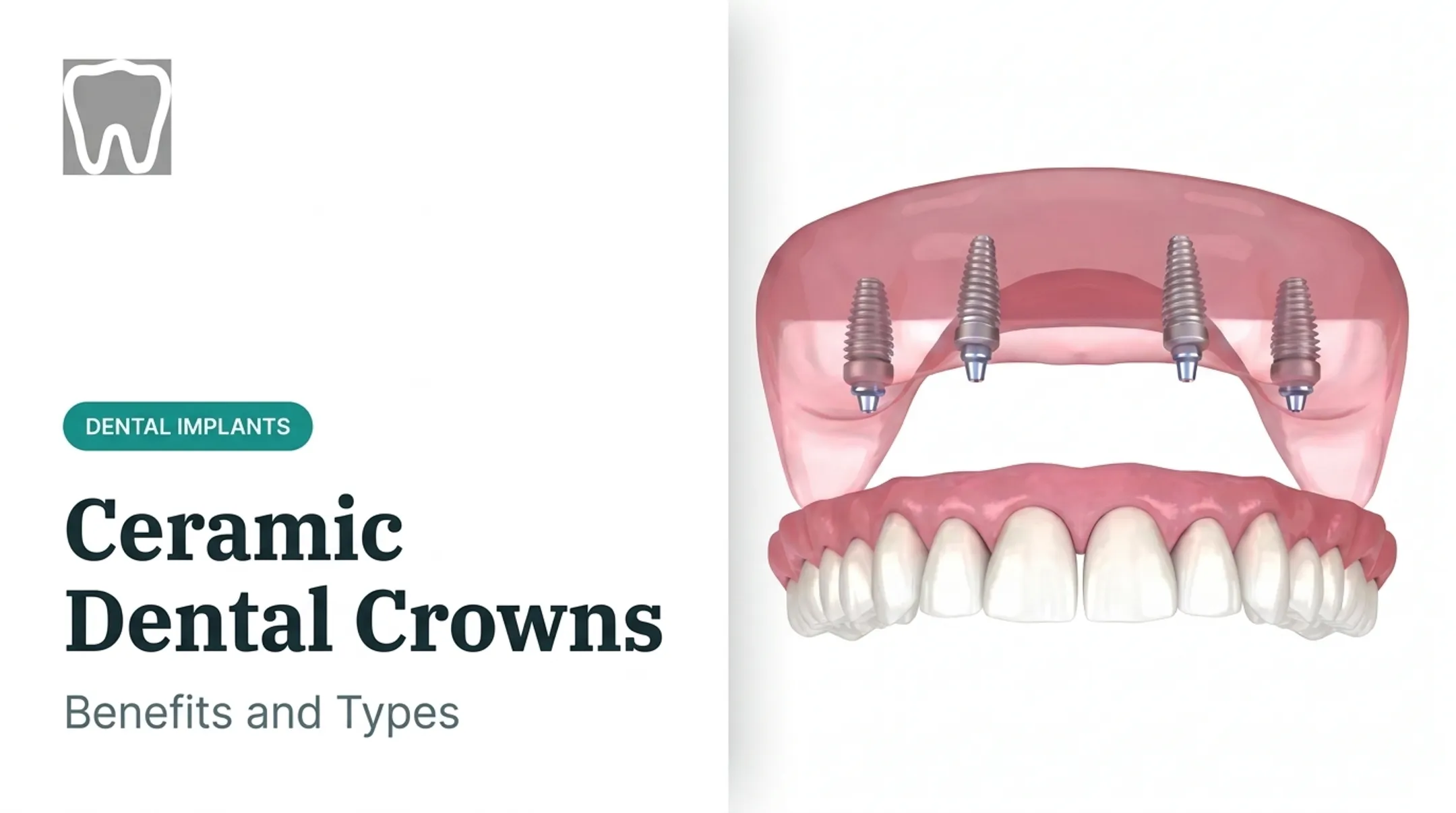
- A dental implant needs a finishing restoration
- A tooth is misshapen or discolored and needs cosmetic correction
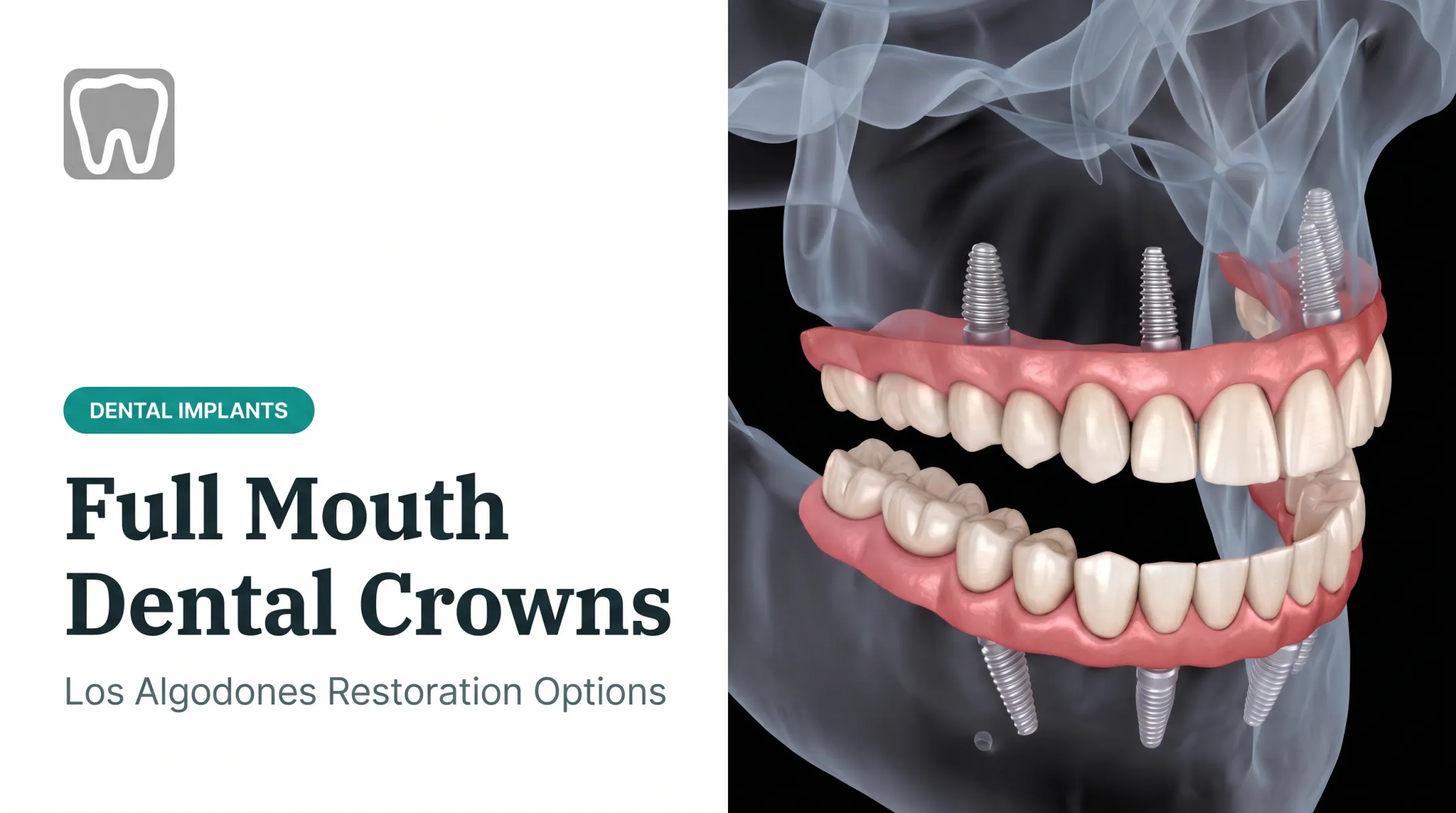
Your dentist will check remaining tooth structure and X-rays before deciding between a crown, filling, or extraction. Crowns also complete implant restorations. For a single-tooth implant, the crown sits on top of a titanium or zirconia implant and abutment.
Types of Dental Crowns and How to Choose the Right One
Material choice depends on where the tooth sits, your bite force, and your budget. Use the comparison below to narrow what fits your case.
- Porcelain/ceramic: Most natural-looking option, ideal for front teeth, resists staining
- Zirconia: Extremely strong and wear-resistant, works well anywhere in the mouth
- Porcelain-fused-to-metal (PFM): Combines strength with a natural look; a 2016 review of dentist material selection found PFM crowns hit a 94% success rate over 10 years
- All-metal: Most durable option, best reserved for back molars where looks matter less
- Resin: Budget-friendly, but with limited long-term clinical evidence — mostly used as temporary crowns
| Material | Appearance | Durability | Best Use |
|---|---|---|---|
| Porcelain/Ceramic | Excellent | Good | Front teeth |
| Zirconia | Very good | Excellent | Any position |
| PFM | Good | Very good | Front or back |
| All-metal | Poor (metallic) | Excellent | Molars |
| Resin | Fair | Limited | Temporary use |

Match appearance needs to the tooth’s position first, then weigh durability against cost.
For implant-supported single crowns and full-arch bridges, Dental Implants in Mexico often favors zirconia and porcelain. Both hold color and shape well when fabricated from digital scans.
The Dental Crown Procedure: What to Expect Step-by-Step
A standard crown usually takes two visits and follows five steps:
- Consultation and imaging — X-rays or 3D scans assess the tooth and surrounding bone
- Tooth preparation — Local anesthesia numbs the area, then the dentist reshapes the tooth, removing decay or weakened structure
- Impression or digital scan — Captures precise measurements for the dental lab
- Temporary crown placement — Protects the tooth while the lab fabricates the permanent crown (usually two to three weeks)
- Final fitting — The permanent crown is checked for fit and bite alignment, then cemented in place

Implant-supported crowns take longer. A single-tooth implant crown usually waits on 3–4 months of osseointegration so the implant can fuse with the jawbone before the abutment and crown go on.
Local anesthesia covers discomfort during the prep visit. Mild hot or cold sensitivity afterward is common and usually fades within a few days.
Call the clinic if pain persists or you hurt when biting down. That often means the crown needs a small bite adjustment.
Cost of Dental Crowns: What Influences the Price
In the US, crowns typically run $800 to $1,700 or more per crown, according to WebMD's 2024 review, depending heavily on material and location. Canadian estimates hover around C$900-C$1,500, though pricing varies by province and dental fee guide. Several factors move the price:
- Material — zirconia and PFM typically cost more than resin
- Tooth location — molars can require more lab work than front teeth
- Lab fees — vary by fabrication method and turnaround
- Additional procedures — core build-ups or root canals add to the total That gap is why many US and Canadian patients travel to Los Algodones, Mexico, for crowns and full-mouth restorative work. At Dental Implants in Mexico, a single-tooth implant package that includes the implant, abutment, and a custom porcelain or zirconia crown is published from $750–$1,500. Full-arch options like All-on-4 start from $6,000 per arch. Free consultations and itemized quotes make it easier to compare costs before you travel. The clinic also helps prepare documentation for US insurance reimbursement claims.

Caring for Your Crown and How Long It Will Last
Crowns average 5-15 years, and some last well beyond that with good care. A 2022 longevity study of over 1,000 crowns found survival rates of 89.9% at 5 years, dropping to 61.8% at 20 years — with teeth grinding (bruxism) as a major factor shortening lifespan.
Keep a crown functioning longer by:
- Brushing twice daily and flossing carefully around the crown's edge
- Avoiding hard foods like ice or hard candy
- Wearing a nightguard if you grind your teeth
- Keeping up with regular dental checkups
Watch for warning signs that need a prompt dentist visit:
- Looseness or chips
- New sensitivity
- Visible dark lines at the gum margin
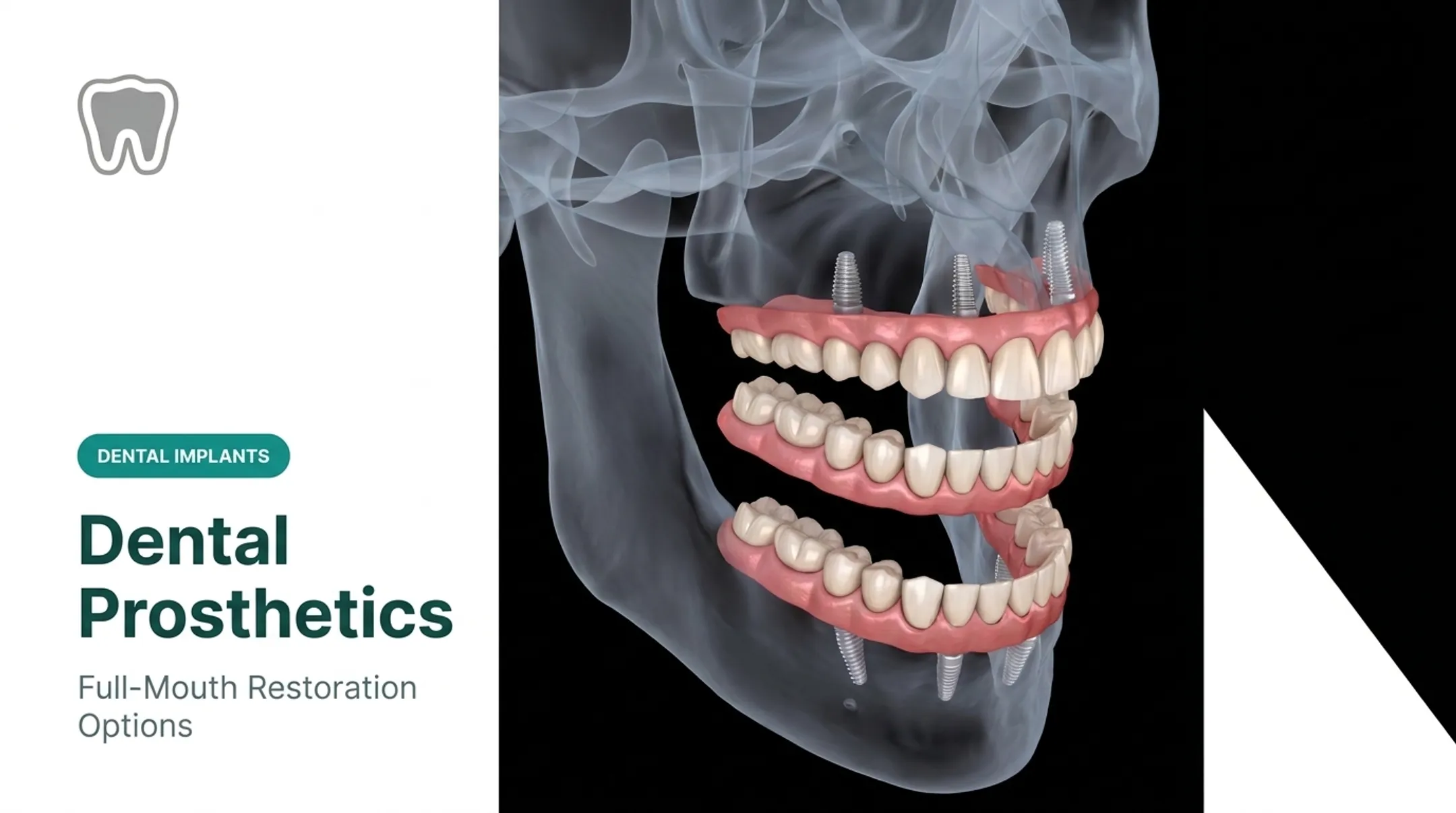
Prosthetic crowns fitted as part of implant restorations often carry a five-year warranty from the treating clinic, provided routine professional cleanings continue.
Partial Crowns, Full Crowns, and Crowns vs. Veneers
Not every damaged tooth needs full coverage.
Onlays and Partial Crowns
An onlay or partial crown covers only the damaged portion of a tooth, leaving healthy structure untouched. They're a good fit when decay or fracture is limited to specific cusps rather than the whole tooth.
Research shows partial restorations remove roughly 35-47% of tooth substance, compared to 67-76% for full-crown preparation, according to a 2024 systematic review.

Full Crowns
A full crown caps the entire visible tooth above the gumline. Dentists typically recommend one when damage is widespread, after a root canal, or when a large filling would leave the tooth too weak to hold up on its own.
Crowns vs. Veneers
These get confused often, but the purpose differs:
- Crowns cover the entire tooth and restore strength. The right call for cracked, decayed, or structurally weak teeth
- Veneers cover only the front surface and address appearance. Better suited for healthy teeth that just need a cosmetic upgrade
If a tooth is structurally compromised, a veneer won't fix the underlying problem. Crowns exist for that job.
Frequently Asked Questions
How much does a dental crown cost?
Cost depends heavily on material and location, typically $800-$1,700+ in the US. Cross-border clinics in Mexico often offer significant savings on comparable crown work.
How long do crowns on teeth last?
Most crowns last 5-15 years, with some lasting 20+ years. Grinding, tooth location, and hygiene habits all affect longevity.
How long does it take to prepare a tooth for a crown?
A standard preparation appointment usually runs 1-2 hours, though same-day CAD/CAM crowns can take 2-4 hours in a single visit.
Is it painful to get a crown?
Local anesthesia keeps the prep appointment pain-free. Mild sensitivity to hot or cold afterward is normal and typically fades within a couple of weeks.
When is a partial crown better than a full crown?
Partial crowns work well when damage is limited to part of the tooth, preserving more natural structure than a full crown would require.
Do crowns look better than veneers?
It depends on the goal. Crowns restore structurally damaged teeth; veneers cosmetically enhance healthy teeth. Neither is "better" outside its intended use.