
All-on-6 often gets compared to All-on-4 and other full-arch protocols, and the differences matter more than marketing pages suggest. This guide breaks down the real benefits, drawbacks, costs, and candidacy factors so you can make an informed decision.
Key Takeaways
- All-on-6 uses six implants per arch for stronger support and wider load distribution than All-on-4
- Requires more available jawbone, and some patients need grafting before treatment
- Higher upfront cost than All-on-4, with similar five-year survival in recent large-scale data
- Working with an experienced, board-certified implant specialist matters more than implant count alone
What Is All-on-6 in Dentistry?
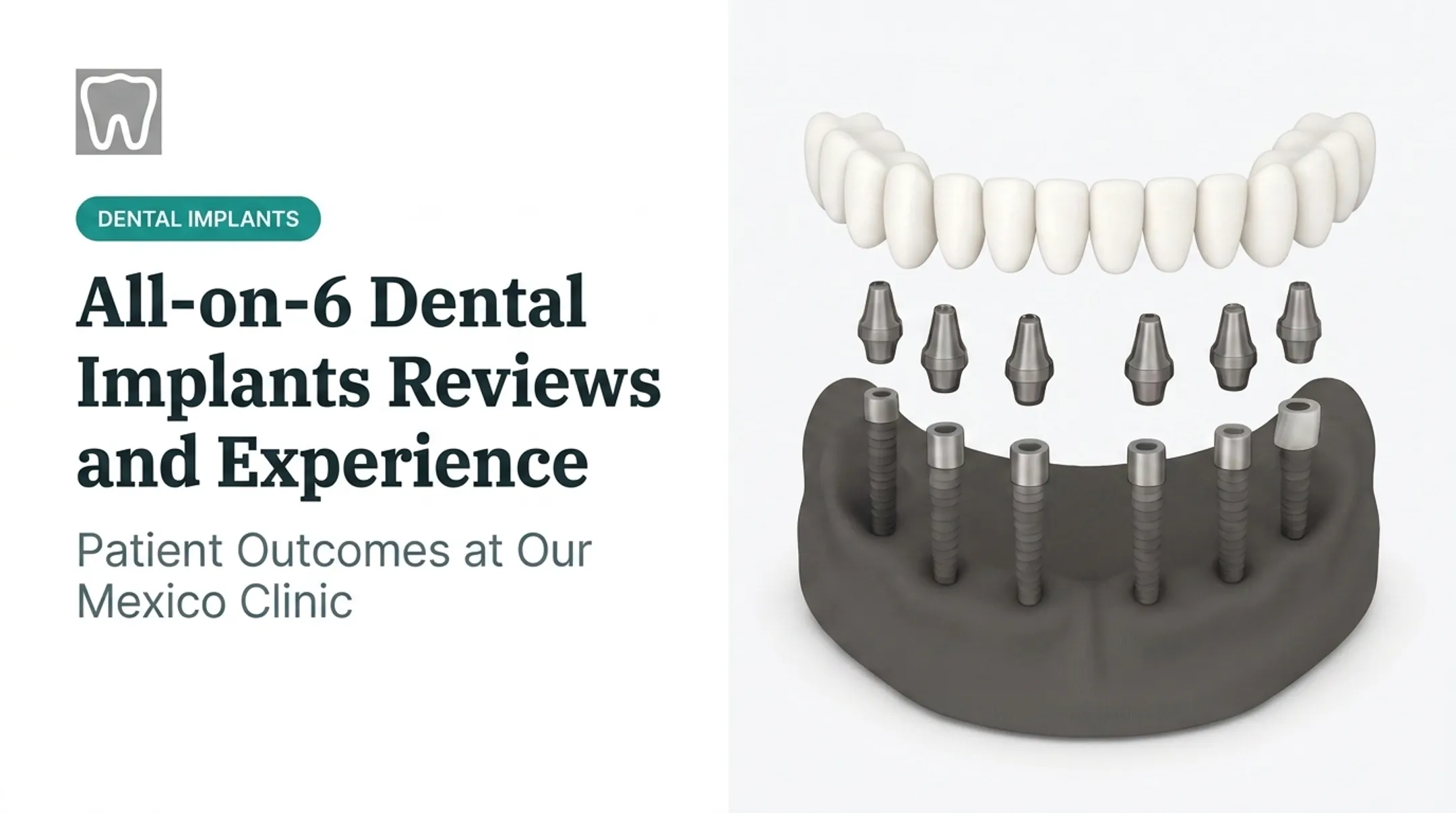
All-on-6 is a full-arch restoration protocol where six titanium implants are placed in the jaw to support one fixed, non-removable prosthesis. The implants act as artificial tooth roots, and a custom bridge attaches on top.
Placement isn't identical from patient to patient. Implant positions depend on bone density, arch shape, and prosthetic design, mapped out using 3D CBCT imaging and digital surgical guides. There's no single universal template, just a customized plan for each jaw.
How It Differs From All-on-4
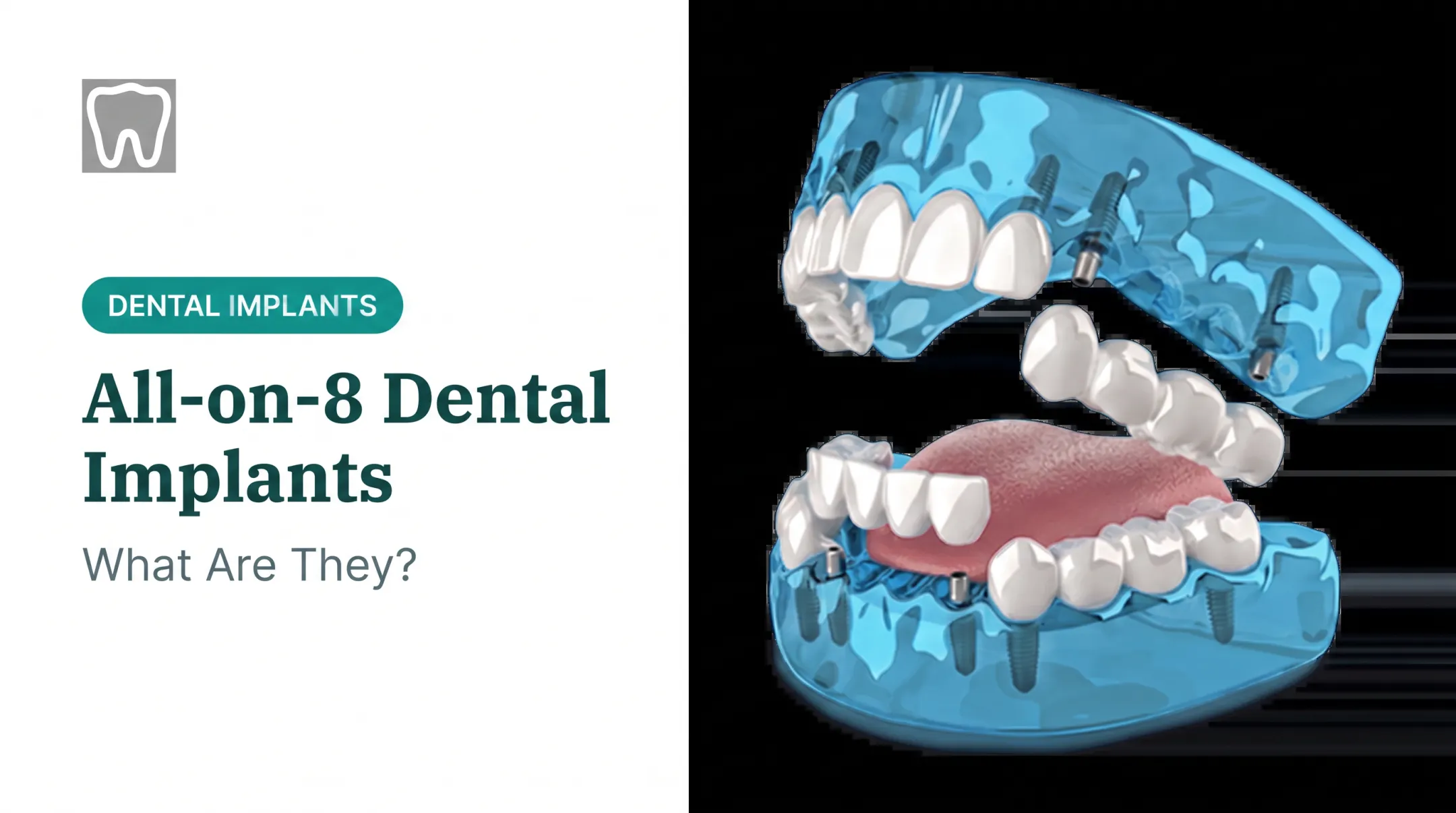
The structural difference is two additional implants in extra load-bearing positions:
- All-on-4: Two straight anterior implants and two tilted posterior implants
- All-on-6: Support spread across six implant sites
More implants can mean more support and redundancy. That also means more surgical planning and, often, more available bone. Which protocol fits depends on anatomy and goals, not a universal ranking of one over the other.

Beyond All-on-6: Some specialists offer more advanced alternatives. Dr. José Moguel's clinic, for example, developed the patented 3-ON-8™ protocol, which uses eight implants per arch supporting three independent zirconia bridges instead of one continuous bridge. The design adds redundancy and allows section-specific repairs.
Pros of All-on-6 Dental Implants
Stability and Redundancy
Six implants distribute chewing force across more anchor points, reducing stress on any single implant. That built-in redundancy is a real advantage. If one implant fails, the remaining five can often keep supporting the prosthesis while the issue is fixed—room a four-implant setup rarely has.
Bone Preservation
Implants stimulate the jawbone through normal biting function, similar to natural tooth roots. Research reviews consistently link implant-supported prostheses to less bone loss than conventional dentures. Implants may reduce resorption; they don't eliminate it entirely.
Natural Function and Look
Patients report:
- Eating a wider range of foods, including harder textures dentures can't handle
- Speaking without the slipping or clicking common with removable appliances
- A more natural smile line and gum contour with a well-designed bridge
Long-Term Durability
A five-year randomized trial found 95% implant survival in All-on-6 patients, with zero prosthetic failures over that period 1.
A larger 2025 cohort study of nearly 6,000 implants found five-year survival of 98.7% for six-implant restorations, statistically similar to four-implant setups 2. All-on-6 is a durable, well-supported option. Six implants don't automatically outperform four; case selection and surgical skill matter as much as implant count.

Cost Savings When Treated in Mexico
Patients traveling to Los Algodones, Mexico, can access the same implant brands and surgical standards used in the U.S. at a fraction of the price. One documented case at Dr. Moguel's clinic involved six Straumann implants with bilateral sinus lifts for $14,200, compared to a $42,000 U.S. quote for equivalent care—roughly 66% savings.
Cons of All-on-6 Dental Implants
Higher upfront cost. Two extra implants, longer surgical time, and more lab work push All-on-6 above All-on-4 pricing.
Bone requirements. All-on-6 generally needs more available jawbone than All-on-4. Patients with significant bone loss may need:
- Localized bone grafting ($500–$800)
- A sinus lift for upper-arch cases ($600–$900)
Either add-on extends treatment time and cost.

Longer procedure and healing. Placing six implants takes more chair time than four, and osseointegration can run longer depending on bone quality and grafting needs.
Not ideal for everyone. Uncontrolled diabetes and heavy smoking impair healing and raise implant failure risk. One meta-analysis found smokers face more than double the odds of implant failure compared to non-smokers. These aren't automatic disqualifiers, but they require careful screening and, often, a modified treatment timeline.
Maintenance matters. Fixed doesn't mean maintenance-free. Skipping daily cleaning or professional checkups raises the risk of peri-implantitis, a gum infection around implants that can threaten long-term success.
Cost, Candidacy, and All-on-6 vs. Other Options
Cost Comparison
| Region | Typical Cost (per arch) | Notes |
|---|---|---|
| United States | $19,315–$30,878 | Broad full-arch benchmark; varies by provider and materials |
| Los Algodones, Mexico | $12,000–$16,000 | Includes surgery, implants, and fixed prosthesis; add-ons extra |
At Dental Implants in Mexico, Dr. Moguel’s clinic reports savings of roughly 60–70% compared to U.S. pricing for comparable implant brands (Straumann, Nobel Biocare, MegaGen) and surgical standards.
All-on-6 vs. All-on-4
- All-on-4: Fewer implants, lower cost, generally faster recovery, good for patients with limited bone
- All-on-6: More implants, higher stability and redundancy, better suited for patients with adequate bone who want extra load-bearing support
All-on-6 vs. 3-ON-8™
3-ON-8™ takes redundancy further with eight implants and three independent bridge segments instead of one continuous bridge. If a section develops an issue, that segment alone can be repaired while the rest of the restoration stays intact.
Ideal Candidate Profile
- Full or near-full arch tooth loss
- Sufficient bone volume, or willingness to undergo grafting
- Good general health; diabetes and smoking are evaluated case-by-case (non-smokers preferred, though not always disqualifying)
Recovery and Healing Timeline
Healing happens in phases:
- Initial healing (first 1–4 weeks): The surgical site settles, and discomfort is typically manageable with prescribed medication. Most patients feel better within the first week.
- Osseointegration (3–6 months): Implants biologically fuse with the jawbone; clinics report a typical 4–5 month window for All-on-6 specifically.
- Final prosthesis fitting: Once integration is confirmed, the permanent bridge replaces the temporary one.

Pain is mild to moderate after surgery and well controlled with standard pain management protocols.
Frequently Asked Questions
How much do All-on-6 implants cost?
In the U.S., fixed full-arch implants run roughly $19,000–$31,000 per arch. In Los Algodones, Mexico, clinics quote around $12,000–$16,000 per arch, with variables like grafting needs and prosthesis material affecting the final price.
What does All-on-6 mean in dentistry?
All-on-6 refers to a technique where six titanium implants are placed per arch to support one fixed, full-mouth prosthesis. It's designed to spread biting force across more anchor points than a four-implant setup.
How long does it take for All-on-6 dental implants to heal?
Osseointegration typically takes 3–6 months, with many clinics reporting a 4–5 month average for All-on-6 specifically. Final prosthesis placement follows once integration is confirmed.
How painful are All-on-6 dental implants?
Surgery is performed under local anesthesia, with oral or IV sedation available for anxious patients. Post-operative discomfort is generally mild to moderate and manageable with prescribed medication within the first week.
Are All-on-6 dental implants worth it?
For patients with adequate bone and good general health, All-on-6 offers strong long-term durability and natural function. Weigh the higher upfront cost against fewer denture replacements and better chewing over time.
Which type of dental implant has the highest success rate?
Multi-implant full-arch protocols like All-on-6 and 3-ON-8™ report high five-year survival rates, often above 95%. Success also depends heavily on surgeon experience, bone quality, and post-treatment maintenance—not implant count alone.