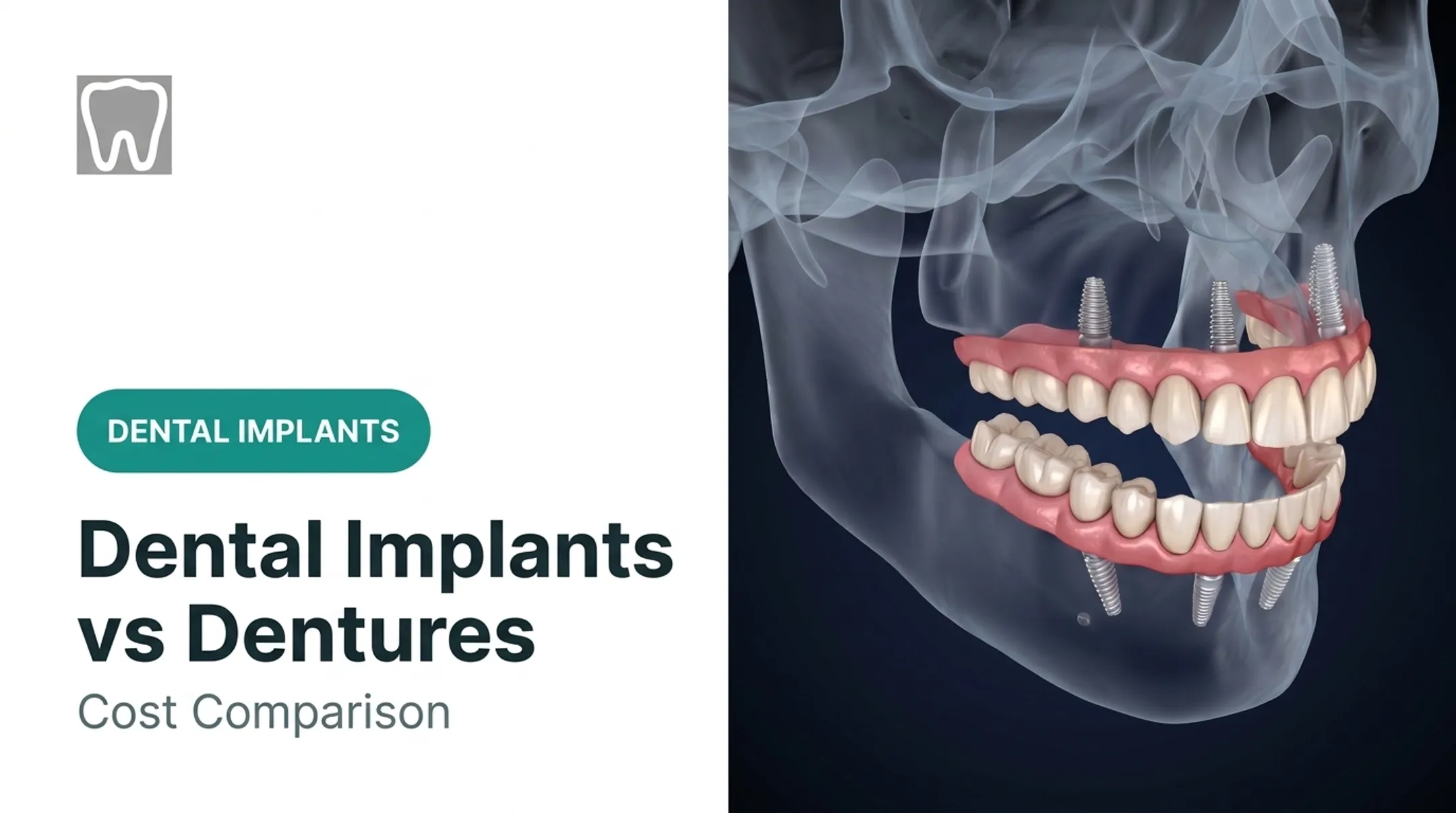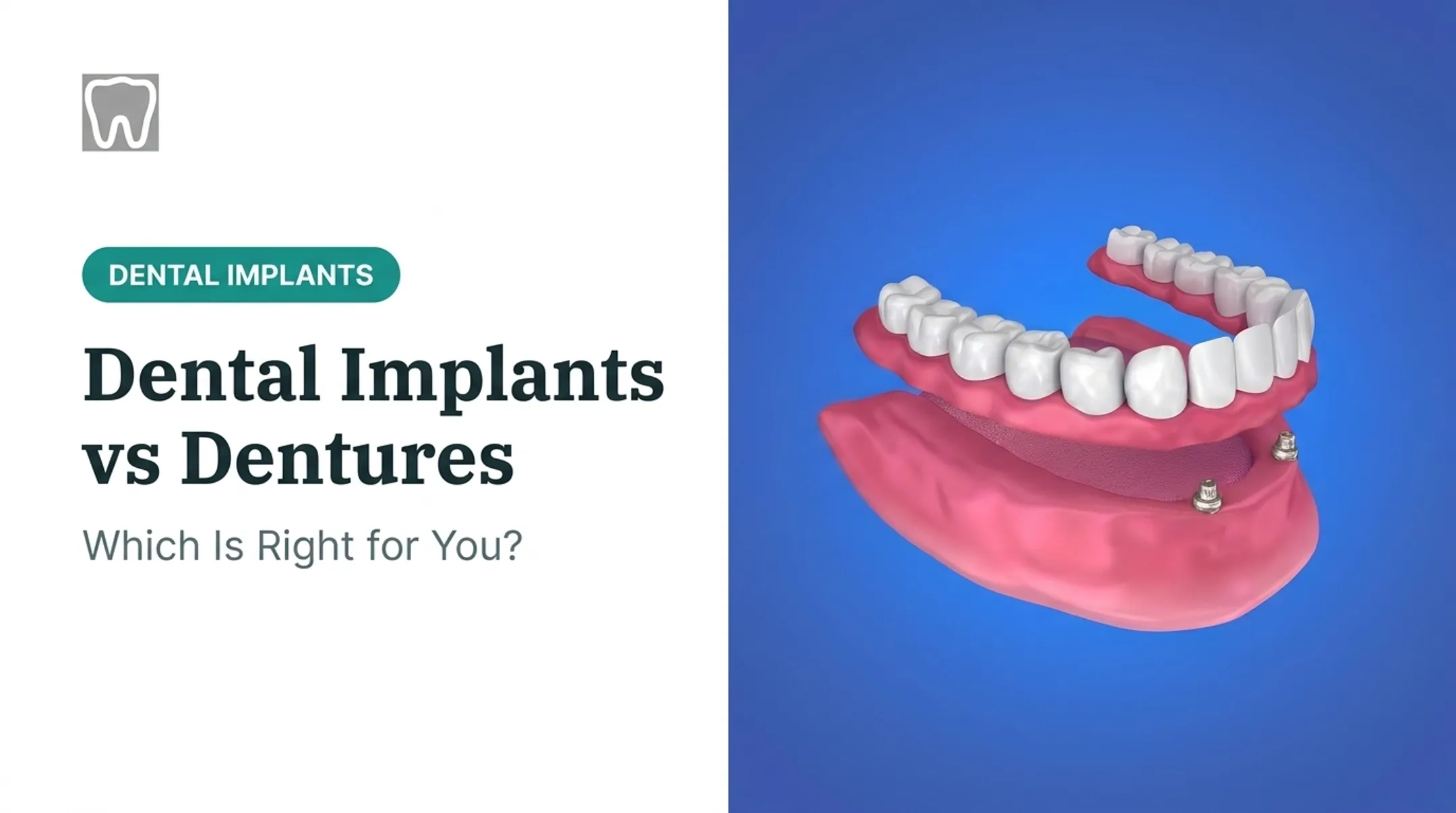

This guide compares traditional dentures, implant-supported overdentures, and fixed full-arch implant solutions. We'll cover stability, chewing ability, bone health, and cost, so you can make an informed choice.
Cost matters too. Traveling to Los Algodones, Mexico, has made implant treatment more accessible for many US and Canadian patients seeking board-certified care at a lower price point.
Key Takeaways
- Traditional dentures cost less upfront but shift over time and don't stop jawbone loss
- Implant-supported dentures and fixed full-arch bridges stay stable and help preserve jawbone
- Bone density and health decide candidacy, though grafting helps many patients qualify
- Current denture wearers can typically transition to implants, often with same-day teeth options
Understanding Your Tooth Replacement Options
Tooth replacement runs from removable dentures to fixed full-arch implants. Options differ in stability, effect on the jawbone, daily maintenance, and cost—so the fit depends on your bone, budget, and how permanent you want the result to be.
Traditional Removable Dentures
Traditional dentures rest on the gums, held in place by suction, adhesive, or a combination of both. They're affordable, require no surgery, and can be ready quickly.
The trade-offs are real:
- Prone to shifting while eating or talking
- Don't stimulate the jawbone, which contributes to resorption over time
- Need nightly removal and cleaning
The American College of Prosthodontists advises replacement based on exam findings, not a fixed calendar. A prosthesis in use more than five years typically warrants a check-up. Learn more from the ACP's position statement.
Implant-Supported Overdentures
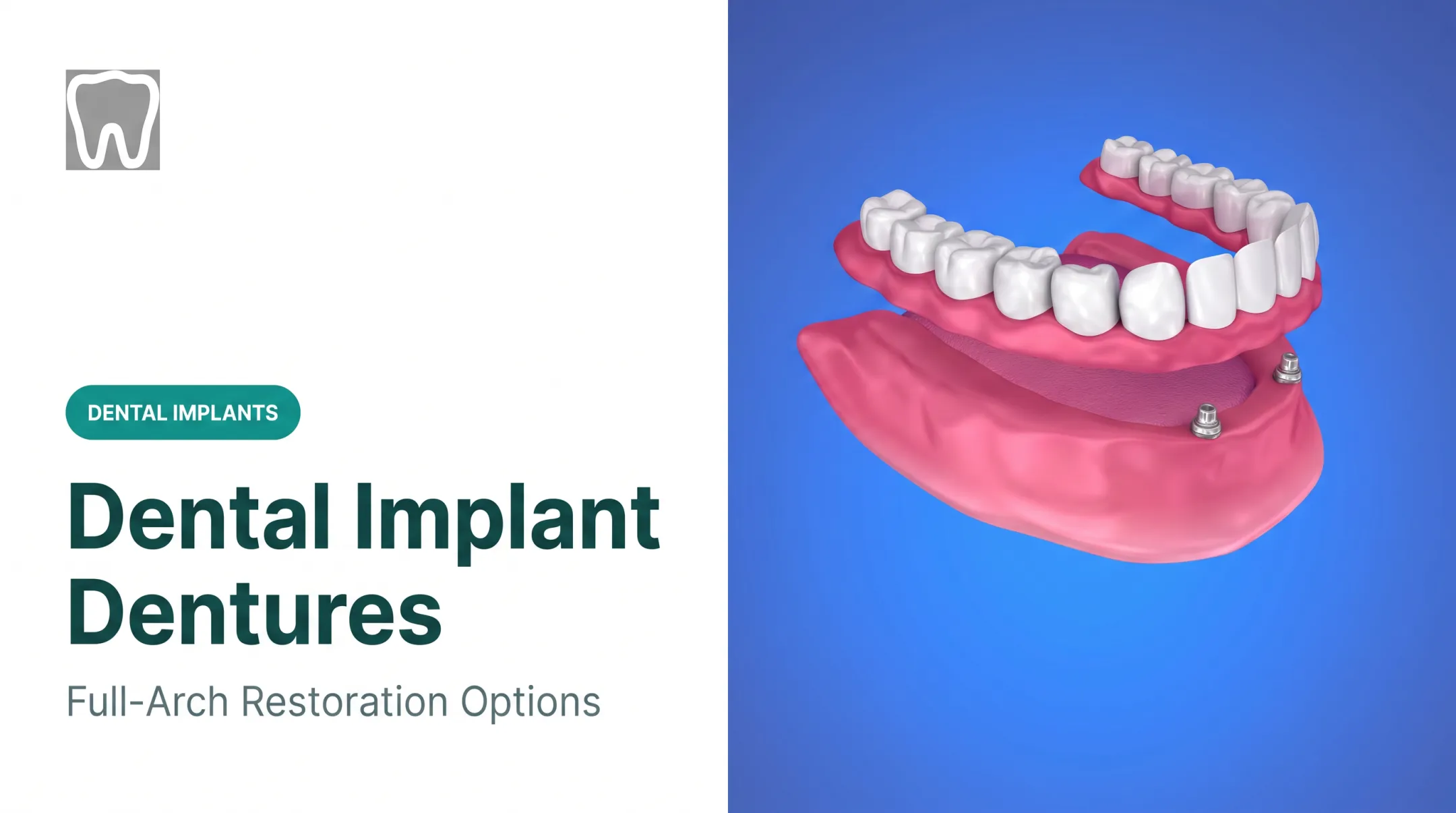
These use 2 to 4 titanium implants with ball or locator attachments connecting to a custom removable denture. They stay far more stable than traditional dentures but still come out for cleaning.
Compared with traditional dentures, overdentures typically:
- Shift less when you chew or speak
- Improve bite force through implant retention
- Still remove nightly for cleaning
Fixed Full-Arch Solutions
Fixed bridges attach permanently to implants, no removal needed. Options vary by implant count:
- All-on-4: Four implants (two vertical front, two posterior tilted implants), good for patients with low-to-moderate bone density
- All-on-6: Six implants for more distributed bite force, typically requires moderate bone volume
- 3-ON-8™: Our patented protocol using eight implants supporting three independent zirconia bridges. If one segment needs repair, the rest stays untouched.

The right protocol depends on your bone map, willingness for grafting, and treatment goals. Dr. Moguel evaluates this through a 3D CT scan before recommending a path.
Single-Tooth and Partial Solutions
Missing just one tooth? A single-tooth implant places a titanium post, custom abutment, and ceramic or zirconia crown, without grinding down healthy neighboring teeth. Osseointegration typically takes 3-4 months before the permanent crown goes on.
Several missing teeth in a row can use an implant-supported bridge or partial so neighboring teeth stay intact. A clasp-retained partial denture costs less up front but does not stimulate bone the way implants do.
Dentures vs. Dental Implants: Key Differences
| Factor | Traditional Dentures | Implant Solutions |
|---|---|---|
| Stability | Can shift during eating/speaking | Anchored, minimal movement |
| Bone preservation | No stimulation; resorption continues | Implants mimic tooth roots, help slow bone loss |
| Recovery | No surgery | Surgical placement + healing time |
| Maintenance | Relines/adjustments as needed | Long-term care with proper hygiene |
Is eating easier with implants? A 2017 crossover study found patients needed just 40 chewing strokes with implant overdentures versus 69 with conventional dentures to break down a test food. That gap is a meaningful functional improvement, though results vary by individual. See the study.
Bone preservation follows the same pattern. A five-year radiographic study found posterior mandibular bone loss averaged 1.63mm with conventional dentures, compared with just 0.69mm with implant overdentures—roughly half the resorption. Read the research.

That said, implants don't stop bone loss entirely. They simply tend to slow it compared to unsupported dentures resting on gum tissue alone.
On longevity: implants can last decades with proper care. We back this with a lifetime warranty on implant hardware for All-on-4, All-on-6, and 3-ON-8™ cases (prosthetic crowns and bridges carry a separate 5-year warranty with routine cleanings).
Are You a Candidate for Dental Implants?
Good candidates generally have:
- Adequate jawbone density and width
- Healthy gum tissue
- Controlled chronic conditions (including diabetes, if managed)
- Non-smoking status, or willingness to quit
What can disqualify you? Insufficient bone, uncontrolled systemic disease, and heavy smoking raise implant-failure risk substantially. According to a PLOS ONE meta-analysis, smokers face nearly double the implant failure risk compared to non-smokers.
Bone grafting and sinus lifts often resolve bone deficiency issues. We perform both procedures in-house using piezo-surgical instruments that reduce perforation risk during sinus lifts.
A free consultation with a 3D Cone Beam CT scan is the most accurate way to determine candidacy. Unlike flat 2D X-rays, CBCT imaging shows bone width and nerve pathways, letting Dr. Moguel plan implant length, width, and position precisely.

Switching From Dentures to Implants
Wearing dentures now doesn't rule out implants later. If you have adequate bone (or can build it through grafting), transitioning is usually possible.
Many current denture wearers move to:
- All-on-4 — often the best fit for moderate bone loss, since angled posterior implants can reduce grafting needs
- All-on-6 — for patients wanting extra stability
- 3-ON-8™ — for those wanting extra implant support and a near-natural bite
Which option fits depends on bone volume and how much stability you want. A common next question is whether remaining teeth come out all at once.
Do all teeth come out at once? In many full-arch cases, extraction and implant placement happen on the same surgical day, followed by a fixed temporary bridge. Patients can leave with functional teeth rather than returning to removable dentures during healing.
Complex cases sometimes call for staged extraction instead. Eligibility is confirmed through consultation and CT imaging.
Cost Considerations for Dentures and Implants
In the US, published benchmarks put common options in these ranges:
- Traditional full dentures: roughly $1,800
- Implant-supported dentures: $3,000-$12,000 per arch
- All-on-4 procedures: average $15,176, with a reported range of $11,640–$27,500, according to a 2024 US cost study
Our "from" pricing in Los Algodones:
- Single-tooth implant: from $1,500
- All-on-4: from $6,000
- All-on-6: from $8,000
- 3-ON-8™: from $15,000
That reflects savings of roughly 60-70% versus comparable US pricing. Every quote is a starting figure, not a final number. Your plan depends on grafting needs, arch count, and restoration materials.

To keep total cost clear before you travel, we provide:
- Free consultations with 3D CT imaging
- Transparent, itemized quotes
- US-standard insurance documentation, including ADA CDT procedure codes, for out-of-network reimbursement claims
- Travel coordination, including hotel recommendations in Yuma, Arizona, and local shuttle assistance
The clinic sits roughly a three-minute walk from the Andrade, California border crossing. That keeps cross-border visits straightforward for US and Canadian patients.
Frequently Asked Questions
What is the average cost of dental implants and implant-supported dentures?
Costs vary widely by case complexity and location, from roughly $1,500 for a single implant to over $15,000 for full-arch treatment in the US. Treatment in Mexico can offer savings of approximately 60-70% for comparable procedures.
How many implants are needed for full mouth dentures?
Full-arch solutions typically use 4 implants (All-on-4), 6 implants (All-on-6), or 8 implants (3-ON-8™) per jaw, depending on bone density and the chosen protocol.
Will all my teeth be removed at once to get dental implants?
Often yes, extraction and implant placement can happen during the same surgical visit, followed by a temporary fixed bridge. Complex cases may require a staged approach instead.
Can you get dental implants if you currently wear dentures?
Yes, this is common. It requires adequate jawbone density, and bone grafting can often make up for low bone volume.
How long do dental implants and dentures last?
Dentures typically need relining or replacement within 5-10 years, while implants can last decades with proper care. Our implants come with a lifetime warranty.
What disqualifies you from getting dental implants?
Common disqualifiers include insufficient bone density, uncontrolled health conditions like diabetes, and heavy smoking. Many of these issues, particularly low bone density, can be addressed through grafting or a sinus lift.