
This choice matters beyond aesthetics. It affects your long-term cost, jawbone health, and how many more dental procedures you'll need down the road. This guide compares implants and bridges side-by-side, explains which situations favor each, and looks at where affordable cross-border care fits into the equation.
TL;DR
- Implants replace the tooth root and preserve bone; bridges replace only the visible tooth
- Lifespan runs 20+ years for implants (often a lifetime) versus 5-15 years for bridges
- Bridges require filing down healthy adjacent teeth; implants leave neighboring teeth untouched
- Bone density, budget, and timeline determine which option fits your situation
- Patients can cut implant costs by 60-70% versus U.S. prices with board-certified specialists in Mexico
Dental Implants vs Bridges: Quick Comparison
Cost
Implants cost more upfront per tooth and may add bone grafting fees. Bridges usually cost less at first but often need replacement later.
Typical US price anchors:
- Single-tooth implant: $3,100 to $5,800 (American Academy of Implant Dentistry)
- Traditional bridge: about $2,500
- Implant-supported bridge: $4,000 to $16,000 (GoodRx)
Structure & Composition
- Implants: Titanium post fused to the jawbone, topped with an abutment and custom crown
- Bridges: Crowns on adjacent teeth support a false tooth (pontic) in between
Durability
Implants show a 96.4% survival rate at 10 years, per a peer-reviewed meta-analysis in PubMed. Bridges hover around 79-82% survival at 10 years, with Cleveland Clinic noting a typical lifespan of 5 to 15 years before replacement.

Impact on Adjacent Teeth
Implants leave neighboring teeth completely untouched. Bridges require filing down healthy adjacent teeth to anchor the crowns, an irreversible step according to the Canadian Dental Association.
Treatment Timeline
Implants take several months total, including a 3-9 month osseointegration period where the post fuses to bone. Bridges are typically completed in two visits over a couple of weeks.
What Is a Dental Implant?
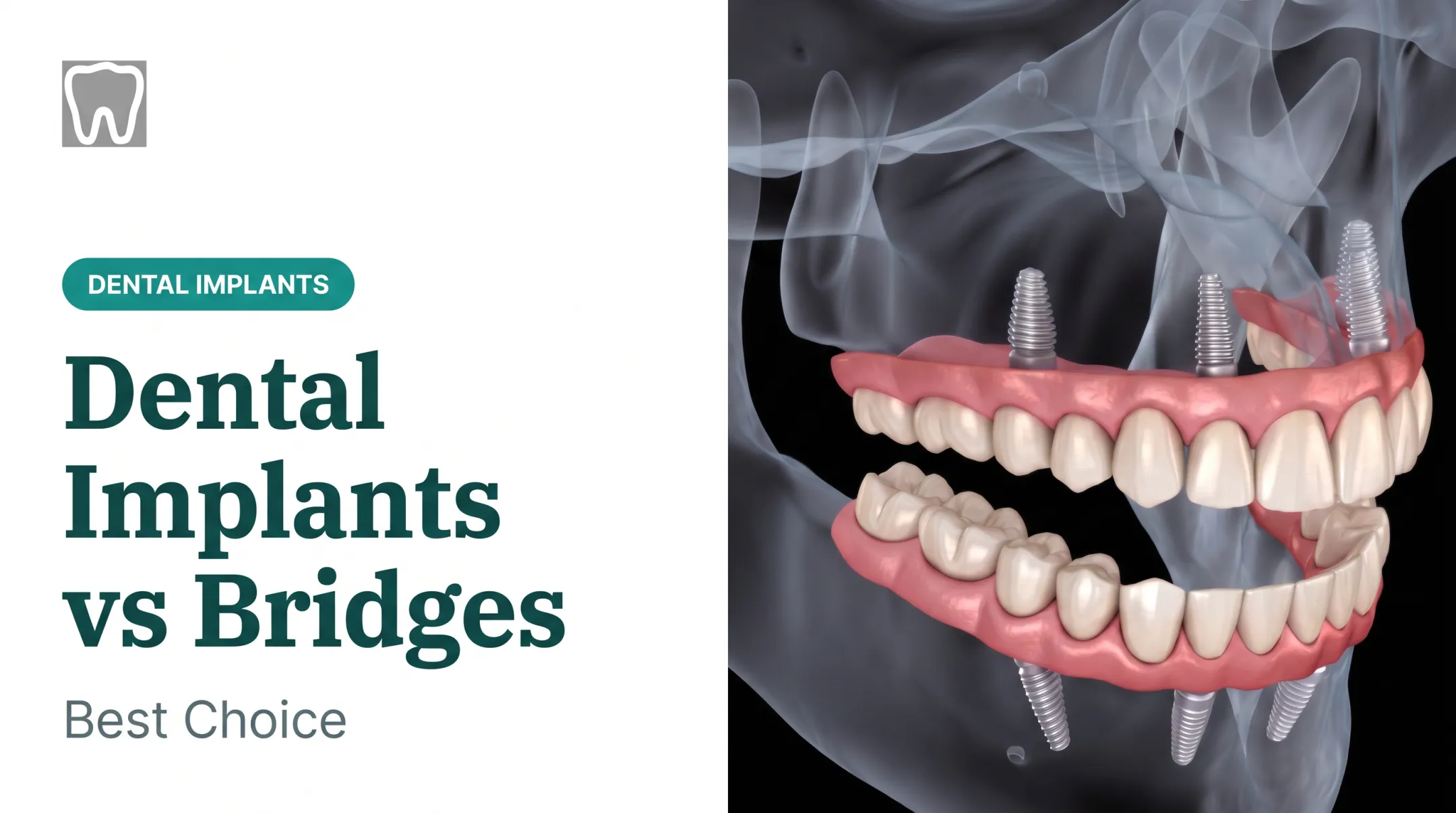
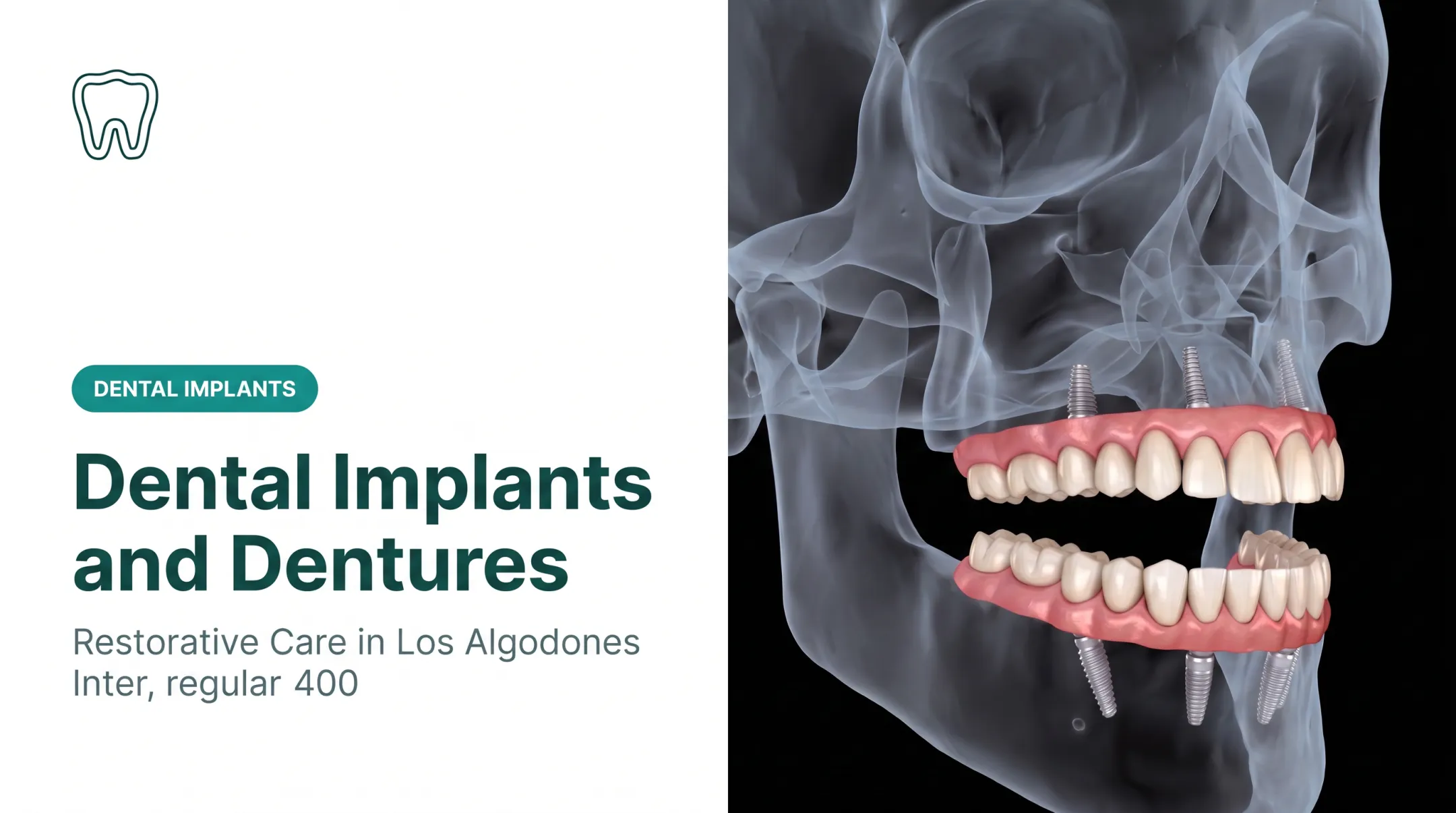
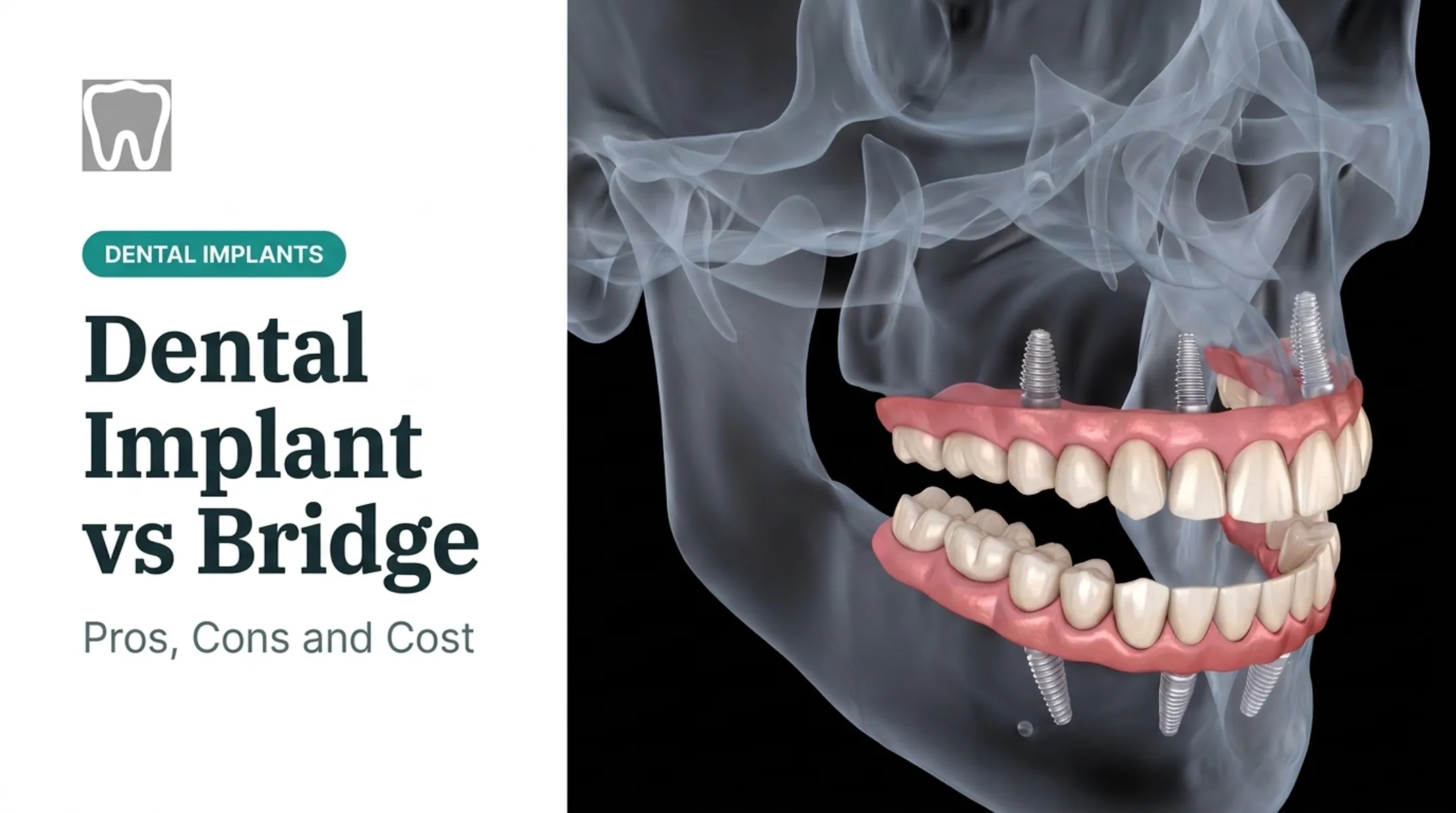
A dental implant is a titanium post surgically placed into the jawbone, replacing the tooth root itself. Once it fuses with bone (osseointegration), an abutment and custom crown complete the restoration.
Core benefits:
- Preserves jawbone density instead of letting it deteriorate
- Functions and feels like a natural tooth
- Doesn't require altering neighboring teeth
Those same advantages scale from one tooth to a full arch. Options include single-tooth implants, All-on-4, All-on-6, and full-mouth protocols such as Dr. José Moguel's patented 3-ON-8™. That protocol places 8 implants per arch to support three independent zirconia bridges, which adds stability and helps conserve bone.

Use Cases of Dental Implants
Implants suit patients with adequate bone density who want a long-term, low-maintenance solution. They work for single missing teeth, multiple gaps, or full-arch replacement.
The international average success rate sits at 95-97%. Dr. Moguel reports a 98%+ clinical success rate across a 38-year career and more than 17,000 implants placed, above the broader benchmark.
What Is a Dental Bridge?
A dental bridge "bridges" a gap using crowns on the two teeth adjacent to the missing tooth, anchoring a false tooth (pontic) between them.
Core benefits:
- Completes treatment faster with no surgery required
- Often accessible when implant surgery isn't an option
- Restores chewing function and smile appearance quickly
- Lower upfront cost than a comparable single-tooth implant
Common variations include traditional, cantilever, Maryland (resin-bonded), and implant-supported bridges.
Use Cases of Dental Bridges
Bridges make sense when adjacent teeth already need crowns, budget is tight, or surgery isn't an option. They're a common fix for one missing tooth or a few missing teeth in a row.
Cleveland Clinic estimates the typical lifespan at 5 to 15 years, with some lasting longer given proper maintenance. An NIH evidence review found 10-year survival rates for all-ceramic bridges ranging from 79% to 82%. Those figures are solid, but they sit notably below implant benchmarks.
Dental Implants vs Bridges: Which Is Better for You?
The right answer depends on a few overlapping factors: bone health, budget, timeline, how many teeth are missing, and how much long-term maintenance you're willing to take on. Choose implants if:
- You want long-term stability and bone preservation
- You're in good overall health with adequate bone density
- You'd rather avoid touching healthy adjacent teeth Choose a bridge if:
- You need a faster, lower-cost solution
- Your adjacent teeth can support crowns as bridge abutments
- You're not a surgical candidate Cost is often the deciding factor for patients who'd otherwise choose implants. A single-tooth implant costs $3,000–$4,500 in the US, but $750–$1,500 through Dr. Moguel's clinic in Mexico, a savings of 60–70%. Those implants use the same FDA-approved brands (Nobel Biocare, Straumann, MegaGen) found in many US clinics.

Real-World Perspective: Making the Cost of Implants Work
Picture a patient in Phoenix who needs a single-tooth implant but is quoted $4,000+. Facing that number, they settle for a bridge purely for financial reasons, even though their dentist agreed an implant would serve them better long-term.
This scenario is common. Patients from the US and Canada increasingly travel to border clinics for modern implant care at about 60–70% less than typical domestic prices.
Los Algodones sits just minutes from the Andrade, California port of entry, so the trip is practical rather than a major journey. At Dr. Moguel’s clinic, that access includes care from an ADA/ADM-certified periodontist plus:
- Free, no-obligation consults, including virtual X-ray or CBCT review
- Published starting prices from $1,500 for a single-tooth implant and $6,000 for All-on-4
- A lifetime warranty on all implants
- Travel coordination, from border-crossing guidance to Yuma hotel arrangements

Cost alone shouldn’t push someone into a bridge when a more durable implant is within reach. If price is the main hesitation, a free consultation can show a personalized plan and a transparent quote.
Conclusion
Neither option is universally "better." The right choice depends on your bone health, budget, timeline, and how many teeth need replacing. Implants offer superior long-term stability and bone preservation. Bridges offer speed and a lower upfront price tag.
For patients who assumed a bridge was their only realistic option, affordable, board-certified implant care in Mexico is often more accessible than expected. Worth exploring before you settle on a bridge.
Frequently Asked Questions
How much does a dental bridge cost compared to a dental implant?
In the US, traditional bridges average about $2,500, while single-tooth implants run $3,100–$5,800. Bridges cost less upfront but often need replacement within 5–15 years. The same treatments in Mexico are often 60–70% less than those US averages.
How long does a dental bridge last?
Most bridges last 5 to 15 years, according to Cleveland Clinic, though some last longer with good oral hygiene and regular dental visits. Material quality and bite force also affect longevity.
Is it better to have a dental implant or a bridge?
It depends on your bone health, budget, and how many teeth are missing. Implants generally offer better long-term durability and bone preservation, while bridges work well for patients who need a faster or lower-cost fix.
Why might a dentist recommend a bridge over a dental implant?
A dentist may suggest a bridge if you have insufficient jawbone density, health conditions that rule out surgery, or budget and timeline constraints. It's also common when adjacent teeth already need crowns.
Which is more painful: dental implants or bridges?
Implants involve minor surgical discomfort managed with local anesthesia and typically fade within days. Bridges avoid surgery but require filing down adjacent teeth, which can cause temporary sensitivity.
Can you eat normally with a dental bridge?
Yes, bridges restore normal chewing function for most foods. However, they may feel less stable than implants when biting into very hard or chewy items, since they rely on adjacent teeth for support.