
The truth sits somewhere in between. Same-day implants are real and backed by clinical evidence, but what patients receive on day one isn't the finished product. For US and Canadian patients weighing cross-border treatment in Mexico, understanding exactly what happens on surgery day — and what happens months later — matters before booking flights or crossing the border.
This article separates the marketing claims from the clinical facts.
Key Takeaways
- Same-day implants give you a temporary tooth immediately, not the final permanent restoration
- Candidacy hinges on bone density, gum health, and infection control, confirmed by 3D CBCT
- Success rates match traditional implants when an experienced specialist performs the procedure
- Osseointegration (bone fusion) still takes 4-6 months, even with a same-day working tooth
What Are Same-Day Dental Implants, Really?
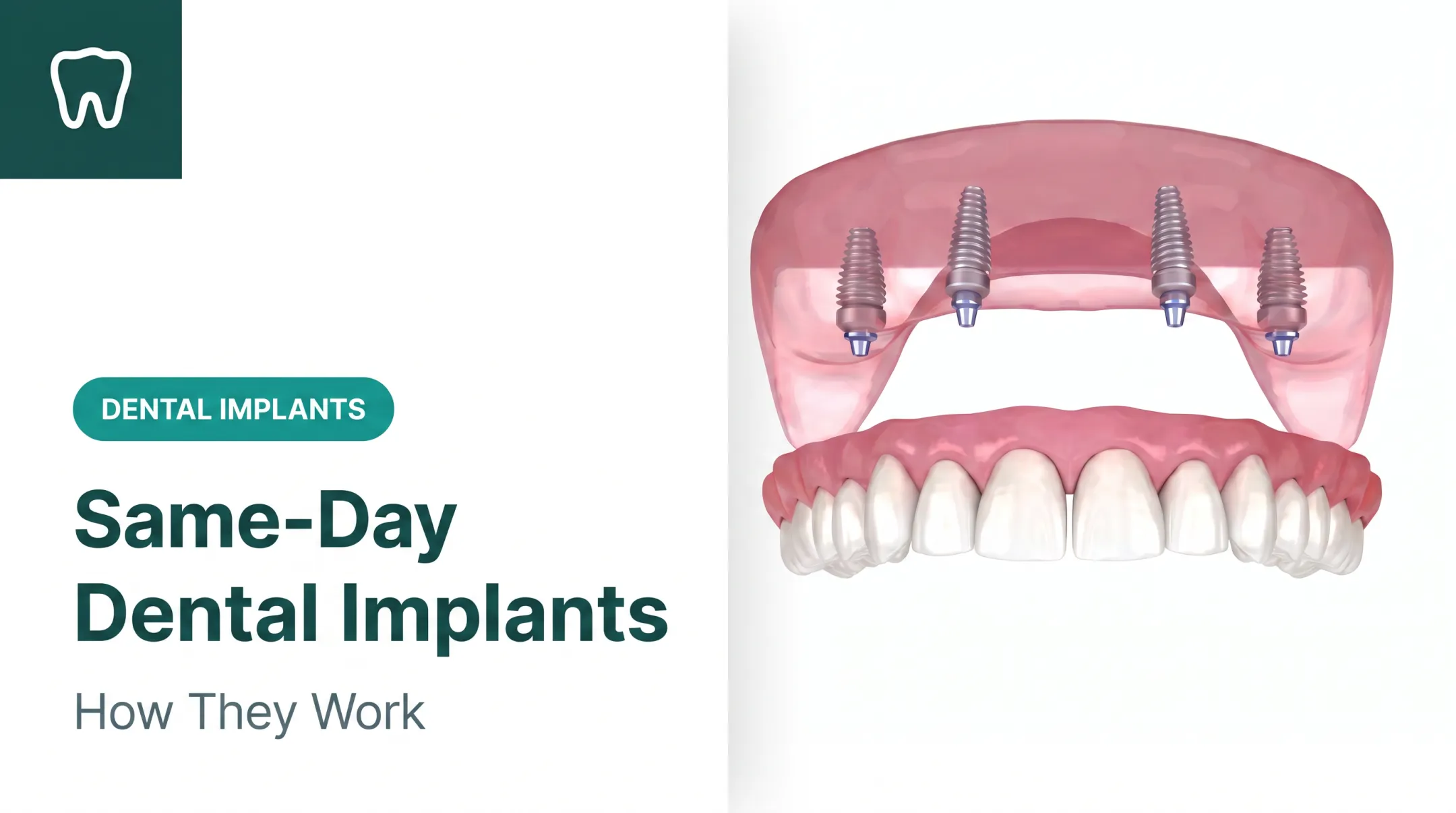
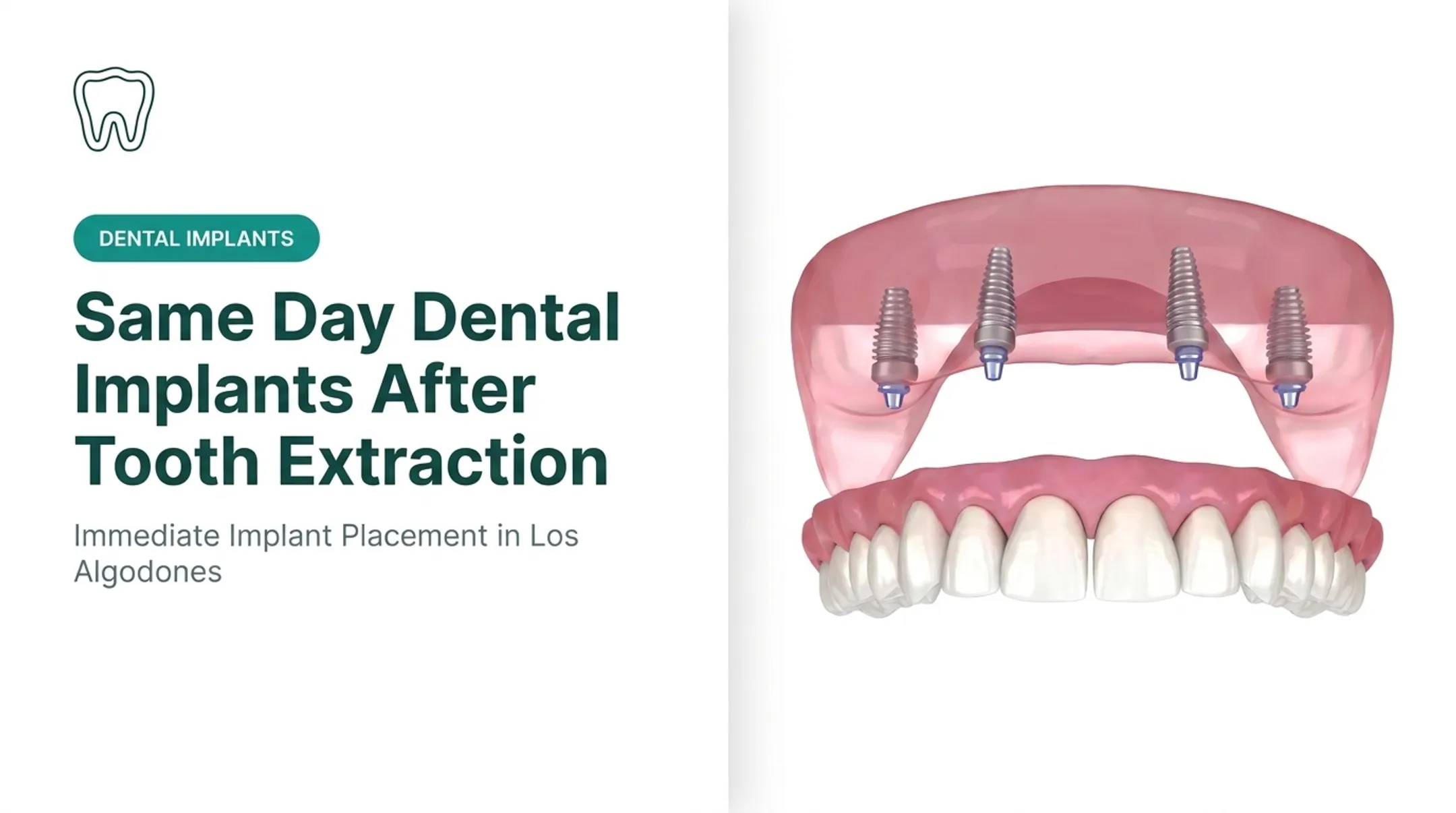
Same-day implants, also called immediate-load implants, involve placing a titanium post into the jawbone and attaching a temporary crown or bridge during a single visit. You leave the same day with a functional, natural-looking tooth. That part is genuine.
Here's what differs from the marketing pitch: this temporary restoration protects the surgical site while the bone fuses around the implant. It is not the final tooth.
Traditional implants, by contrast, spread treatment across 3-9 months:
- Extraction and healing (if needed)
- Implant placement, followed by a separate healing period with no restoration attached
- Fabrication and fitting of the permanent crown only after full bone integration
The clinical distinction matters. "Teeth in a day" refers to when you receive a working tooth, not when treatment concludes. According to the FDA, implant healing "may take several months or longer," regardless of loading protocol.
A typical full-arch same-day protocol follows a similar arc:
- Digital planning and CBCT imaging before surgery
- A 2–3 hour surgical visit, with a temporary bridge attached that same afternoon
- 4–6 months of osseointegration before the permanent zirconia bridge replaces it
For single-tooth cases, that final step typically arrives in 3–4 months.

Myth vs. Reality: Debunking the Biggest Misconceptions
Let's tackle the claims patients hear most often.
Myth: You get a permanent tooth in one visit. Reality: You get a temporary crown or bridge. The permanent restoration comes after healing.
Myth: Anyone qualifies for same-day placement. Reality: Candidates need several clinical conditions in place:
- Adequate bone density
- Healthy gums
- No active infection
- Controlled chronic conditions
A 2022 review notes that controlled diabetes isn't an automatic disqualifier, though poor glycemic control is linked to delayed healing and higher inflammation risk.
Myth: Same-day implants fail more often. Reality: A Cochrane review of 26 randomized trials covering over 2,100 implants found no statistically significant difference in first-year failure between immediate and conventional loading.
Evidence quality was rated low, so results aren't definitive. Still, the data doesn't support the "less reliable" claim either.
Myth: You can eat normally right away. Reality: A soft-food diet is mandatory. Clinic protocols specify 3-4 months of soft foods (soups, yogurt, scrambled eggs, smoothies) while implants stabilize under light chewing load.
Myth: The procedure is especially painful. Reality: Deep local anesthesia makes the surgery itself painless. Many clinics also offer oral or IV conscious sedation for anxious patients, with NSAIDs managing post-op discomfort.
Myth: Same-day implants are purely cosmetic. Reality: They restore chewing function, speech clarity, and gum support throughout the healing window, not just appearance.
How the Same-Day Implant Process Actually Works
The workflow follows a predictable sequence, whether you're getting a single implant or a full-arch restoration.
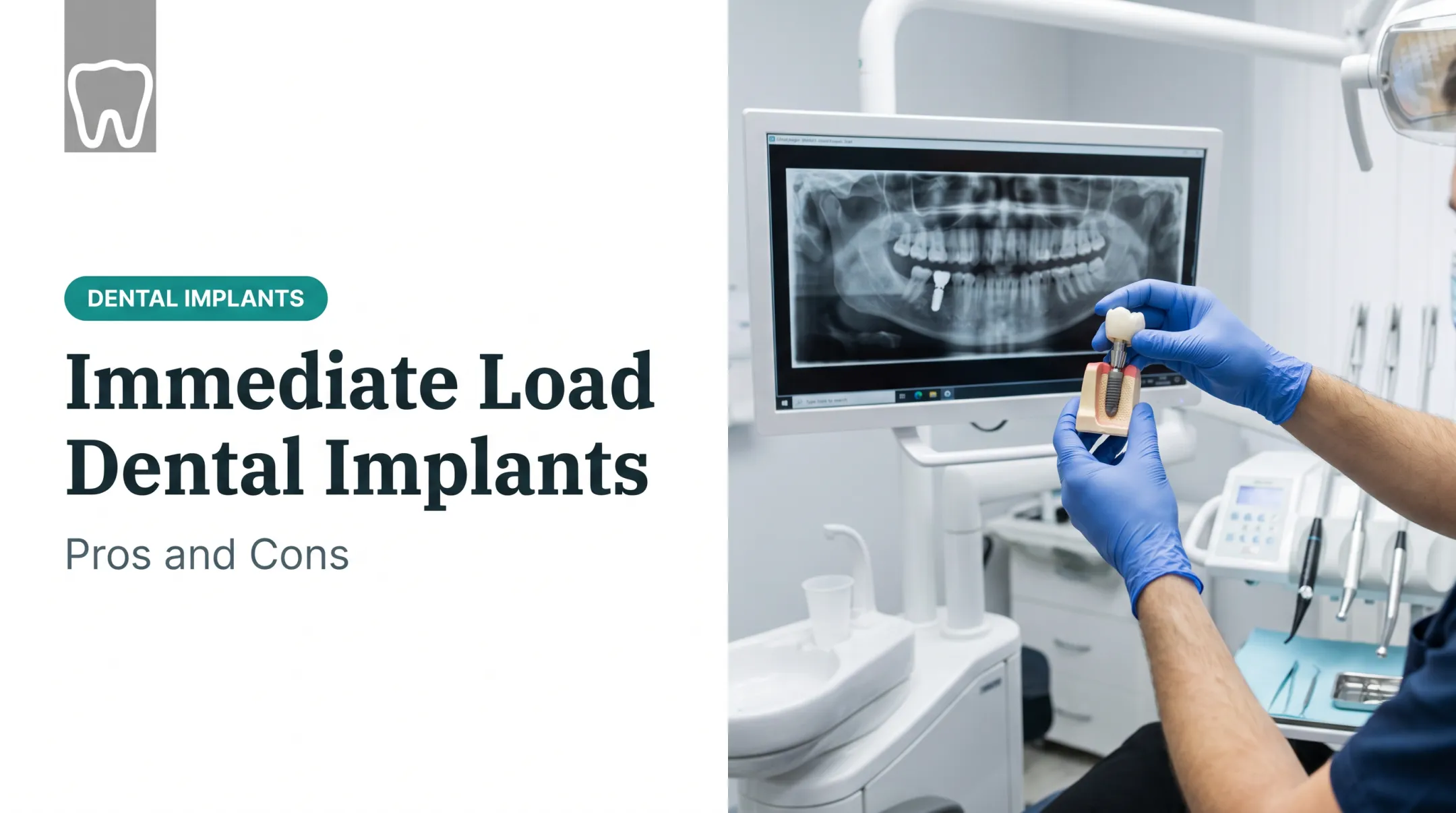
- Comprehensive evaluation. 3D Cone Beam CT imaging and digital scanning assess bone volume, density, and gum health. This step also identifies nerve pathways and sinus positioning to plan implant placement precisely.
- Extraction and placement. Failing teeth are removed if needed, and implants go in using computer-guided planning, typically during a 2-3 hour surgical visit.
- Same-day temporary restoration. A fixed temporary crown or bridge is attached later that afternoon, giving you a functional, natural-looking smile immediately.
- Osseointegration. The jawbone fuses with the implant over 4-6 months. Aftercare compliance during this window directly affects success.
- Final restoration. Once imaging confirms full bone fusion, a custom permanent crown or zirconia bridge replaces the temporary one.

Full-Arch Protocols: All-on-4, All-on-6, and 3-ON-8™
These protocols extend the same-day approach to full-arch cases:
- All-on-4 uses four implants per arch (two straight, two angled) to support a full fixed bridge
- All-on-6 adds two more implants for greater load distribution and stability
- 3-ON-8™, a patented protocol developed by Dr. José Moguel, uses eight implants per arch supported by three independent segmented bridges rather than one continuous piece

Dr. Moguel has placed over 17,000 implants across 38 years of practice, experience that directly informs the clinic's same-day full-arch protocols and outcomes.
Are You a Good Candidate? Benefits, Risks, and Recovery
Who Qualifies
Ideal candidates share these traits:
- Healthy gums with no active periodontal infection
- Adequate bone density and volume at the implant site
- Controlled diabetes (uncontrolled blood sugar delays healing)
- Non-smoker, or willing to quit before and after surgery
- Good overall systemic health
Patients needing bone grafting or a sinus lift first typically don't qualify for immediate placement without additional prep work. When grafting is required, healing before implant placement runs roughly 3-6 months.
A clinical exam and 3D imaging confirm whether same-day placement is safe for your case.
Benefits vs. Risks
| Benefits | Risks |
|---|---|
| Fewer clinic visits | Implant failure if bone support is insufficient |
| No removable dentures during healing | Infection at the surgical site |
| Preserved bone and gum structure | Delayed osseointegration in smokers |
| Immediate confidence boost | Higher complication rates without proper screening |
Smoking is a serious risk factor. A 2021 systematic review of over 149,000 implants found failure rates of 6.4% in smokers versus 3.3% in non-smokers — more than double the risk.
Nicotine restricts blood flow to healing bone tissue. Many clinics require quitting at least two weeks before and six weeks after surgery.
Recovery Timeline
- First 48 hours: Mild swelling, minor oozing, and dull ache; ice in 20-minute intervals, head elevated, cold soft foods only.
- Week one: Swelling peaks around day three, then recedes. Soft-food diet continues; most patients feel near-normal by day six or seven.
- Months 1-6: Osseointegration progresses. Avoid smoking and alcohol, and ease back onto firmer foods while protecting the healing site.
Cost Considerations and Why Patients Travel for Treatment
Same-day implant costs shift based on the number of implants needed, material choice (titanium versus zirconia), and whether grafting or a sinus lift is required.
In the US, the ADA Health Policy Institute cites a typical range of $3,100-$5,800 per implant for the post, abutment, and crown combined. Full-arch same-day cases run considerably higher.
That pricing drives many US and Canadian patients to seek care in Mexico. In Los Algodones, clinics offer the same technology American patients expect:
- 3D CBCT imaging for precise treatment planning
- In-house CAD/CAM labs for custom prosthetics
- FDA-cleared implant materials, including Nobel Biocare and Straumann systems
Reported savings run 60-70% versus US pricing. As an example, same-day full-arch treatment at a Los Algodones clinic often starts around $9,000-$13,000, compared to $26,000-$32,000 for comparable US treatment.

If you're considering cross-border care, the CDC's Yellow Book guidance on medical tourism recommends planning 4-6 weeks ahead, verifying the treating clinician's credentials, and confirming what's included in follow-up care before you travel.
Free, no-obligation consultations let you get a clinical treatment plan and transparent cost quote before committing to travel. Ask specifically whether you're a same-day candidate or whether grafting will be needed first — that single answer changes your entire treatment timeline.
Frequently Asked Questions
Can dental implants be done in one day?
Yes, for suitable candidates. An implant post and a temporary crown or bridge can be placed and fitted in a single visit. The final, permanent restoration is placed months later, after the bone has fully healed.
Do you get temporary teeth while waiting for implants?
Yes. A fixed temporary crown or bridge is typically attached the same day as surgery, allowing you to eat soft foods, speak, and smile normally during the healing period.
How many days should I rest after a dental implant?
Most patients need 24-48 hours of dedicated rest, with light activity resuming within a few days. Swelling generally peaks around day three before subsiding.
What should I know before getting dental implants?
Patients often say they wish they'd understood the realistic timeline: same-day teeth aren't the finished result. Expect a soft-food diet for several months, and choose an experienced, board-certified specialist over the lowest quote.
What is the newest procedure for dental implants?
Guided full-arch protocols like the 3-ON-8™ technique, combined with digital planning, CBCT imaging, and CAD/CAM fabrication, are among the most advanced options in implant dentistry today.
How much do same-day dental implants cost compared to traditional implants?
Costs depend heavily on case complexity, implant count, and materials used. A free consultation with a transparent quote is the most reliable way to compare your options.