
Introduction
Titanium has been the backbone of dental implant dentistry since the 1960s, when Dr. Per-Ingvar Brånemark first documented bone fusing permanently to a titanium post. Because of this long track record, many patients assume "titanium implant" describes one single product.
It doesn't.
Bone quality, the number of missing teeth, and your budget all determine which titanium implant design actually works for your mouth. Choosing the wrong type can mean a longer recovery, a less stable bite, or even implant failure.
This article breaks down the main types of titanium dental implants, how they differ, and how to figure out which one fits your situation.
TL;DR
- Titanium implants are the most researched, durable option for tooth replacement, thanks to osseointegration with the jawbone
- The three primary types are endosteal, subperiosteal, and zygomatic implants, each built for different bone conditions
- Full-arch protocols like All-on-4, All-on-6, and the patented 3-ON-8™ place endosteal implants to replace most or all teeth
- The right choice depends on jawbone density, how many teeth need replacing, and long-term goals, not popularity or price alone
What Are Titanium Dental Implants and Why Do They Matter?
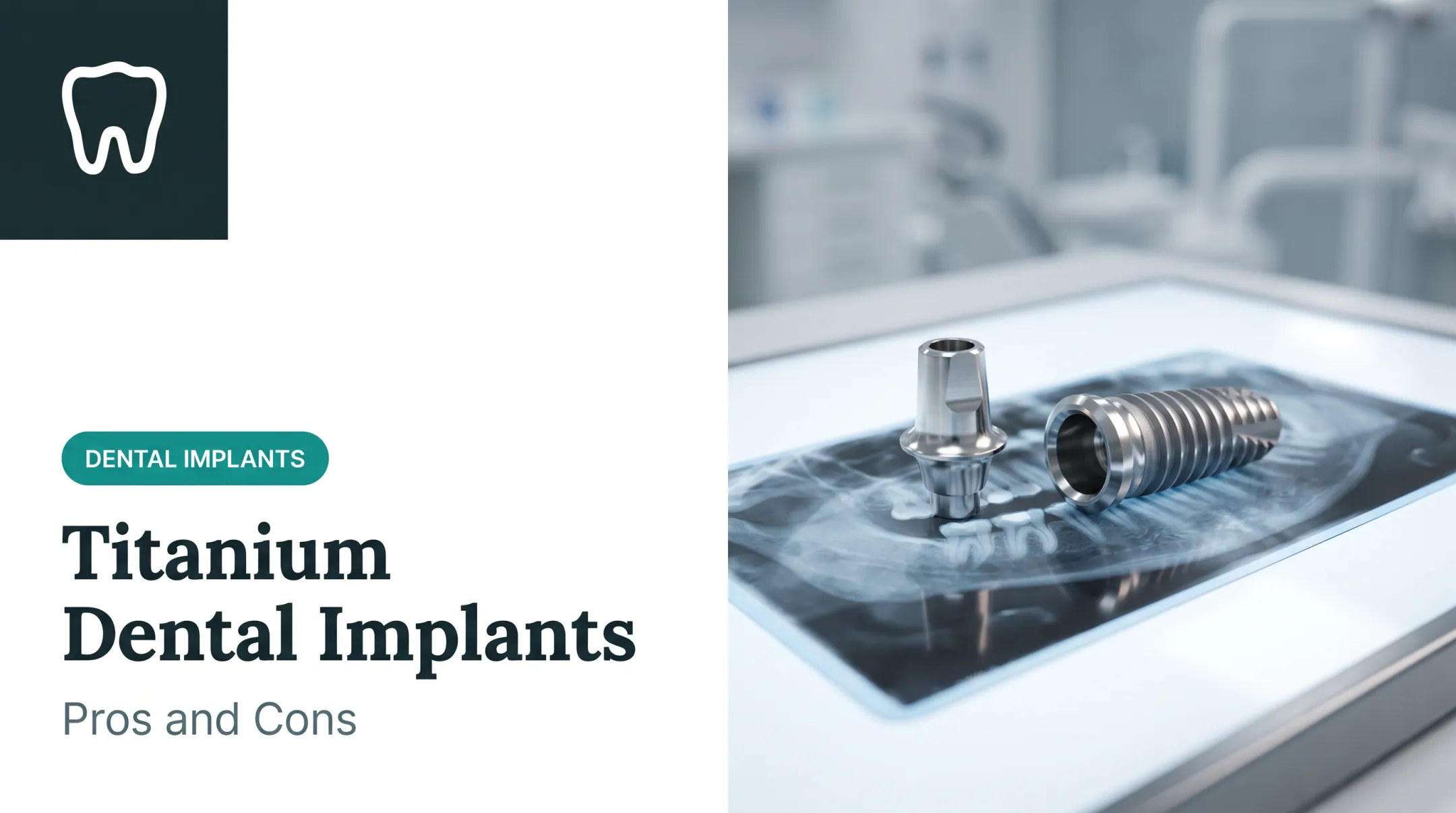
A titanium dental implant is a surgically placed post that acts as an artificial tooth root. Over several months, the bone fuses to the titanium surface through osseointegration, creating an anchor strong enough to support a crown, bridge, or denture.
Titanium implants are used in three main clinical scenarios:
- Single tooth replacement with one implant and one crown
- Implant-supported bridges for multiple missing teeth
- Full-arch protocols for full-mouth reconstruction
Titanium's biocompatibility and strength translate directly into long-term outcomes. A 2019 systematic review found a 96.4% implant-level survival rate at 10 years. That benchmark reflects titanium's decades of clinical use, not any single brand or protocol.
Outcomes still aren't guaranteed just because the material is titanium. Choosing the wrong implant type for your bone condition can lead to:
- Early implant failure when bone doesn't fuse properly to the post
- Unstable placement when the design doesn't match available bone density
- Higher complication risk over time
Knowing the main titanium implant types makes it easier to match design and connection style to your bone and restoration goals.
At Dental Implants in Mexico, Dr. José Moguel pairs grade-5 titanium systems from Nobel Biocare, Straumann, and MegaGen with 3D diagnostic planning. That approach is tied to a 98% clinical success rate across more than 17,000 implants placed.
Types of Titanium Dental Implants
Titanium implants aren't one-size-fits-all. The right type depends on jawbone volume, bone density, and how many teeth need replacing.
Endosteal Implants
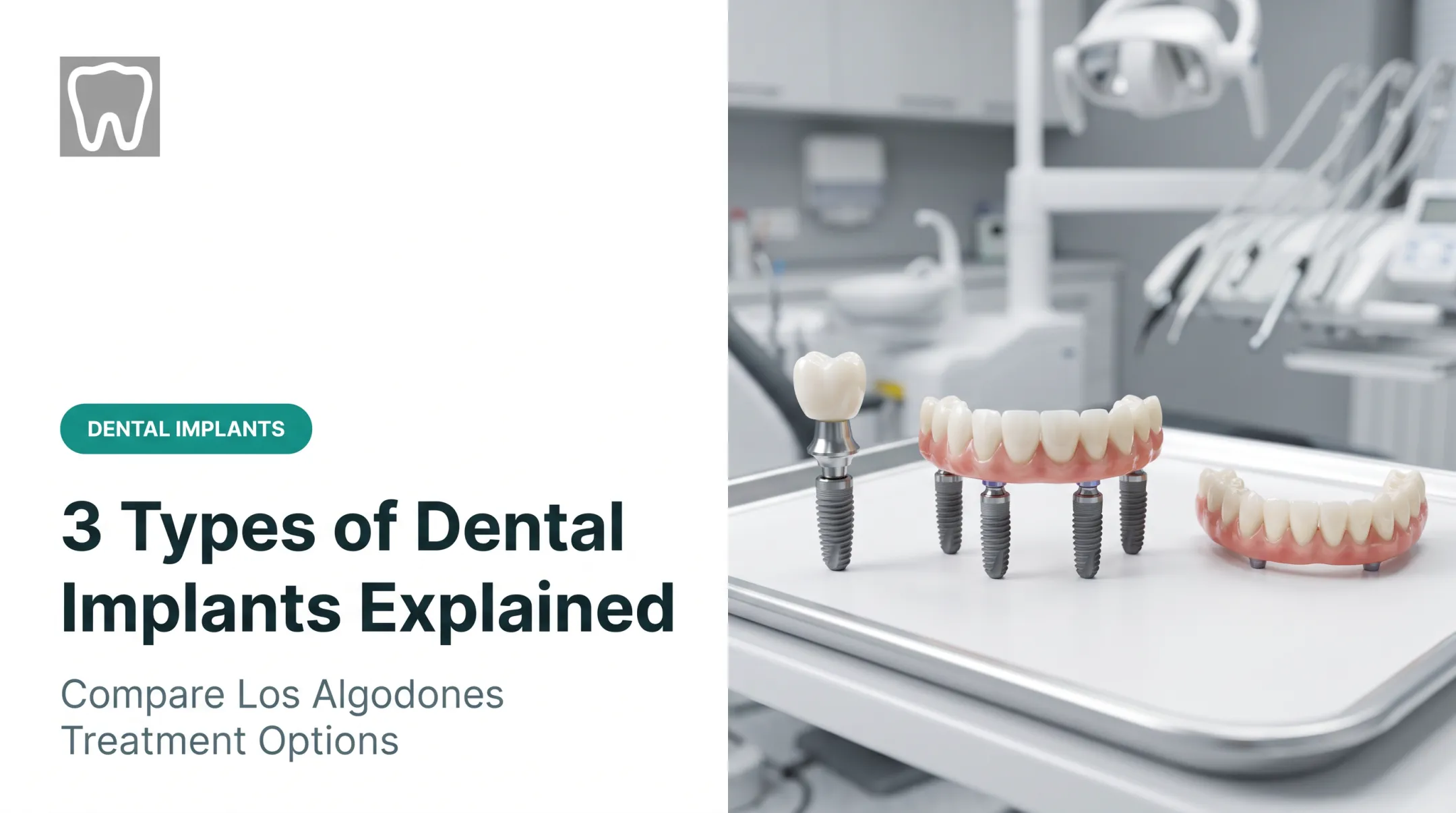
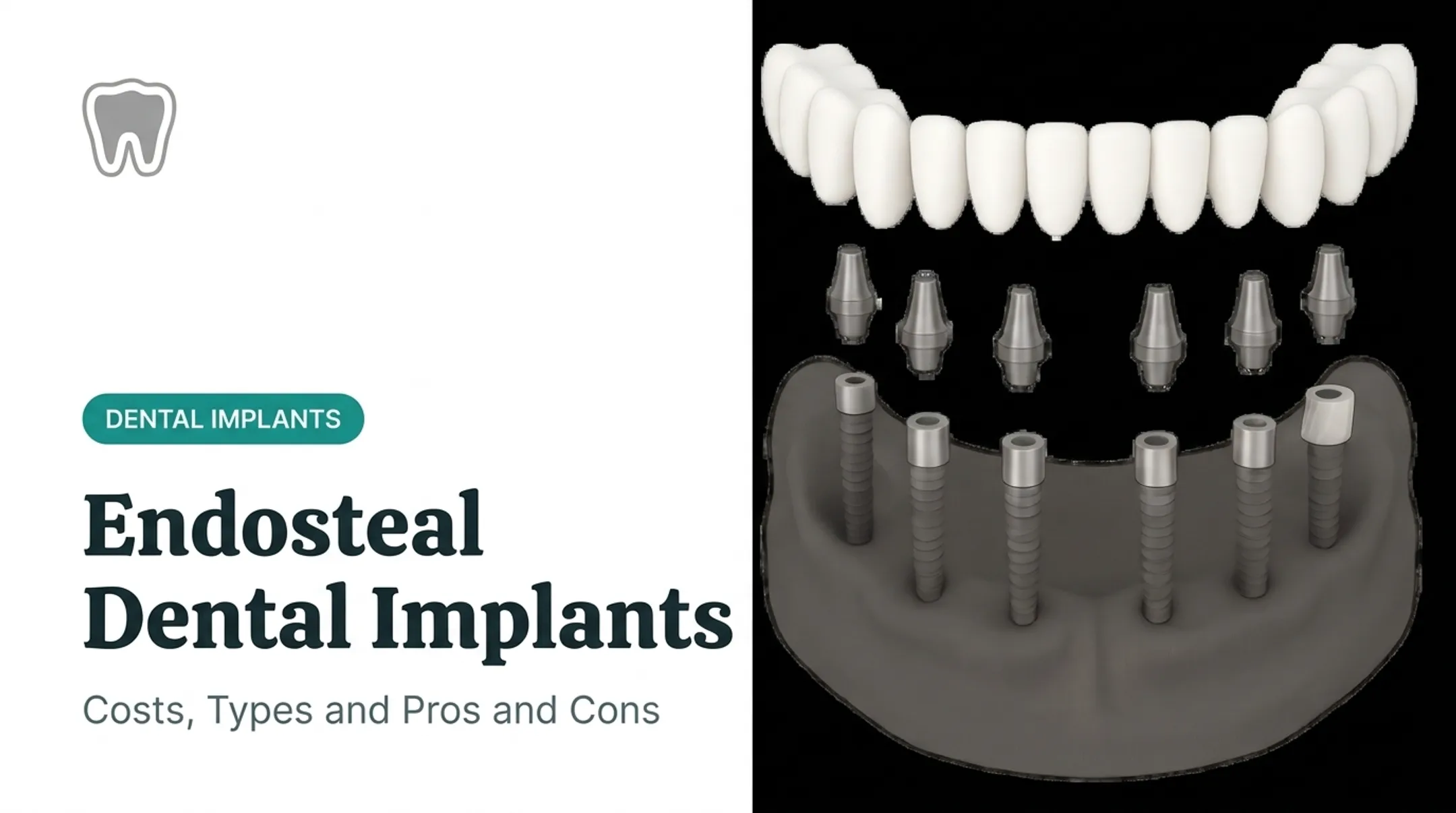
Endosteal implants are the most common titanium implant type: a screw-shaped post surgically inserted directly into the jawbone to act as a tooth root. After the site heals, an abutment is placed so a crown, bridge, or denture can attach on top.

How it differs: Placed inside the bone itself, which means it requires adequate bone height and density to achieve primary stability.
Best suited for:
- Patients with healthy, sufficient jawbone
- Single-tooth replacement
- Multiple-tooth bridges
- Full-arch cases, including All-on-4 and All-on-6 protocols
Key strengths:
- Strong, proven bond through osseointegration
- Versatile across nearly every tooth-replacement scenario
- Long-term durability backed by the most robust clinical evidence
Limitations: Not suitable for patients with significant bone loss unless bone grafting happens first. A 2023 systematic review found significantly higher survival rates in denser bone types compared with severely deficient bone.
Subperiosteal Implants
Instead of going inside the bone, a subperiosteal implant places a custom titanium framework on top of the jawbone, under the gum tissue. Posts protrude through the gum to hold the replacement teeth in place.
How it differs: Avoids drilling into the bone entirely, making it an option when bone volume is inadequate for a standard endosteal implant.
Best suited for: Patients with insufficient bone height or density who want to avoid extensive bone grafting.
Key strengths: Offers a faster treatment path for patients who wouldn't otherwise qualify for endosteal implants.
Limitations: Far less common today, and fewer clinicians are trained to place them. A 2025 review of subperiosteal implants notes that outcomes vary and are generally less predictable than endosteal treatment, with survival ranging from roughly 80% to 98% depending on the study.

Zygomatic Implants
Zygomatic implants are longer titanium posts anchored in the cheekbone (zygoma) rather than the jawbone, reserved for severe upper jaw bone loss. This technique allows full-arch restoration even without bone grafting.
How it differs: Bypasses the jawbone entirely, engaging a much denser bone structure that can support immediate loading.
Best suited for: Patients with severe upper jaw bone atrophy who want to skip multiple bone graft surgeries and achieve same-day full-arch results.
Key strengths: Strong long-term survival in severe bone-loss cases. A 2023 ITI consensus review reported 96.2% mean survival over a mean follow-up of more than six years, with immediate-loading cases performing slightly better than delayed loading.
Limitations: Highly specialized, generally reserved for advanced bone-loss cases, and demands an experienced surgical team. Sinusitis was the most commonly reported complication in the ITI review.
How to Choose the Right Type of Titanium Implant
The "right" implant type depends on your individual bone structure and treatment goals, not popularity or cost alone.
Consider these factors:
- Jawbone density and volume — A high-resolution 3D Cone Beam CT (CBCT) scan should guide planning, since simple 2D X-rays don't show bone width or nerve pathways accurately.
- Number of teeth needing replacement — A single missing tooth calls for one endosteal implant; missing most or all teeth in an arch points toward a full-arch protocol.
- Willingness to undergo bone grafting — Some patients prefer a sinus lift or graft; others want a protocol like All-on-4 that's designed to bypass grafting through angled implant placement.
- Budget and long-term value — Compare total treatment cost, warranty coverage, and expected lifespan rather than sticker price alone.
- Experience level of the treating specialist — Full-arch protocols and zygomatic implants require advanced surgical training.
Full-arch protocols illustrate how bone density and implant count interact:
| Protocol | Implants per arch | Bone density needed | Mexico price range |
|---|---|---|---|
| All-on-4 | 4 | Low-to-moderate | $8,000–$12,000 |
| All-on-6 | 6 | Moderate | $12,000–$16,000 |
| 3-ON-8™ | 8 | Moderate-to-high (grafting optional) | $16,000–$20,000 |
All-on-4's two posterior implants are tilted at roughly a 45-degree angle, helping bypass the sinus cavity and often eliminating the need for grafting altogether.
The 3-ON-8™ protocol, developed and patented by Dr. Moguel, adds structural redundancy: if one implant fails to integrate, the entire restoration isn't compromised.

A free consultation with a board-certified periodontist can help determine which titanium implant type and protocol actually fits your anatomy, rather than guessing based on price alone.
Common Mistakes to Avoid When Selecting an Implant Type
Patients researching implants online tend to make a few predictable errors:
- Choosing zygomatic implants when endosteal would work: zygomatic fixtures address severe upper jaw bone loss, not routine cases, and add cost and complexity you may not need
- Overlooking long-term trade-offs with subperiosteal implants, which often carry lower long-term success rates and may mean retreatment sooner
- Skipping 3D CBCT imaging before you commit, which confirms whether you need a graft and sets depth and angle so the plan avoids nerves and sinus cavities
Conclusion
Titanium remains the gold standard material in implant dentistry, backed by decades of clinical evidence and a strong track record of osseointegration. Endosteal, subperiosteal, and zygomatic implants each serve different bone conditions and treatment goals. There's no universal "best" option.
What matters most is working with an experienced, board-certified specialist who can match the right implant type and protocol to your specific anatomy. Dr. José Moguel's team combines 3D CBCT imaging with grade-5 titanium systems to match implant type to your anatomy and support long-term results.
Frequently Asked Questions
How much does a titanium implant cost?
In Mexico, a single-tooth titanium implant typically costs $750–$1,500, while full-arch protocols range from $8,000–$20,000 per arch. Final cost depends on implant type and case complexity; a free consultation provides a transparent, customized quote.
Are titanium tooth implants safe?
Yes. Titanium has a decades-long safety record and is highly biocompatible. Complications like titanium hypersensitivity are documented but rare, with no conclusive evidence linking it to implant failure.
Is a titanium dental implant painful?
The procedure uses local or general anesthesia, so you won't feel the placement itself. Mild discomfort afterward usually responds to over-the-counter pain relief.
What type of metal is used in dental implants?
Titanium and titanium alloys (grade-5 titanium) are the most common materials, chosen for strength and biocompatibility. Zirconia is available as a metal-free ceramic alternative.
Will a dental implant set off a metal detector?
Titanium implants are generally too small to trigger standard walk-through metal detectors, though highly sensitive scanners could occasionally flag them.
What is the difference between endosteal and subperiosteal implants?
Endosteal implants are placed inside the jawbone; subperiosteal implants rest on top of the bone, under the gum. Endosteal implants are more common and have a more established long-term success record.