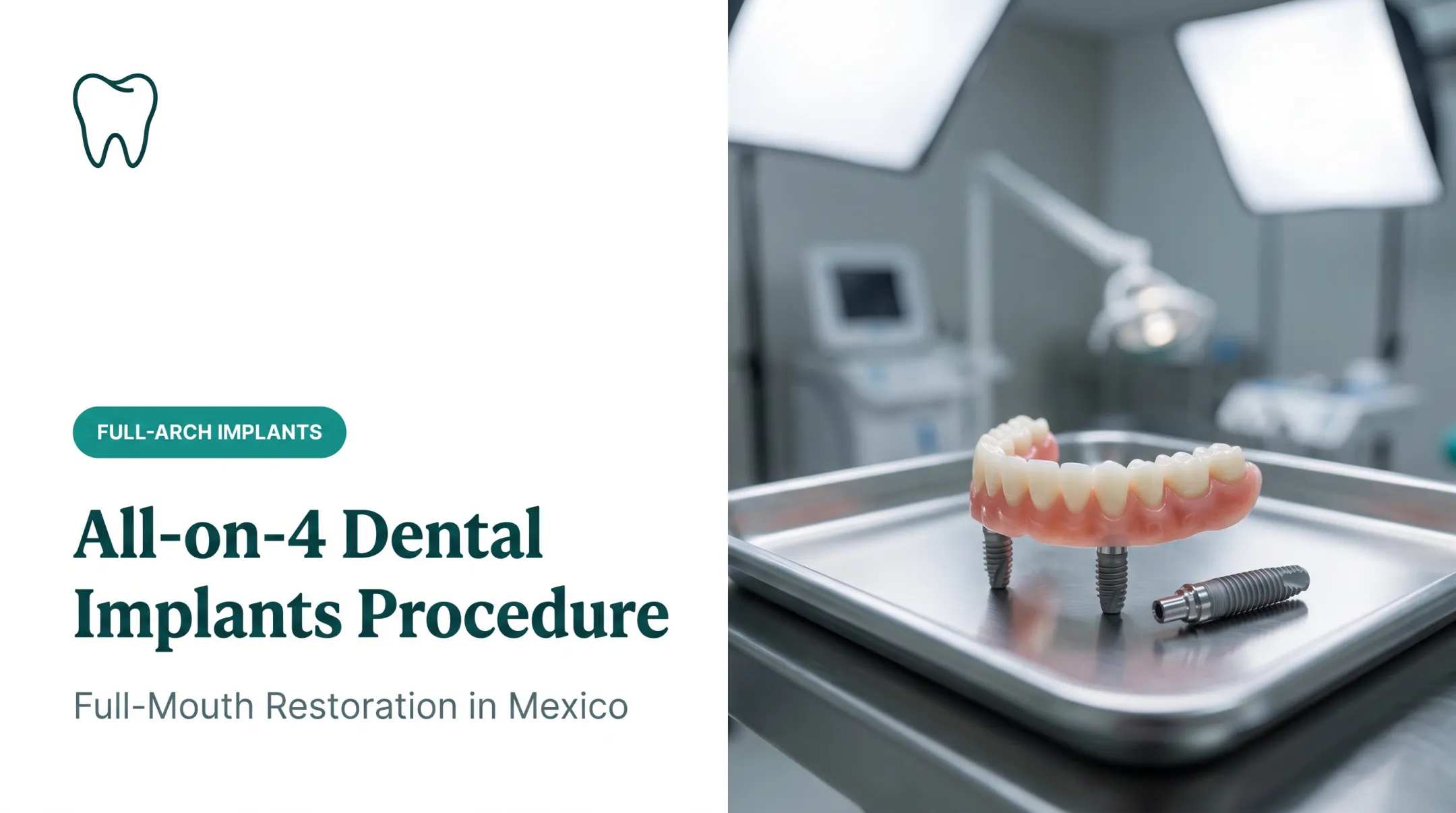

All-on-4 (sometimes called 4-in-1 dental implants) was designed to solve exactly that. Four strategically placed implants support a complete, fixed arch of teeth, often on the same day as surgery. This guide covers how the procedure works, what it costs, how much it hurts, how long it lasts, and whether it's actually worth the investment.
Dr. José Moguel, a board-certified periodontist with over 38 years of experience and more than 17,000 implants placed, performs All-on-4 procedures at his clinic in Los Algodones, Mexico, just steps from the Andrade, California border crossing.
Key Takeaways
- Four implants (two straight, two angled) support a full arch, often without bone grafting
- Most patients leave surgery with fixed, non-removable temporary teeth the same day
- Mexico pricing runs 60-70% lower than comparable US treatment
- Published research shows implant success rates above 94% at the 10-year mark
- Outcomes depend heavily on choosing an experienced, board-certified specialist
What Is All-on-4 and How Many Teeth Do You Get With It?
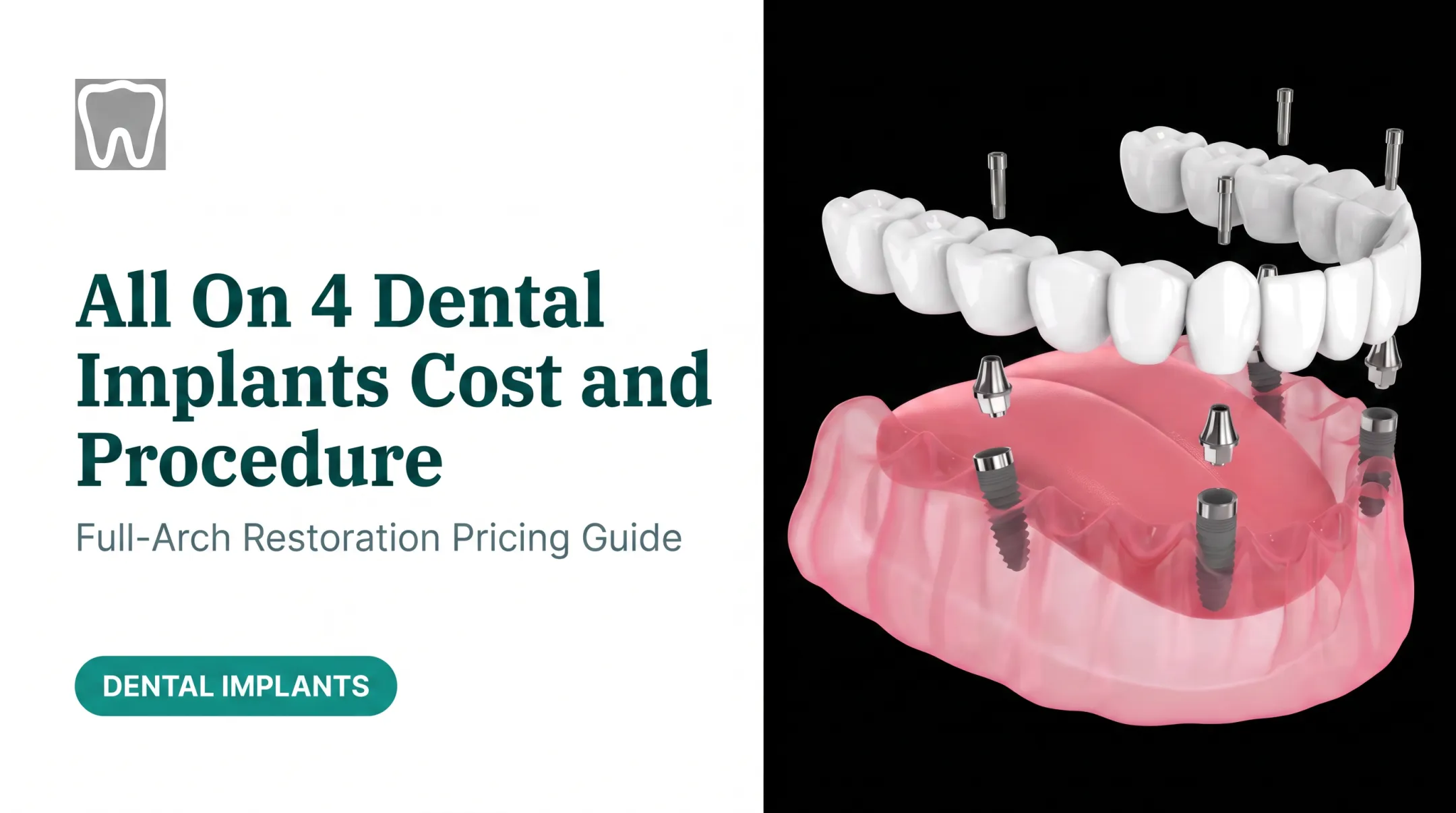
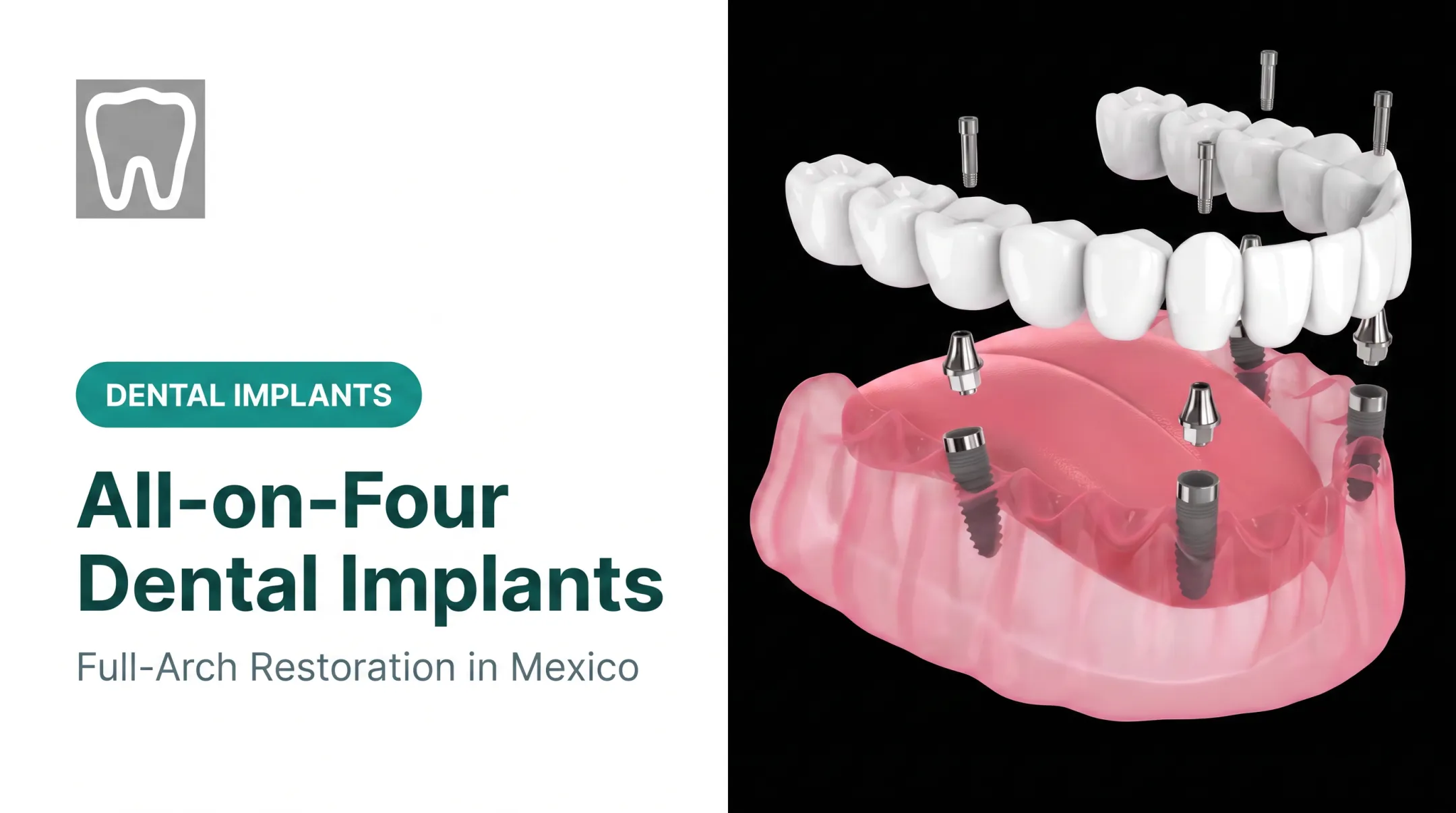
The "4-in-1" name refers to the surgical design: four implants support one full prosthetic arch, not four individual teeth. Two implants go in straight at the front of the jaw.
The other two are angled up to 45 degrees toward the back. That tilt uses denser bone near the front of the jaw and avoids the sinus cavities and nerve pathways further back.
Each implant post is topped with an abutment (a connector piece), and the full set supports a fixed prosthetic bridge.
So how many teeth do you actually get? A typical full-arch prosthesis includes 12 to 14 teeth. At Dr. Moguel's clinic, the standard full-arch design distributes these teeth across three independent bridge segments, which allows for a more precise fit and means one segment can be repaired without disturbing the others.

Why Angled Implants Matter
The posterior tilt is an engineering choice that lets the surgeon use available bone more effectively. That is why All-on-4 often works for patients with moderate bone loss who might otherwise need grafting first.
Some patients need more support than four implants provide. In those cases, the clinic offers:
- All-on-6 — six implants per arch for added stability
- 3-ON-8™ — patented eight-implant protocol with three independent zirconia bridge segments, built for higher bone density and maximum bite strength
Who Is a Good Candidate?
Good candidates typically have:
- Most or all teeth missing, or failing teeth with a poor prognosis
- Dissatisfaction with removable dentures (slipping, discomfort, poor chewing)
- Low to moderate bone density (angled implants can compensate for some bone loss)
- Good general health with no acute infection
- Realistic expectations about healing time
A 3D CT scan during consultation confirms bone volume, density, and the safest implant positions before any commitment is made.
The All-on-4 Treatment Process, Step by Step
All-on-4 is built around two clinic visits—implant surgery with a same-day temporary bridge, then final restoration after healing—with a multi-month osseointegration window in between.
- Consultation and imaging. A 3D Cone Beam CT scan maps bone density and identifies nerve and sinus locations, so the surgeon can plan exact implant angles before surgery.
- Extraction and implant placement. The surgeon removes failing teeth and places all four implants in the same visit, so patients avoid a separate extraction appointment.
- Same-day temporary bridge. A fixed, non-removable temporary prosthesis is attached immediately, so patients leave with functional teeth rather than a gap or a removable denture.
- Osseointegration. Over the next 3 to 6 months, the implants fuse with the jawbone. Patients wear the temporary bridge during this healing window.
- Final prosthesis. Once stability is confirmed, the team takes digital impressions and fabricates the permanent zirconia bridge in-house.
The clinic's in-house CAD/CAM lab produces the final restorations, and implant posts come from FDA-approved manufacturers including Nobel Biocare, Straumann, and MegaGen. In-house fabrication skips outside-lab back-and-forth and shortens turnaround on the final fitting.

How Much Do 4-in-1 Dental Implants Cost, and Is It Worth the Money?
Cost is where All-on-4 in Mexico separates itself sharply from US and Canadian pricing.
| Region | Typical Range | Source |
|---|---|---|
| United States | $11,640 - $27,500 (average ~$15,176) | CareCredit, 2026 |
| Canada | CAD 22,000 - 30,000 per arch | PlacidWay, 2026 |
| Los Algodones, Mexico | $6,000 - $9,000 per arch | Clinic pricing |
That works out to roughly 60-70% savings for patients who travel to Los Algodones, without stepping down on implant materials or surgeon credentials.

What Drives the Final Price
Your quote depends on:
- Implant brand: Nobel Biocare, Straumann, or MegaGen
- Bridge material: zirconia usually costs more than acrylic-hybrid but lasts longer
- Number of implants: four for All-on-4, six for All-on-6, eight for 3-ON-8™
- Extractions and imaging: whether they are bundled into the treatment plan
Is It Actually Worth It?
Compare the alternative: replacing individual teeth one at a time, or repeatedly relining and replacing dentures every few years. A fixed full-arch solution avoids those recurring costs and restores full chewing function.
Dr. Moguel's lifetime warranty on implant hardware also protects the investment long-term.
The clinic also removes common friction points for cross-border patients:
- Free, no-obligation consultations with a transparent cost breakdown
- Insurance documentation support for reimbursement claims
- Hotel coordination in Yuma, Arizona, and shuttle help from the Andrade crossing (about a three-minute walk from the clinic)
How Painful Is the Procedure and What Is Recovery Like?
Surgery itself shouldn't hurt. Dr. Moguel offers local anesthesia, oral conscious sedation, or IV conscious sedation, matched to each patient's anxiety level and the extent of surgery. During IV sedation, a board-certified anesthesiologist monitors heart rate, oxygen levels, and blood pressure throughout.
Post-op discomfort is manageable with prescribed care. Expect:
- Swelling and mild bruising for the first several days
- Some soreness at implant sites, controlled with prescribed pain medication
- Minor bleeding, which typically resolves within 24-48 hours
A 2020 clinical study on postoperative discomfort found that adding more implants influenced swelling more than pain. The standard four-implant protocol therefore tends to be easier on patients than more extensive procedures.
Recovery Timeline
- First 48 hours: Soft-liquid diet only (blended soups, smoothies, yogurt); no straws
- Next 2–3 weeks: Transition to soft solid foods, chewing away from surgical sites
- 3 to 6 months: Continued soft-food caution while osseointegration completes
- Follow-up visits: One at placement, another 3 to 6 months later for the final prosthesis
Success Rate, Longevity, and Living With All-on-4
Long-term data on All-on-4 is encouraging. A 10-year mandibular cohort study reported:
- Patient-related success: 93.8%
- Implant-related success: 94.8%
- Prosthesis survival: 99.2% Dr. Moguel's own clinical record shows a 98% or higher success rate across more than 17,000 implants placed.

What Affects Long-Term Success
- Proper osseointegration (bone bonding to the implant) during the initial healing window
- Consistent oral hygiene and professional cleanings
- Avoiding smoking, which lowers implant survival rates
- Following through on scheduled follow-up visits
Does Food Get Stuck Under the Prosthesis?
It can, since the bridge sits slightly above the gumline like natural teeth do. The fix is a proper cleaning routine:
- Brush twice daily with a soft-bristled toothbrush
- Use a water flosser (Waterpik) or superfloss to clean underneath the bridge
- Attend regular professional cleanings
How Long Do Implants Actually Last?
The titanium posts are built to last decades, potentially a lifetime, with proper maintenance. The prosthetic bridge itself may need adjustment or replacement over time. Dr. Moguel backs implants with a lifetime warranty on the hardware, while crowns and bridges carry a five-year warranty, provided patients maintain routine cleanings.
Frequently Asked Questions
How much do 4-in-1 dental implants cost?
Full-mouth All-on-4 treatment in Mexico typically runs $6,000-$9,000, compared to $20,000-$30,000 in the US. That's roughly 60-70% in savings for comparable materials and standards.
What is the success rate of 4-in-1 dental implants?
Published research shows implant-related success around 94.8% at 10 years, with prosthesis survival near 99.2%. Success depends on hygiene, healing, and avoiding smoking.
How painful are 4-in-1 dental implants?
Your dentist uses local anesthesia or sedation, so you should feel no pain during the procedure. Expect manageable swelling and soreness for a few days afterward, controlled with medication.
How many teeth do you get with 4-in-1 dental implants?
A typical full-arch prosthesis includes 12 to 14 teeth, all supported by four strategically placed implants per arch.
Does food get stuck under 4-in-1 dental implants?
It can happen occasionally, but daily brushing, water flossing under the bridge, and regular professional cleanings prevent buildup and keep the area healthy.
How long do 4-in-1 dental implants last?
The implant posts can last decades or a lifetime with proper care. The prosthetic bridge may need periodic adjustment, typically covered under a five-year warranty.