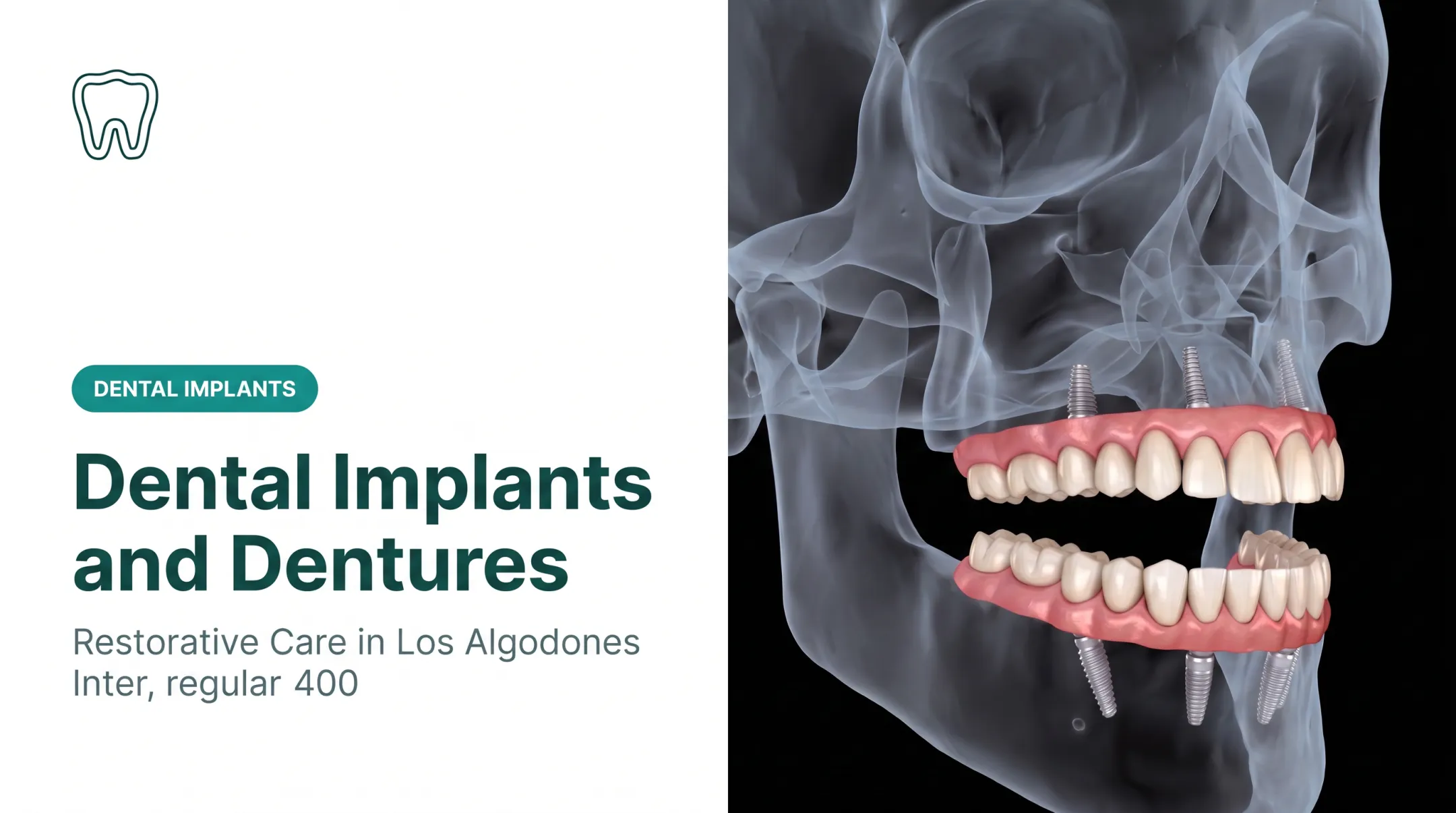

Implant-supported dentures solve this by anchoring your prosthetic to titanium posts fused directly into your jawbone. No slipping. No adhesive paste. No relining every few years.
There's also a growing trend worth mentioning: more US and Canadian patients are crossing the border to Los Algodones, Mexico for this exact treatment, drawn by significant savings without a drop in clinical quality.
This guide covers what implant dentures actually are, the types available, realistic costs, who qualifies, and what treatment looks like from consultation to final fitting.
Key Takeaways
- Implant dentures lock to titanium posts for greater stability and chewing power than gum-supported dentures
- Choose fixed permanent bridges or removable snap-in overdentures based on cost, upkeep, and lifestyle
- Most arches use 2–6 implants via All-on-4, All-on-6, or the patented 3-ON-8™ protocol
- Treatment in Los Algodones, Mexico can cost roughly 60-70% less than comparable US care
- Proper diagnostics and a board-certified specialist are non-negotiable for long-term success
What Are Dental Implant Dentures?
Implant dentures are prosthetic teeth secured to titanium implants surgically placed in your jawbone, rather than resting loosely on your gums like traditional dentures.
Once placed, the implants fuse with surrounding bone through osseointegration: a direct biological bond between living bone and the implant surface, as described in a PMC review on osseointegration.
That bond has clinical consequences. Traditional dentures rely on suction and gum pressure, which do nothing to stop the bone loss that follows tooth loss.
Implants deliver ongoing functional stimulation to the jawbone, which helps limit bone loss over time compared with conventional dentures.
At Dental Implants in Mexico, full-arch treatment typically uses FDA-approved systems such as Nobel Biocare, Straumann, and MegaGen, built from grade-5 titanium or metal-free zirconia.
Fixed vs. Removable Implant Dentures
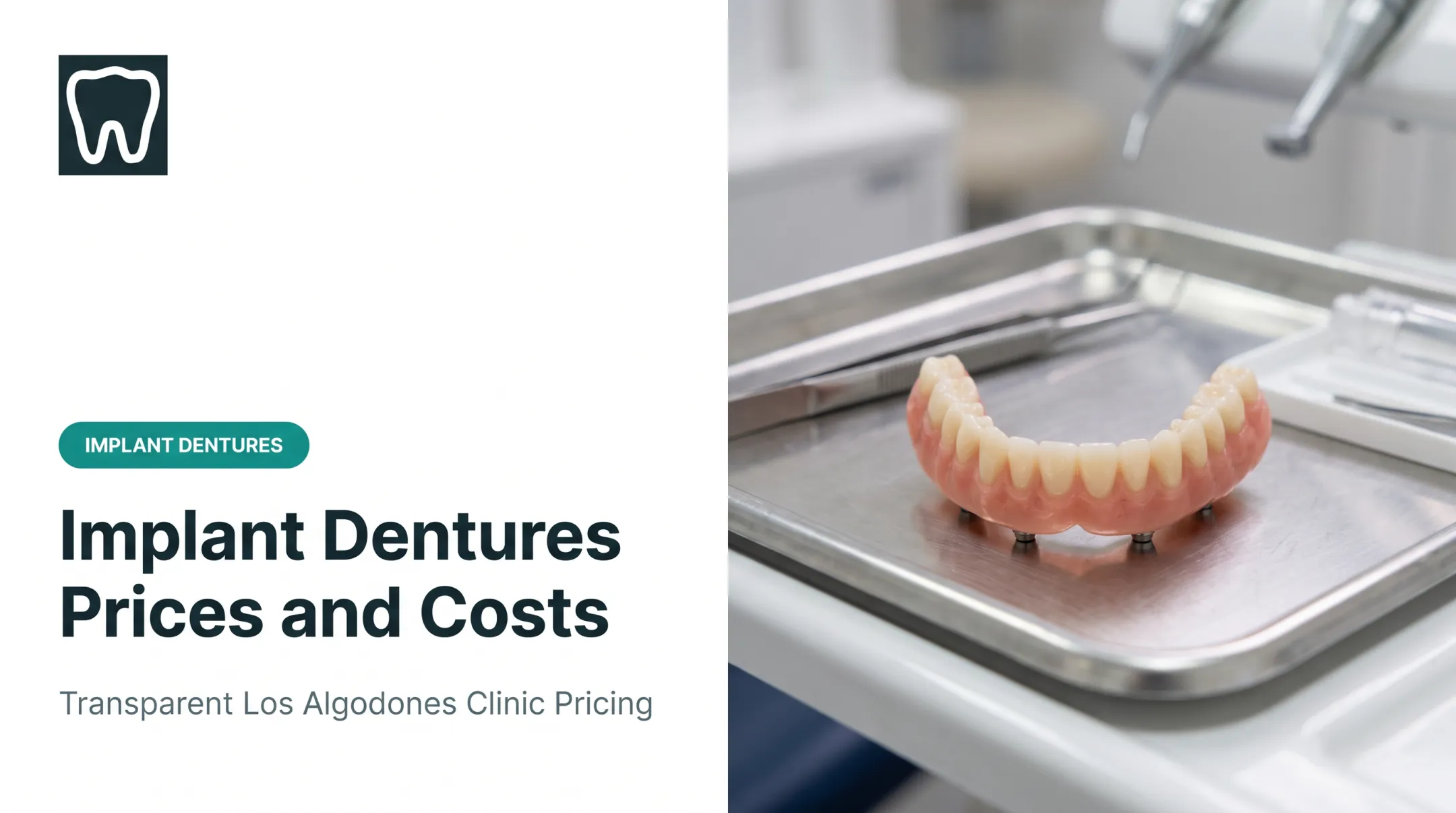
Fixed (permanent) implant bridges attach directly to implants and can only be removed by your dentist. They deliver the highest stability and feel closest to natural teeth. Cleaning requires a water flosser or superfloss underneath the bridge, plus regular checkups, since the bridge itself never comes out.
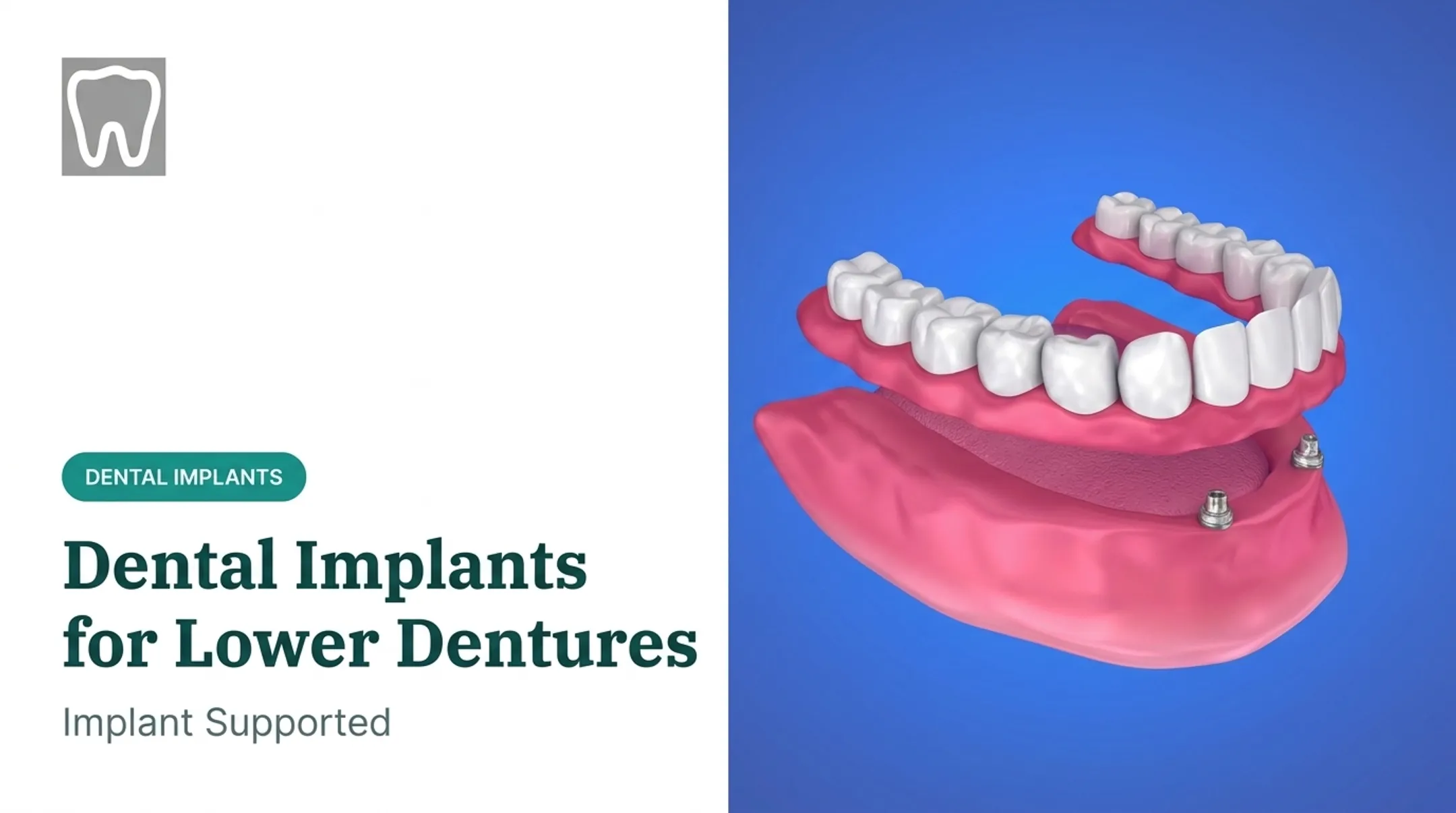
Removable overdentures snap onto two or more implants using locator connectors. Patients take them out nightly for cleaning. Clinics often recommend that habit because it lets gum tissue rest and reduces stress on the implants from nighttime grinding.
Both options beat traditional dentures on stability, but they serve different lifestyles and budgets.
Popular Implant Denture Protocols
Full-arch treatment usually falls into one of three categories:
- All-on-4: Four implants per arch, two straight and two angled posteriors, designed for patients with lower bone volume
- All-on-6: Six implants across the arch, generally recommended for patients with moderate to sufficient bone density seeking added stability
- 3-ON-8™: A patented protocol using eight implants per arch to support three independent bridges instead of one continuous span
The 3-ON-8™ design, developed by Dr. José Moguel, distributes chewing force across more support points. If one segment ever needs repair, dentists can address it without disturbing the entire restoration.

Every treatment plan starts with 3D Cone Beam CT imaging, which maps bone density in three dimensions and identifies nerve pathways before any implant count is finalized.
Implant Dentures vs. Traditional Dentures: Why Patients Switch
The functional difference is significant. One comparative study on chewing efficiency found a 76.34% decrease in average particle size with implant-retained overdentures versus conventional dentures, a clear sign of better chewing performance.
A systematic review also found that 28% of conventional-denture wearers reported impaired chewing function. Implant overdentures markedly reduce that problem.
Maintenance and long-term durability tell a similar story:
- Traditional dentures often need relining every 4-5 years and nightly removal for cleaning
- Implant-supported prostheses show high survival rates, with one systematic review reporting 99.0% implant survival at 36 months
- Implant dentures eliminate the need for messy adhesives entirely
Patients also report less gum irritation and far fewer embarrassing slips while eating or speaking, since the prosthesis is locked to bone rather than floating on soft tissue.

How Many Implants Do You Need, and Are You a Candidate?
Implant count depends heavily on which arch you're treating and which restoration type you want.
Typical implant counts:
| Arch | Removable Overdenture | Fixed Bridge |
|---|---|---|
| Lower (mandible) | 2 implants (consensus minimum) | 4-6 implants |
| Upper (maxilla) | 4+ implants (softer bone needs more support) | 4-6 implants |
Upper arches need more implants because maxillary bone is softer and less dense than the lower jaw, so they require more anchor points for long-term stability.
Candidacy factors clinics assess:
- Adequate jawbone volume (confirmed via 3D CBCT scan)
- Healthy gums and no active periodontal disease
- General health sufficient to support minor oral surgery
- Bone density sufficient for primary implant stability
If you don't initially qualify, bone grafting or a sinus lift can often build the foundation you need. Grafts integrate over 3-6 months, while sinus lifts may take 6-9 months to mature fully.
Already wearing dentures? You're likely still a candidate. Clinics evaluate your current denture's fit and condition. If it's in excellent shape, they can sometimes retrofit it with locator housings. If not, they fabricate a custom overdenture instead.
The Cost of Implant Dentures: US Prices vs. Mexico
US pricing for full-arch implant treatment is steep. ClearChoice's published 2026 cost guide lists $14,000-$36,000 per arch for full-mouth implant treatment, with the range driven by implant number, materials, and complexity.
In Los Algodones, Mexico, comparable treatment costs significantly less:
- All-on-4: $8,000-$12,000 per arch
- All-on-6: $12,000-$16,000 per arch
- 3-ON-8™: $16,000-$20,000
- Removable snap-on dentures: $3,500-$5,500 (using 2-4 implants)
Patients traveling to Mexico for this care can save 60-70% compared to typical US pricing for equivalent treatment.

What drives your final quote:
- Number of implants required
- Fixed versus removable prosthesis type
- Bone grafting or sinus lift needs
- Implant brand and materials (titanium versus zirconia)
Insurance rarely covers implants in full. Clinics don't bill US insurers directly.
Reputable clinics provide itemized receipts with standard ADA CDT codes, pre- and post-op X-rays, and treatment notes. That documentation is what you need to file for out-of-network reimbursement or appeal a denied claim.
Free consultations, often conducted by video call, let you get a customized estimate before committing to travel.
What to Expect: The Implant Denture Treatment Process
- Consultation and diagnostics — Digital X-rays, a 3D CBCT scan, and an oral health assessment build your customized treatment plan. This can often be done remotely before you ever cross the border.
- Implant placement surgery — Fixed full-arch options may use a same-day "Teeth in a Day" protocol. Your dentist extracts failing teeth, places the implants, and attaches a fixed temporary bridge in the same visit, usually under local anesthesia.
- Healing and osseointegration — This typically takes 3-6 months, though snap-on overdentures often need 3-4 months. You wear a temporary bridge or modified existing denture throughout.
- Final denture attachment — Once integration is confirmed, your dentist fits locator attachments or the permanent zirconia/porcelain bridge and adjusts your bite.

For cross-border patients, logistics matter almost as much as the dental work. Clinics near the Andrade, California border crossing typically coordinate:
- Hotel recommendations in Yuma, Arizona—Hilton Garden Inn, Hampton Inn, Marriott TownePlace Suites, and Radisson are common picks about 15 minutes away
- Local shuttle assistance to and from the clinic
- Bilingual coordinators to manage scheduling around your travel dates
Frequently Asked Questions
How much do dental implants for dentures cost?
US full-arch treatment typically runs $14,000–$36,000 per arch. In Mexico, comparable All-on-4 care often costs $8,000–$12,000—about 60–70% less—depending on implant count and prosthesis type.
What should I know before getting dental implants for dentures?
Bone density evaluation via 3D CBCT imaging is essential before any treatment plan is finalized. Choose a board-certified periodontist, and understand whether a fixed bridge or removable overdenture better fits your lifestyle and budget.
How long do dental implants for dentures last?
Implants themselves show survival rates of 94–99% in long-term studies and can last decades with proper care. Prosthetic components like crowns or bridges typically carry shorter warranties and may need periodic adjustment.
Can I get dental implants if I already have dentures?
Yes. Most current denture wearers can transition after a bone density and gum health evaluation. If your existing denture fits well, it may even be retrofitted rather than replaced entirely.
Is it easier to eat with implants or dentures?
Implant dentures restore far more chewing power than traditional dentures. You can bite and grind food more evenly, so meals feel more stable and comfortable day to day.
How many implants are needed to support a lower denture?
A removable lower overdenture typically needs just 2-4 implants. A fixed full-arch bridge usually requires 4-6, depending on bone quality and the chosen protocol.