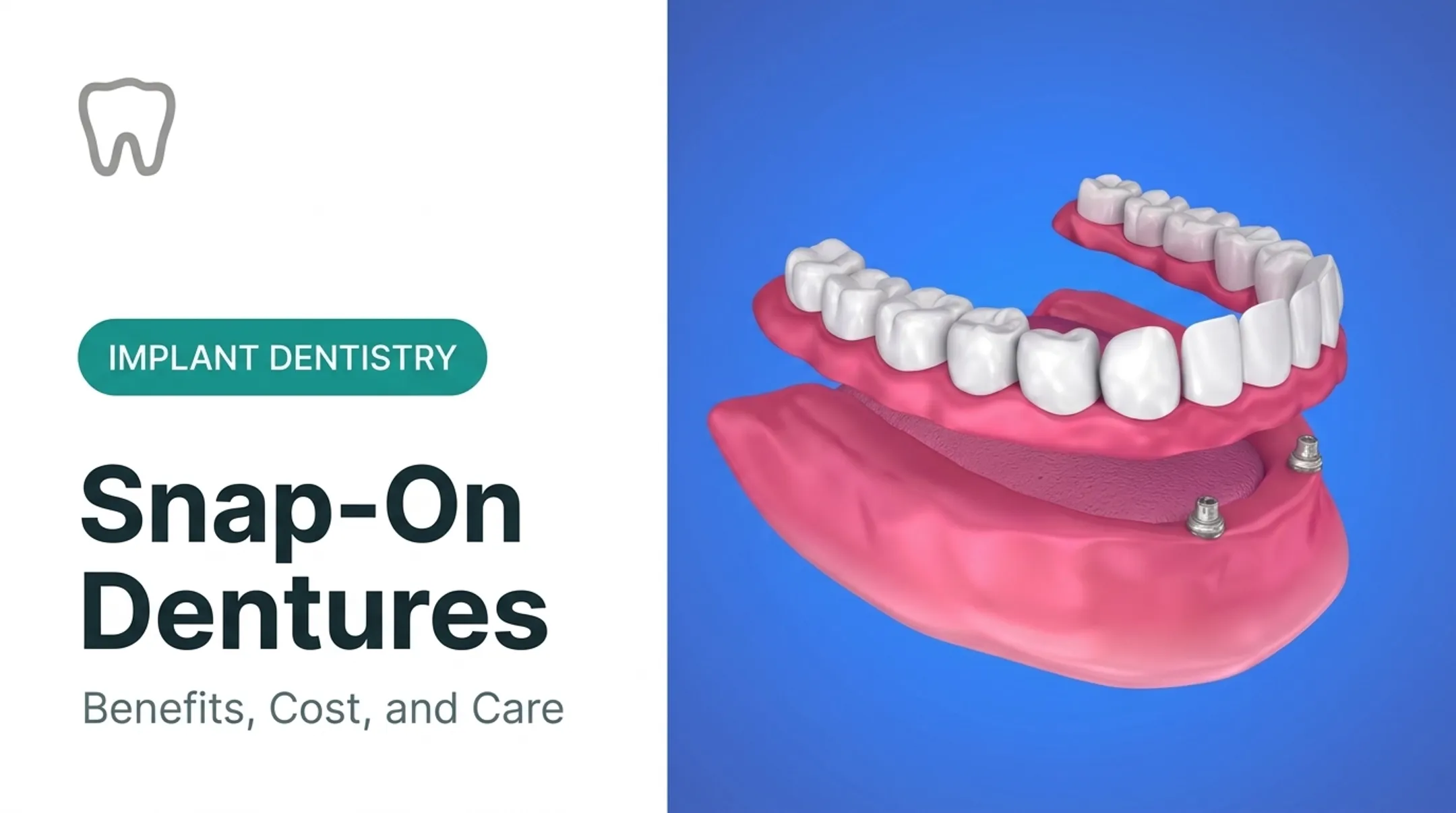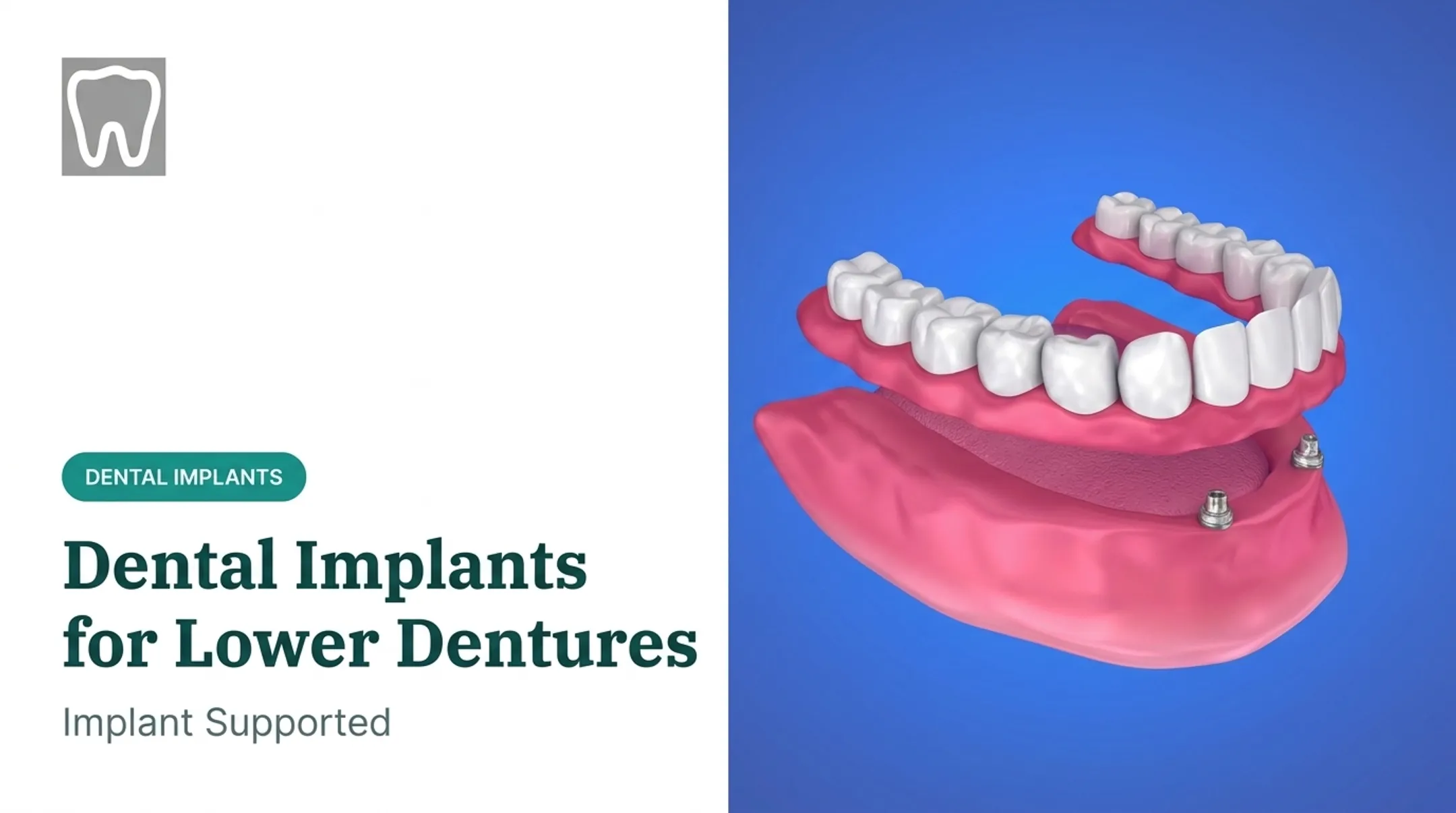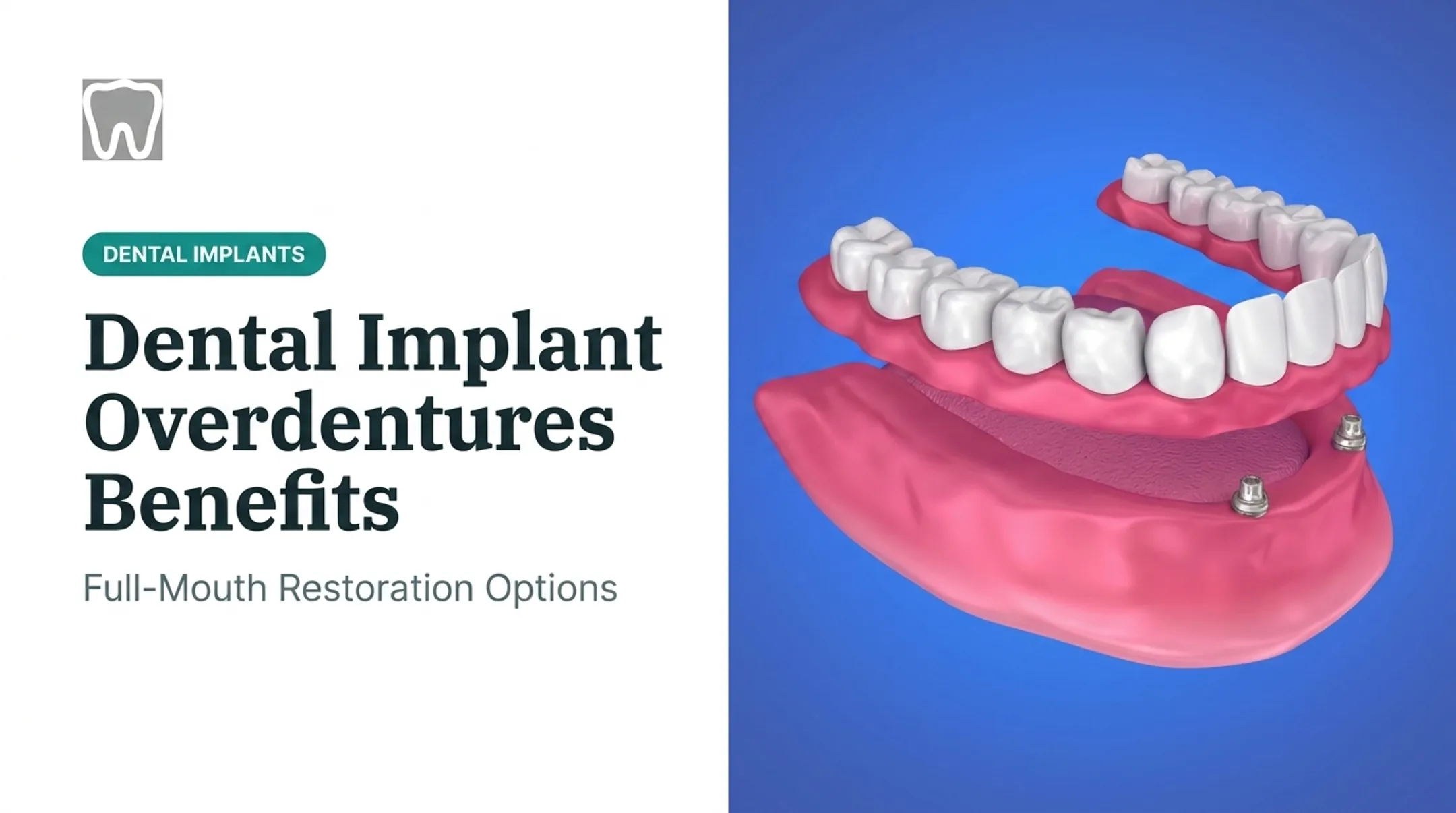

Think of overdentures as the middle ground between a removable traditional denture and a permanently fixed implant bridge. You still take them out to clean, but they snap securely into place rather than floating on your gums.
This guide covers the different types of overdentures, how they compare to conventional and immediate dentures, what the treatment process looks like, and how costs in Mexico stack up against US pricing.
Key Takeaways
- Stable, non-slip fit from ball, LOCATOR, or bar attachments that snap onto implants or natural tooth roots
- Implant-supported designs stimulate the jawbone and help slow the bone resorption common with conventional dentures
- US prices typically range $10,000-$14,000, while Mexico clinics offer comparable treatment for $3,500-$5,500 (about 60-70% less)
- Candidacy depends on jawbone density and gum health, confirmed through consultation and 3D imaging
What Are Overdentures?
An overdenture is a removable prosthetic that rests on and is secured by dental implants or remaining natural tooth roots, not just suction or adhesive like a conventional denture. Conventional dentures sit directly on the gum tissue; overdentures get physical anchor points.
Two main attachment systems make this possible:
- Ball/stud (LOCATOR) attachments: individual connectors screwed onto each implant, matched to sockets in the denture's underside. Usually the more affordable option.
- Bar-retained attachments: implants are joined with a metal bar, and the denture clips onto that bar. More stability, typically higher cost.
Types of Overdentures
Three main categories exist, depending on what's available to anchor to:
- Tooth-supported overdentures: for patients who still have healthy natural teeth or roots that can act as anchors
- Implant-supported overdentures: for significant tooth loss; typically 2–4 implants in the lower jaw and 4–6 in the upper jaw, where bone is softer
- Combination overdentures: use retained teeth and implants together when neither alone is enough

How Overdentures Differ from Dentures and Immediate Dentures
Standard dentures rest entirely on the gums, held by suction or adhesive paste. They're prone to slipping during meals and offer limited chewing force because nothing anchors bite pressure into the bone.
Overdentures close that gap by locking onto implants or remaining teeth. Patients typically notice a clear gain in chewing capacity once the prosthesis is anchored.
Immediate dentures fill a different role. They're made before extraction and placed the same day teeth come out, so you have a temporary prosthesis while gums and bone heal. As tissue changes shape, they usually need relining or replacement.
Overdentures, by contrast, are a longer-term restoration usually fitted after implants have had time to fuse with the bone. Many patients wear an immediate denture during healing, then move to an overdenture once the implants are ready.
| Standard dentures | Immediate dentures | Overdentures | |
|---|---|---|---|
| When they’re used | After healing | Same day as extraction | After implant integration |
| What holds them | Gums only (suction or adhesive) | Gums only | Implants or retained teeth |
| Clinical role | Long-term removable option | Temporary during healing | Longer-term anchored restoration |
| Stability when chewing | Can slip | Shifts as tissue heals | More stable under bite force |

Benefits of Overdentures Over Traditional Dentures
Stability, Function, and Comfort
The most immediate benefit is retention. Overdentures snap onto implants or remaining teeth, so everyday function feels more secure than with conventional dentures. Patients typically notice:
- Stronger hold without messy adhesives
- Less slippage while eating and speaking
- Easier chewing of firmer foods such as apples, nuts, and tougher meats
- Lower gum irritation, because biting force transfers through the implant into bone instead of pressing only on soft tissue Traditional dentures resting directly on the gums can still cause friction sores; implant-anchored overdentures largely sidestep that problem.
Bone Preservation and Facial Structure
Implants act as prosthetic tooth roots, transmitting biting forces into the jawbone. That stimulation helps preserve bone density over time. Evidence is mixed. A five-year mandibular study found ridge-height reduction of just 0.69mm with two-implant overdentures versus 1.63mm with conventional dentures, while other reviews report smaller differences. Implant stimulation can slow bone loss, but it is not a guarantee against resorption. Preserved bone matters cosmetically as well. It helps avoid the sunken, prematurely aged look that follows years of jawbone shrinkage under conventional dentures.
Advanced Options at Dental Implants in Mexico
Some patients want still more stability than a removable overdenture can offer and look at fixed full-arch options instead. At Dental Implants in Mexico, Dr. José Moguel's clinic uses FDA-approved implant systems from Nobel Biocare, Straumann, and MegaGen. For more comprehensive restoration, the patented 3-ON-8™ protocol places eight implants per arch to support three separate zirconia bridges, a fixed step beyond standard overdentures when maximum stability is the goal.
The Overdenture Treatment Process, Step by Step
- Initial consultation and imaging: A 3D Cone Beam CT scan evaluates bone density in three dimensions so your dentist can plan exact implant length, width, and positioning.
- Implant placement surgery: Your surgeon places two to four titanium implants in the jawbone under local anesthesia or sedation, based on your comfort and case complexity.
- Osseointegration healing: This bone-fusion process typically takes 3-6 months, though gum healing around the surgical site is usually complete within about a week. You can often wear a modified interim denture during this phase.
- Final fitting and education: Once healed, your dentist connects the attachments and fabricates the custom overdenture to snap securely onto the implants. Your care team walks you through daily cleaning routines.

Dental Implants in Mexico offers free, no-obligation consultations (virtual or in-person) with a customized treatment plan and transparent cost estimate before any commitment.
Overdenture Costs: What to Expect and How to Save
Cost is often the deciding factor for patients weighing their options, and the gap between US and Mexico pricing is substantial.
| Location | Typical Cost Range | Savings |
|---|---|---|
| United States | $10,000 - $14,000 | — |
| Mexico | $3,500 - $5,500 | Up to 65% |
| A separate comparison puts US pricing at $12,000 versus $4,500 in Mexico, a 62% savings. | ||
| WebMD's 2025 review confirms US snap-in denture costs typically run $3,000-$12,000 per arch before insurance. Clinic location, implant brand, and additional procedures all affect the final number. | ||
| What drives final pricing: |
- Number of implants placed (2-4 for mandibular, up to 6 for maxillary)
- Attachment system chosen: bar-retained generally costs more than ball/stud
- Implant brand and material (titanium vs. zirconia)
- Need for bone grafting, averaging $2,500 in the US versus around $600 in Mexico
- Tooth extractions needed before implant placement Some US insurance plans may reimburse out-of-country treatment. Dental Implants in Mexico provides clinical documentation, itemized receipts, and standard ADA procedure codes so patients can file claims. The clinic also coordinates travel logistics, including hotel arrangements in nearby Yuma, Arizona, for cross-border patients.

Candidacy, Care, and Maintenance
Not everyone is an immediate candidate. Key factors include:
- Adequate jawbone density — confirmed via 3D CBCT imaging; grafting may be needed first if bone is insufficient
- Healthy gums — treat active gum disease before placement to lower peri-implantitis and failure risk
- Overall medical fitness for minor surgery, evaluated during consultation
Once you qualify, daily care is simple and essential:
- Remove the overdenture nightly for cleaning
- Clean attachment components and the implants or teeth underneath with a soft brush
- Rinse and inspect for wear or looseness
Attachment components (LOCATOR or ball inserts) absorb daily friction and usually need replacement every one to two years. With proper care, expect:
- Denture base: five to seven years
- Implants: decades when well maintained
Frequently Asked Questions
How long do overdentures last?
The denture base typically lasts 5-7 years before relining or replacement is needed. Attachments wear faster and usually need swapping every 1-2 years. The implants themselves can last decades with good maintenance.
How do overdentures differ from dentures?
Overdentures anchor to implants or teeth for stability and can help preserve bone. Traditional dentures rest entirely on the gums and rely on suction or adhesives, making them more prone to slipping.
How do overdentures differ from immediate dentures?
Immediate dentures are temporary, fitted the same day teeth are extracted. Overdentures are a longer-term, anchored restoration typically fitted months later, after implants heal.
Are overdentures removable?
Yes. Unlike a fixed full-arch implant bridge, overdentures are designed to be removed daily for cleaning, then snapped back into place.
Who is a good candidate for overdentures?
Good candidates have adequate jawbone density, healthy gums, and no untreated infections. A consultation with 3D imaging confirms suitability and identifies whether grafting is needed first.
How much can patients save by getting overdentures in Mexico?
Patients typically save 60-70% compared to US pricing, often the difference between $12,000 and $4,500 for comparable treatment. A free consultation with Dental Implants in Mexico can provide a personalized quote.