
Missing teeth are more common than people realize. Among US adults ages 20-64, the average person has just 25.5 remaining permanent teeth, and complete tooth loss affects 11% of adults 65-74 and 20% of adults 75 and older. Tooth loss also carries a real psychological weight, with research linking it to reduced quality of life.
Patients researching solutions often compare costs across borders, including options like Dental Implants in Mexico. This guide covers the main types of dental prosthetics, what they cost, how to care for them, and how to pick the right one for your situation.
Key Takeaways
- Match the prosthetic to the job: implants, crowns, bridges, dentures, and veneers each fit different needs
- Mexico clinics deliver 60-70% savings versus US pricing for the same procedures
- Consistent care plus biannual checkups extends the lifespan of any prosthetic
- A board-certified specialist matches the right option to your bone health and lifestyle
What Is a Dental Prosthesis?
A dental prosthesis is any artificial replacement for a missing tooth or oral tissue. Unlike a filling or bonding, which repairs an existing natural tooth, a prosthesis is a manufactured structure that stands in for what's gone. Crowns, bridges, implants, and dentures are the most common examples.
Prosthetics fall into two broad categories:
- Fixed prosthetics — permanently attached, removable only by a dentist (crowns, bridges, most implant restorations)
- Removable prosthetics — the patient takes these out for cleaning (full and partial dentures, snap-on overdentures)
General dentists handle many routine crowns and bridges. Complex cases, especially full-arch or full-mouth work, often call for a specialist. Board-certified periodontists like Dr. José Moguel bring surgical training and implant expertise that general practice doesn't always cover.
Types of Dental Prosthetics
Dental Implants
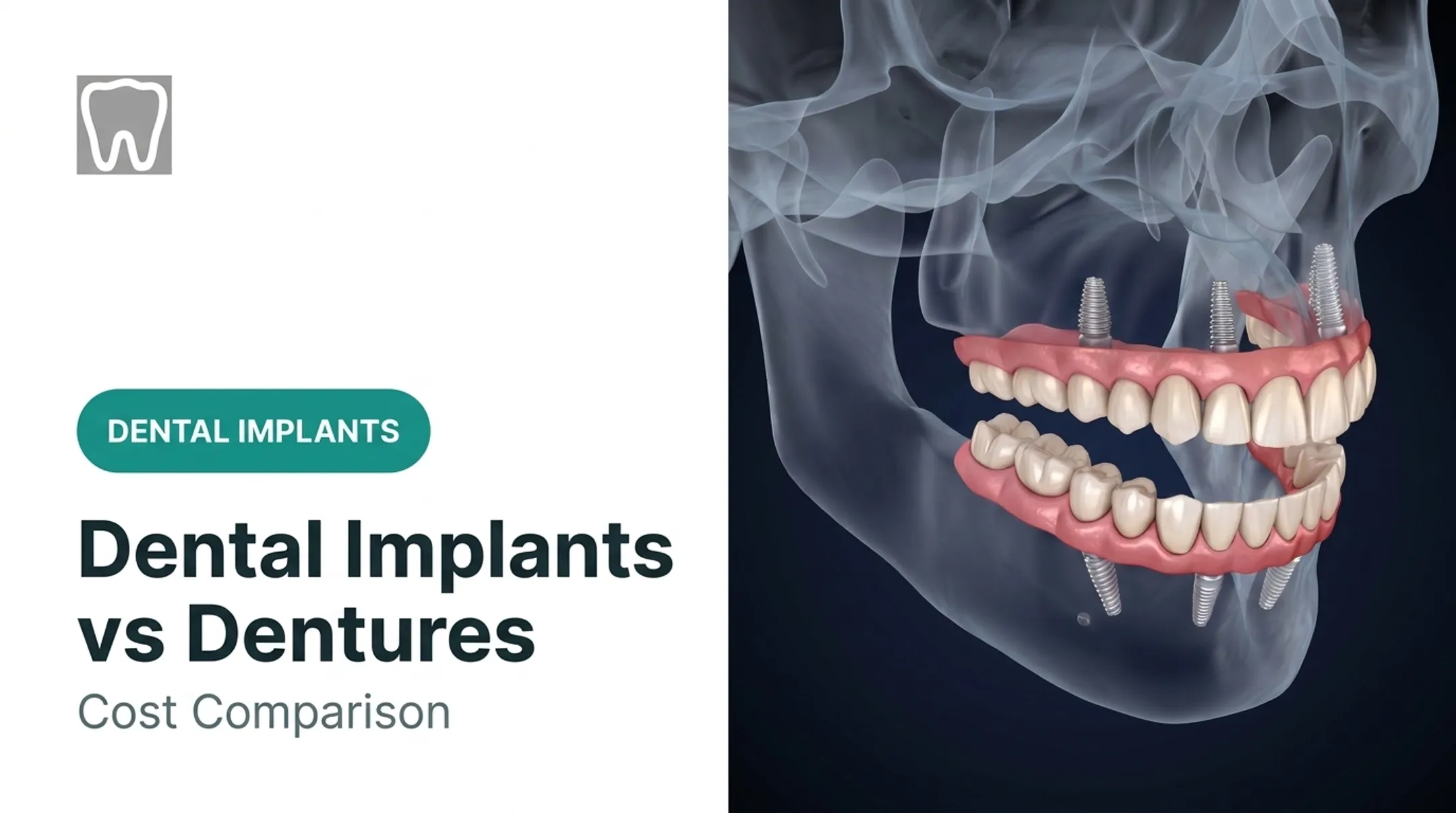
An implant has three parts: a titanium post placed in the jawbone, an abutment connector, and a visible crown on top. For patients missing several or all teeth, advanced protocols scale this concept up:
- All-on-4: four implants support a full fixed arch
- All-on-6: six implants for added stability on softer bone
- 3-ON-8™: a patented protocol using eight implants and three independent zirconia bridges per arch, developed by Dr. José Moguel

Crowns, Bridges, and Dentures
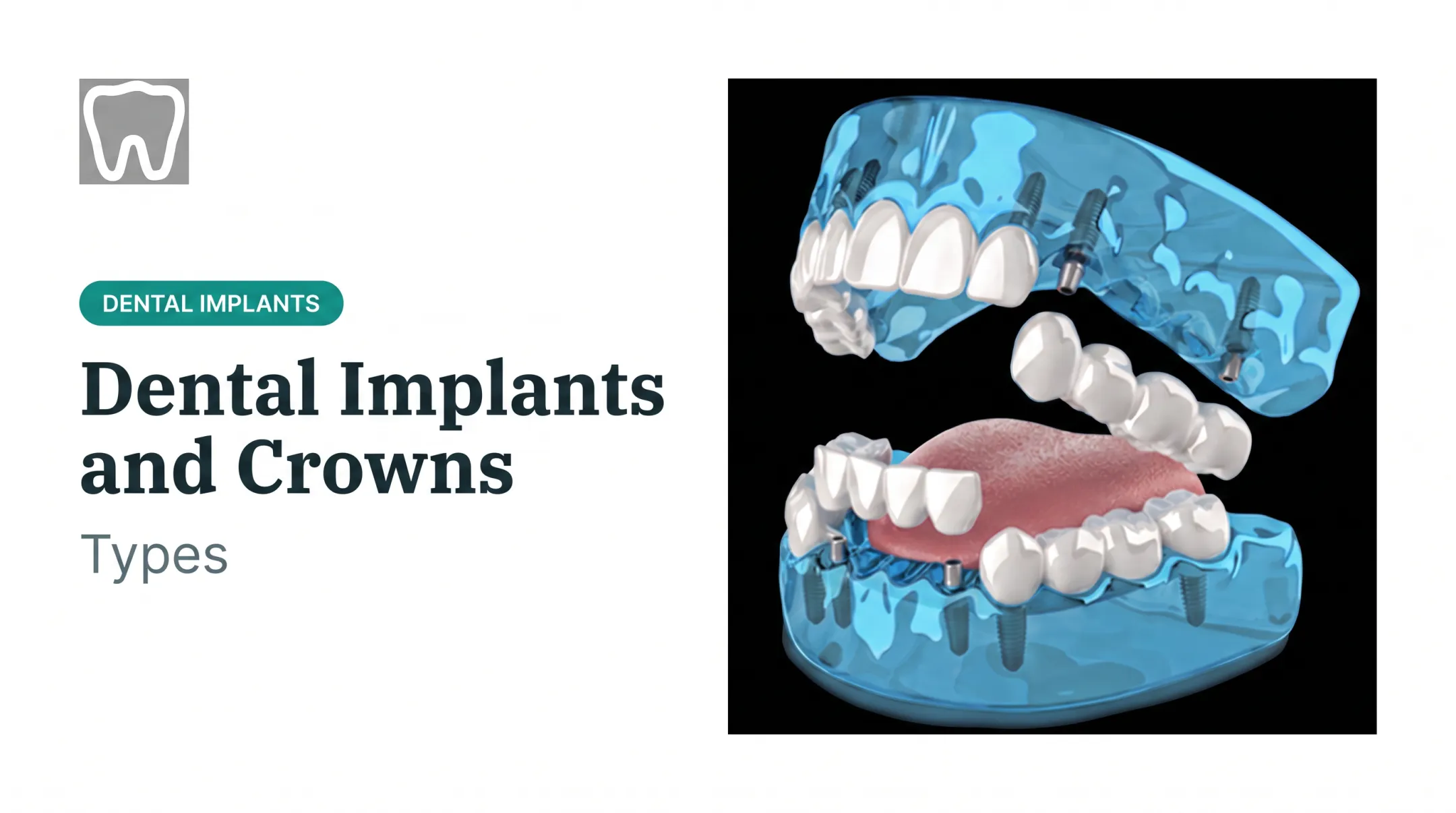
Crowns cap a damaged or weakened tooth, or top an implant. Studies put porcelain-fused-to-metal crowns at roughly 99.5% five-year survival; all-ceramic versions land closer to 92%.
Bridges span a gap using neighboring teeth (traditional) or an implant (implant-supported) as anchors. Implant-supported bridges fit when there aren't enough healthy teeth nearby to carry a traditional bridge.
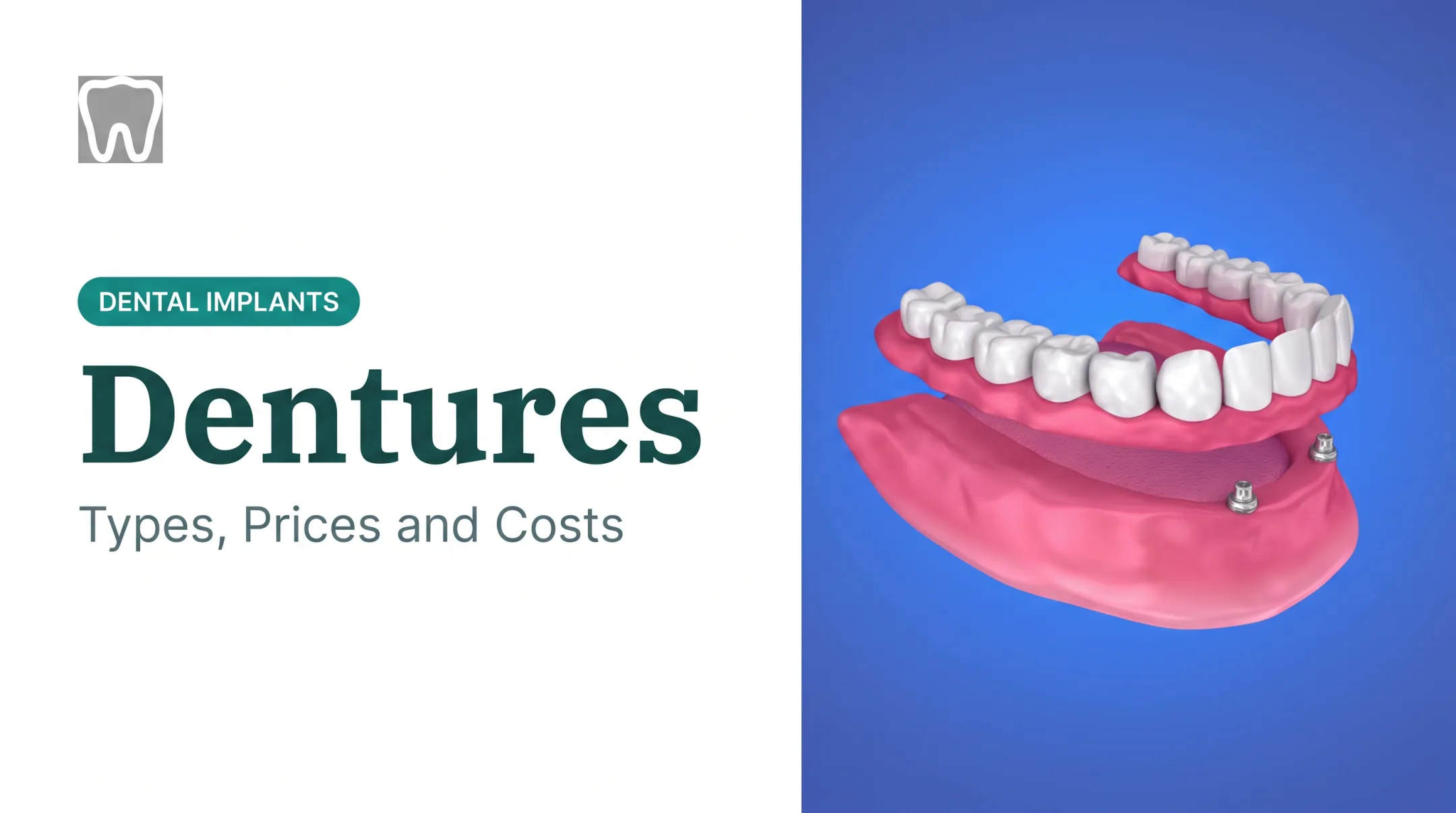
Dentures come in full (entire arch) and partial (a few gaps) versions. Traditional dentures rest on the gums; implant-supported "snap-on" dentures anchor to 2–4 implants and can increase chewing capacity by up to 300% versus traditional dentures.
Veneers
Veneers are thin shells bonded to the front of a tooth, used purely for cosmetic fixes like stains, chips, or small gaps. They don't replace missing teeth.
Choosing the right type often comes down to how much tooth structure is missing. A single missing tooth typically calls for one implant; extensive loss across an arch points toward All-on-4, All-on-6, or full-mouth protocols instead.
How Much Do Dental Prosthetics Cost?
US pricing varies significantly by prosthetic type:
| Prosthetic | Typical US Cost |
|---|---|
| Single-tooth implant | $3,100 - $5,800 |
| Crown | $915 - $3,254 |
| Traditional bridge | $2,000 - $5,000 |
| Implant-supported bridge | $4,000 - $16,000 |
| Full denture | $1,520 - $3,648 |
| Veneer | $1,020 - $2,506 |

Final cost depends on a few variables:
- Materials (zirconia, porcelain, or metal)
- How many teeth need treatment
- The specialist’s experience
- Technology such as 3D Cone Beam CT imaging or in-house CAD/CAM labs
Mexico pricing is often 60–70% lower. At Dental Implants in Mexico, patients typically pay:
- Single-tooth implants around $1,200 instead of $4,500+
- All-on-4 at $8,000-$12,000 per arch versus $20,000-$35,000 in the US
- Full-mouth reconstruction from $12,000 instead of $35,000-$80,000

The clinic publishes transparent “from” pricing and offers free consultations, so patients can compare real numbers before they travel. Staff also help compile insurance claim documentation and itemized receipts with ADA CDT codes, which some US plans reimburse for out-of-country care.
How Much Do Prosthetic Teeth Cost?
In the US, prosthetic teeth typically run from about $1,000 for a single crown to $80,000 for full-mouth reconstruction, depending on type and materials. Comparable care in Mexico is often 60–70% less.
Caring for and Maintaining Your Dental Prosthetics
Day-to-day care has a direct effect on how long your prosthetics last:
- Fixed implants and bridges: Brush twice daily like natural teeth, and floss underneath with a Waterpik or super floss
- Removable dentures and overdentures: Remove nightly, rinse, brush with a non-abrasive cleanser, then soak in denture cleaning tablets
- Removable appliances — do not use: Harsh detergents, bleach, or standard toothpaste, which can scratch or warp the material
Regular checkups catch problems early. A 2019 systematic review found that supportive maintenance visits improve long-term implant survival and reduce peri-implant complications. That is why reputable clinics tie warranties to ongoing professional care.
At Dental Implants in Mexico, implant hardware carries a lifetime warranty, while prosthetic crowns, bridges, and zirconia arches carry a 5-year warranty — both contingent on keeping up with basic professional cleanings.
Choosing the Right Prosthetic and Getting Treatment
A typical treatment journey looks like this:
- Exam and imaging — clinical assessment plus X-rays or 3D Cone Beam CT scans when needed
- Digital treatment planning — computer-guided mapping of implant placement based on bone density and anatomy
- Procedure — surgical placement, sometimes same-day for certain protocols
- Follow-up care — fitting adjustments and healing checks

Those same assessments decide which prosthetic fits. Bone health, remaining teeth, and lifestyle drive the match:
- Moderate bone loss often suits All-on-4
- Higher stability needs may point to All-on-6 or the 3-ON-8™ protocol
- Remaining teeth and daily habits further refine the plan
A specialist consultation makes that match clearer. Dr. José Moguel, a board-certified periodontist with over 38 years of experience and more than 17,000 implants placed, offers free virtual consultations.
Patients can send X-rays and receive a personalized treatment plan and cost estimate before committing to travel.
Frequently Asked Questions
Can I eat normally with a dental prosthesis?
Most patients adjust within a few weeks and return to normal eating habits. Implants tend to restore chewing function closest to natural teeth, while traditional dentures may require more adjustment time.
How long does a dental prosthesis last?
Lifespan depends on type: crowns and bridges typically last 5-15 years, dentures around 5-10 years, and implants can last decades with proper care. Regular cleanings and checkups extend all of these.
What is a dental prosthesis?
A dental prosthesis is an artificial replacement for a missing tooth or oral tissue, such as an implant, crown, bridge, or denture. It differs from a filling, which repairs rather than replaces a tooth.
How much do prosthetic teeth cost?
Costs range from roughly $1,000 for a single crown to tens of thousands for full-mouth reconstruction in the US. Mexico clinics often offer the same procedures at 60-70% less.
What's the difference between a dental implant and a denture?
An implant is a surgically placed, permanent replacement anchored in the jawbone. A denture is a removable appliance that rests on the gums or snaps onto implants, requiring no surgery for traditional versions.
Is traveling to Mexico for dental prosthetics safe and reliable?
Yes—if you choose a clinic with verified ADA/ADM board certification, clear credentials, and a documented track record. The CDC also advises confirming qualifications and a complication plan before you travel for care.