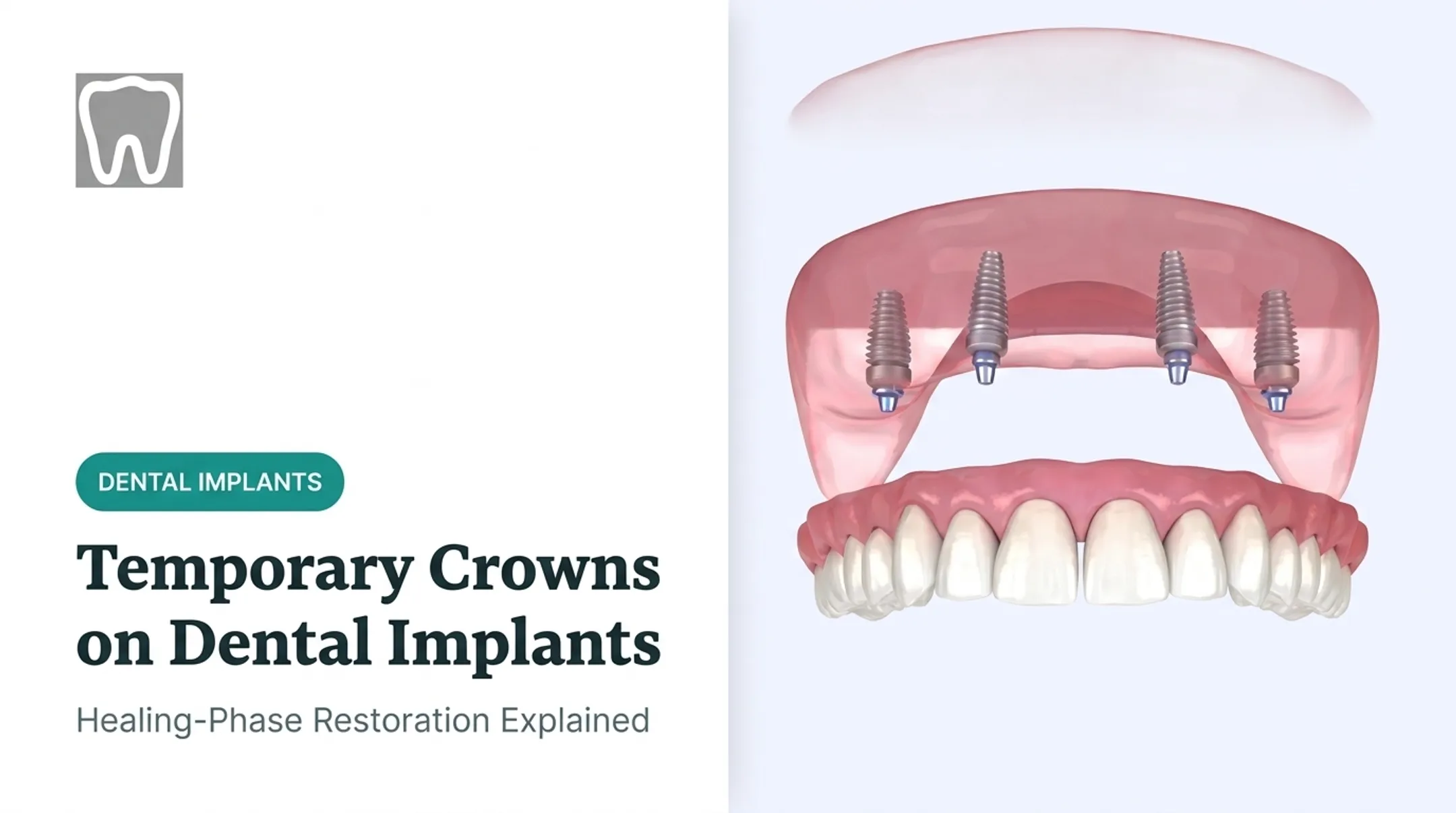

Here's the reassuring part: a temporary tooth solution is almost always planned from day one. You're rarely, if ever, left with an empty space during healing.
This guide covers the types of temporary teeth available, how long you'll wear them, eating and care tips, and what happens once healing wraps up. We spoke with insights from Dr. José Moguel, a board-certified periodontist at Dental Implants in Mexico, to ground this in real clinical practice.
Key Takeaways
- Most implant patients get a temporary tooth right away and never leave with a visible gap
- Temporary options range from removable flippers to fixed same-day crowns, based on bone stability
- Healing takes 3 to 6 months and calls for a soft diet plus gentle care
- Same-day fixed temporaries with clear pricing are available at Dr. Moguel’s Los Algodones clinic
Why Temporary Teeth Matter During Implant Healing
Your implant needs time to fuse with your jawbone, a process called osseointegration. Published loading protocols from the International Team for Implantology define this healing window as 3 to 6 months under conventional loading. A broader review puts the undisturbed healing range at 3 to 8 months. Loading a permanent crown too soon risks implant failure.
Temporary teeth solve three practical problems while that biology plays out:
- Appearance and confidence: no visible gap when you smile or talk
- Function: support for speech and chewing during recovery
- Alignment: neighboring teeth stay put instead of drifting into the empty space
A provisional crown on a single-tooth implant holds neighboring teeth in place while the site heals. Left open, that gap invites shifting, bite changes, and uneven wear.
There's a design benefit too. A well-shaped temporary crown guides your gum tissue as it heals, so the final restoration emerges looking natural rather than forced into place afterward.

Types of Temporary Teeth While Waiting for Implants
The right temporary depends on your case: how many teeth are missing, where they're located, and your bone stability.
Removable Options
- Flipper (interim partial denture): lightweight acrylic, affordable, and easy to remove for cleaning. Best for short-term single-tooth gaps.
- Essix retainer: a clear, low-profile alternative to a flipper, often preferred for discreet daytime wear.
Fixed Options
- Temporary bridge: bonded to neighboring teeth, more stable than removable appliances, and commonly used up front where appearance matters most.
- Fixed temporary crown (immediate loading): placed the same day when the implant has strong initial stability; feels closest to a natural tooth.
- Implant-retained overdenture: for full-arch cases, snaps onto implants for far more stability than a traditional denture.
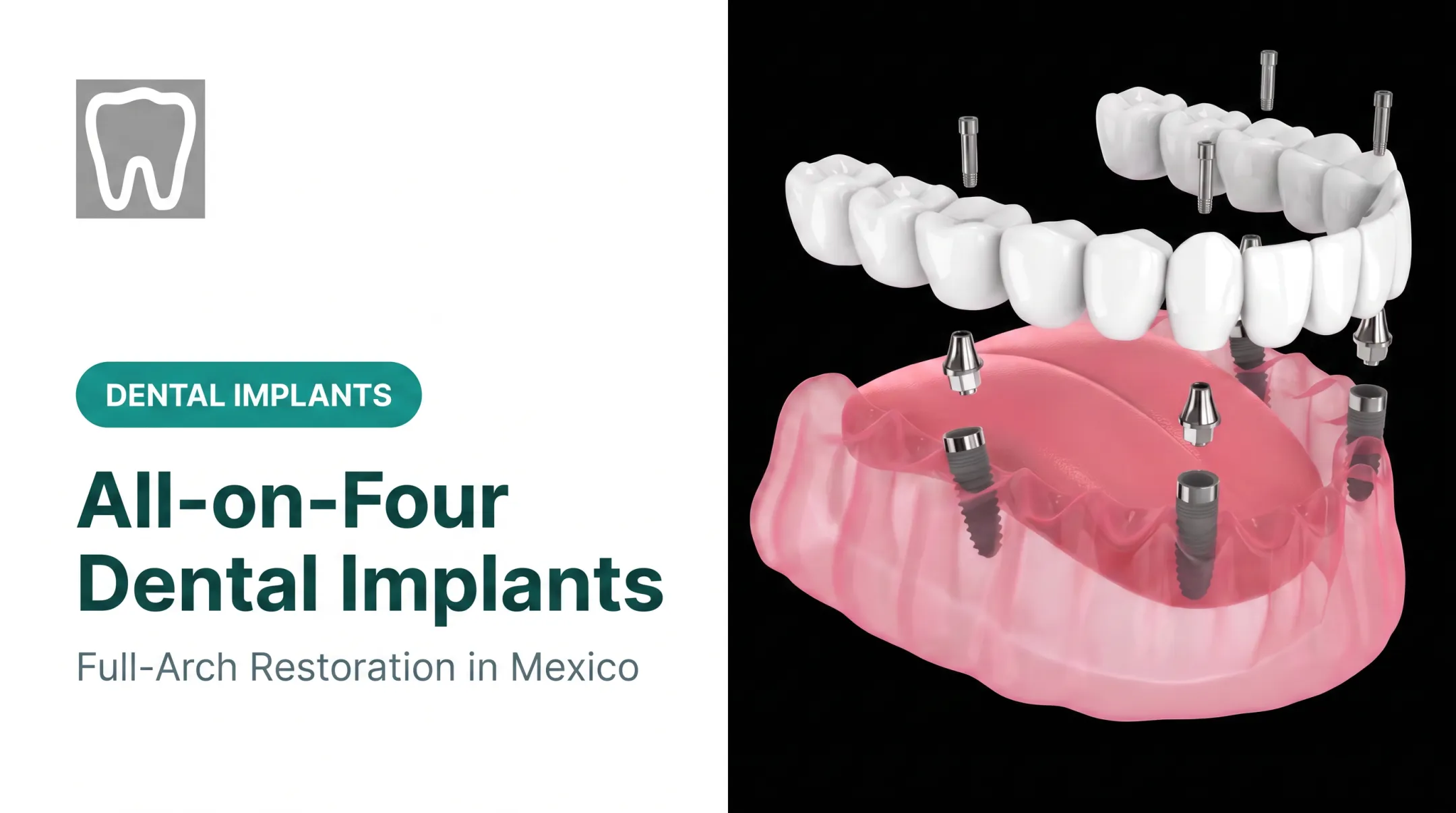
At Dr. Moguel's clinic, 3D Cone Beam CT imaging determines whether a patient qualifies for same-day fixed temporary teeth. His Teeth in a Day protocol extracts failing teeth, places implants, and secures a complete fixed temporary bridge in a single 2–3 hour appointment. The bridge is fabricated beforehand, then screwed onto the implants that same afternoon.
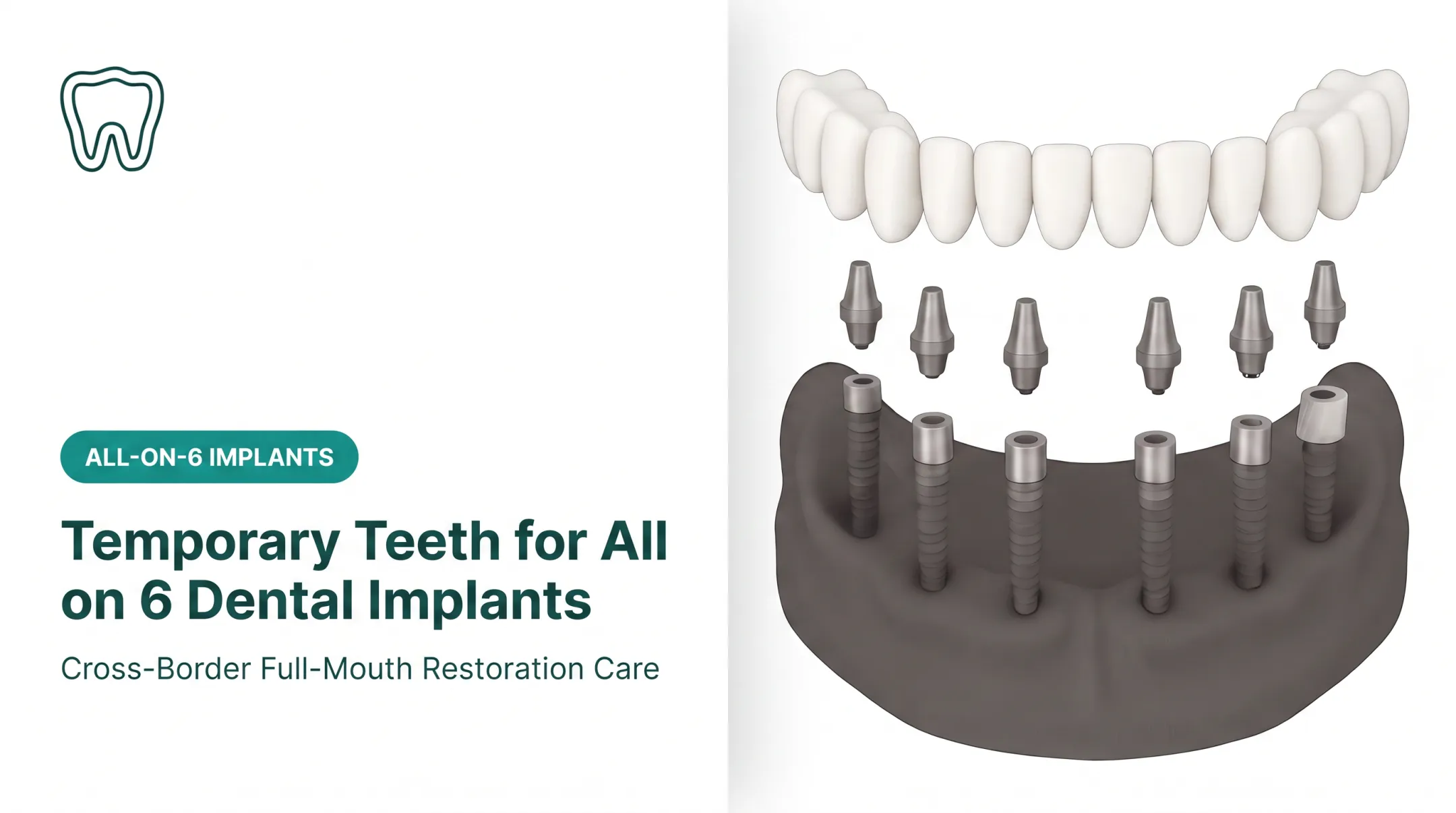
For full-mouth cases, the patented 3-ON-8™ protocol first verifies bone across eight strategic sites on a CBCT scan. Localized grafting is done if needed, then implants are placed so they can support a fixed temporary bridge.

How Long You'll Wear Temporary Teeth and What Happens Day to Day
Most patients wear their temporary for 3 to 6 months, though full-arch or grafting cases can extend that. Bone graft material itself typically needs 3 to 6 months to solidify, and larger grafts can take up to a year, according to Cleveland Clinic guidance.
Daily life during healing looks like this:
- Soft-food diet — soups, pasta, yogurt, scrambled eggs, and smoothies for the first 3 to 4 months; skip hard, sticky, or crunchy foods near the surgical site
- Mild speech changes in the first couple of weeks, usually resolving as your tongue adapts
- Chew on the opposite side whenever possible
One study of implant rehabilitation patients found that 47.4% reported their temporary restoration functioned better than expected after surgery. Most people adapt faster than they expect.

So what actually triggers the switch to a permanent crown? Not a date on the calendar. Your dentist confirms bone integration through imaging and clinical stability checks before moving forward — never a guess.
Caring for Your Temporary Teeth
Good care habits protect both your temporary teeth and the implant healing underneath.
- Brush gently with a soft-bristled brush, avoiding direct pressure on the surgical site for the first 48 hours
- Rinse with warm salt water (½ teaspoon salt in a glass of warm water, 4-5 times daily) starting 24 hours after surgery, or use an alcohol-free rinse if prescribed
- Don't poke or press on the implant area — chew on the opposite side when possible
- Attend every follow-up so your dentist can catch loosening, discoloration, or bite issues early
For the first two weeks, keep pressure off the surgical site even when brushing nearby teeth.
Is There an Alternative to a Temporary Tooth or Implant?
Patients who are not getting implants usually choose one of two options:
- Traditional bridges — fixed in place, but require grinding down healthy neighboring teeth and can permanently weaken them
- Removable dentures — sit on the gums with suction or adhesive and need no surgery
If you are getting an implant, the usual question is whether you can skip the temporary tooth. Most dentists still recommend one during healing rather than leaving the space open. Empty gaps let neighboring teeth shift and tilt, which can throw off bite alignment and lead to TMJ issues or uneven wear over time.
If you're weighing your options, Dental Implants in Mexico offers a free, no-obligation consultation for US and Canadian patients, with a personalized treatment plan and transparent cost quote before you commit.
Frequently Asked Questions
Can I get temporary teeth while waiting for an implant?
Yes. Most patients receive either a fixed or removable temporary, depending on their bone stability and case type. Your dentist determines the best fit during treatment planning.
How fast can you get a temporary tooth?
Same-day placement is possible when the implant achieves strong initial stability. Otherwise, a short healing window is needed before the temporary goes in.
How long can temporary implants stay in?
Typically 3 to 6 months. Full-arch cases or those requiring bone grafting may take longer, sometimes up to a year for larger grafts.
Can I eat with my temporary teeth?
Yes, with precautions. Stick to soft foods and avoid hard, sticky, or very chewy items near the surgical site, especially in the first few months.
What do temporary dental implants look like?
Modern temporaries are shade-matched and shaped to blend with your natural teeth. From a normal conversational distance, they're often indistinguishable from permanent restorations.
How long can you go without a tooth before getting an implant?
Waiting too long risks bone loss and shifting teeth. Ridge width drops fastest in the first 6 months after extraction, so get evaluated sooner rather than later.