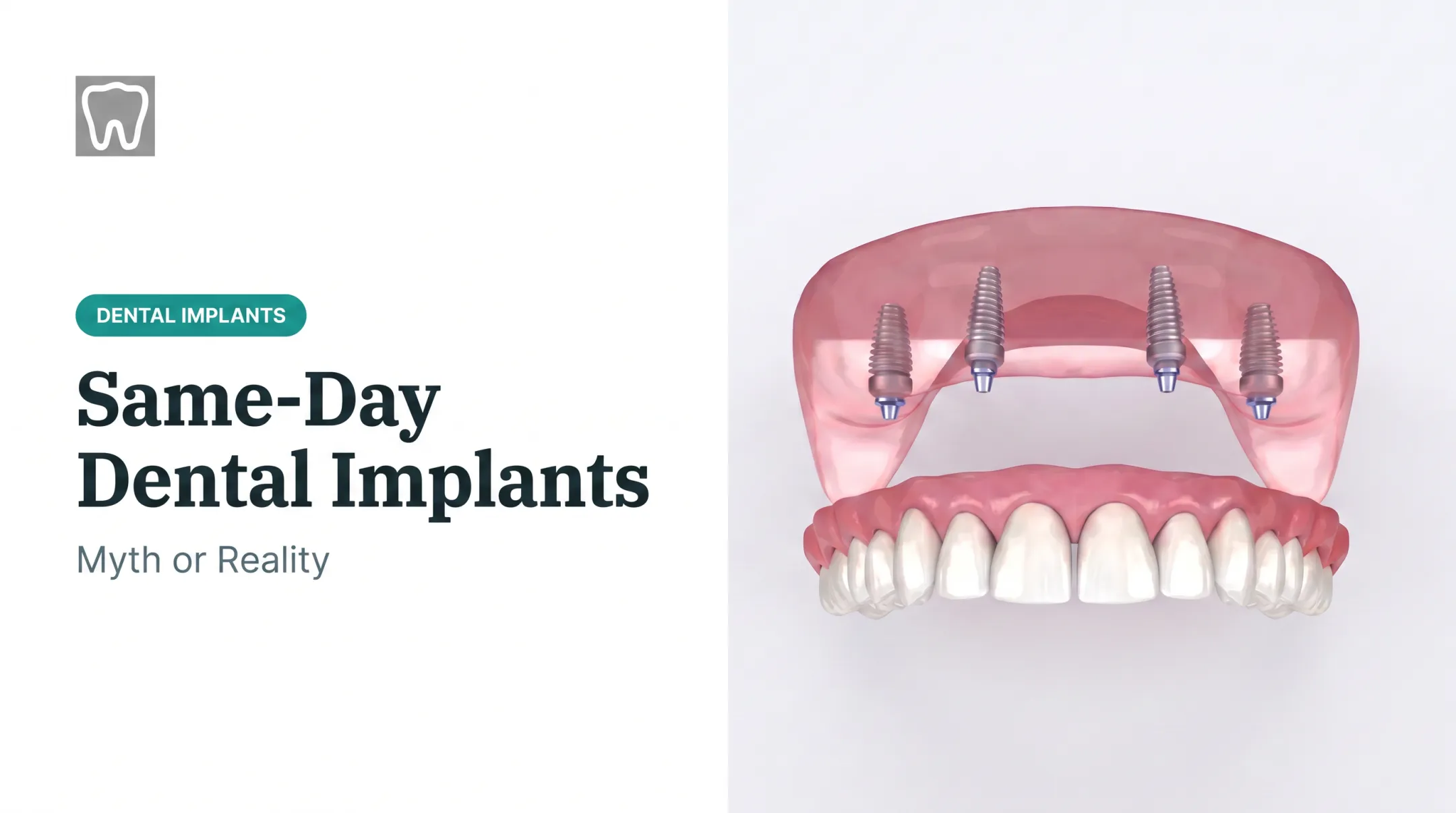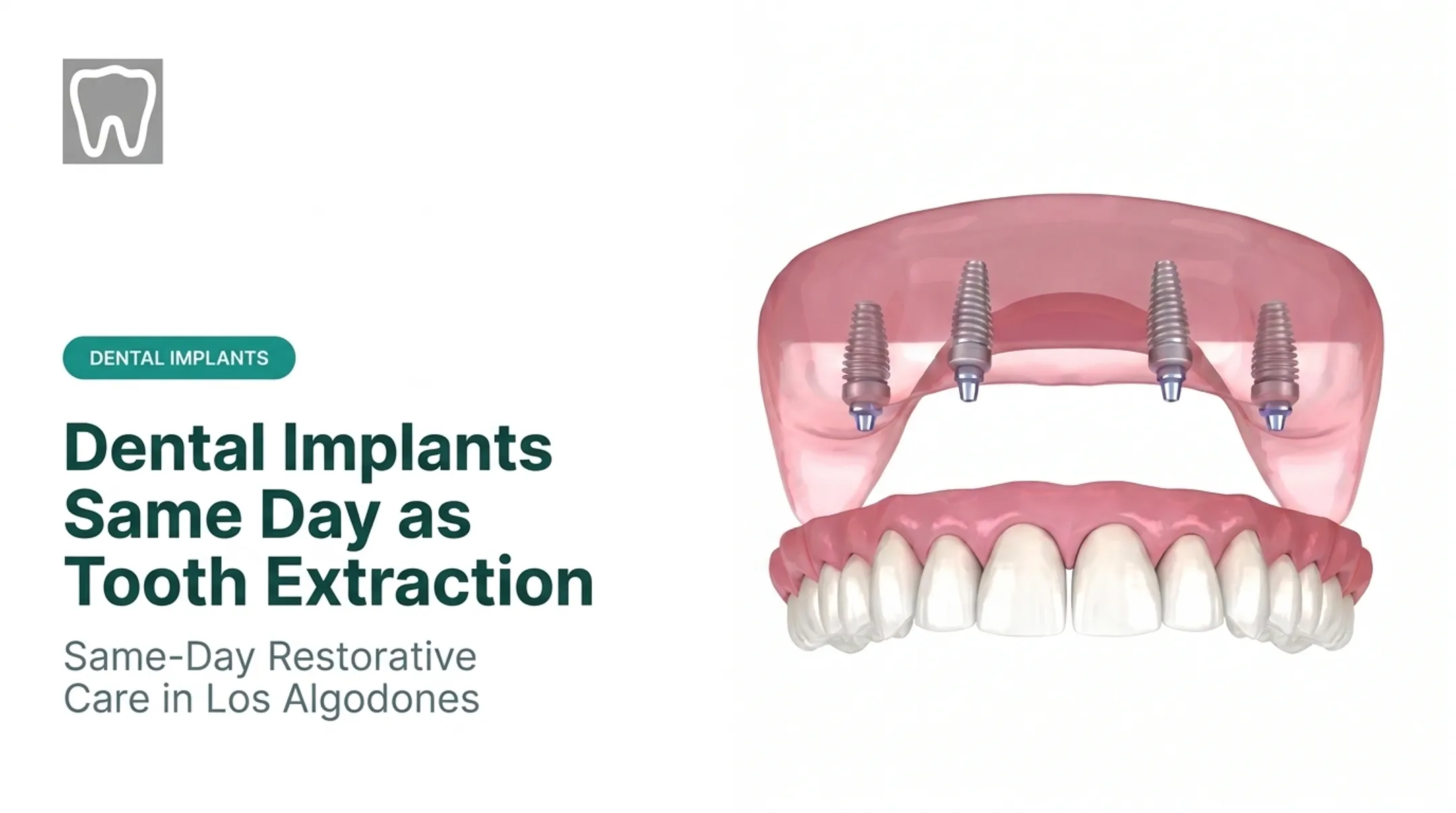

That's exactly what same-day implants promise. Also called immediate implant placement, this approach combines extraction and implant insertion into a single visit, rather than waiting the traditional 4-6 months for the socket to heal first.
This guide covers who actually qualifies, what happens step-by-step, realistic costs, and where to get an honest evaluation before you travel.
Key Takeaways
- Same-day implants combine extraction and implant placement in one visit, skipping the traditional months-long wait
- Candidacy depends on bone quality, infection status, and tooth location — not personal preference
- A board-certified periodontist's skill affects success rates for immediate implants
- Patients can save 60-70% versus U.S. prices at Dental Implants in Mexico’s Los Algodones clinic
What Is a Same-Day Dental Implant After Extraction?
The clinical term is immediate implant placement: the implant fixture goes into the socket during the same visit as the extraction. This differs from delayed placement, where the site heals for weeks or months before an implant ever touches it.
Here's where patients get confused. Same-day placement is not the same thing as same-day loading. Placement means the titanium post goes in. Loading means a crown gets attached and put into actual biting function. You can have one without the other.
Often, a temporary restoration sits on the implant while it integrates with the bone (a process called osseointegration) before the permanent crown is fitted.
Traditional vs. Same-Day Timeline Comparison
| Stage | Traditional | Same-Day |
|---|---|---|
| Extraction | Day 1 | Day 1 |
| Graft (if needed) | Day 1, then wait | Often unnecessary if bone is adequate |
| Implant placement | 4-6 months later | Day 1, same visit |
| Healing | 3-4 more months | Shorter overall timeline |
| Final crown | Total: 7-10 months | Often 3-4 months from surgery |

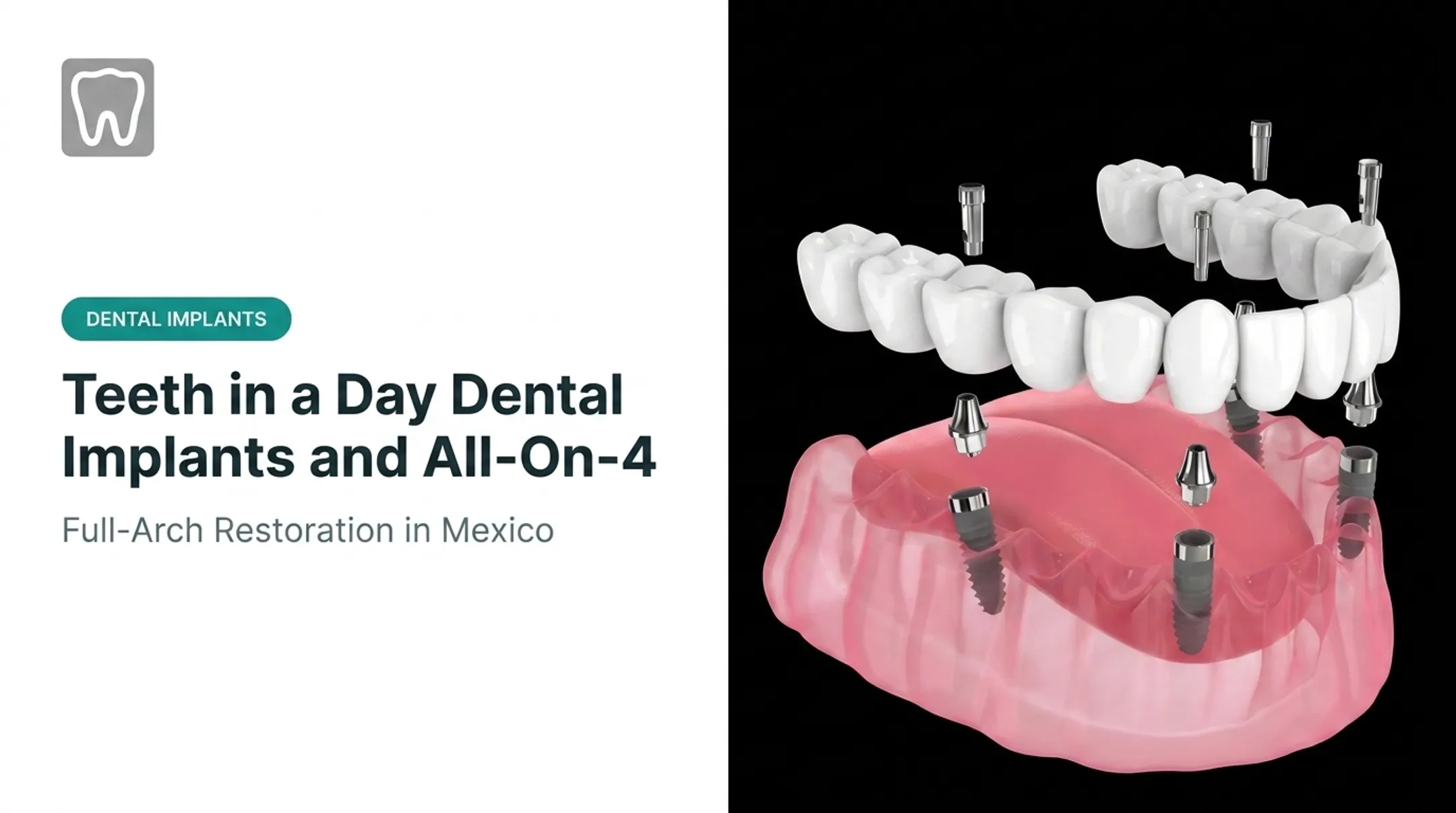
For full-arch cases, Dr. José Moguel's team fabricates surgical guides and a temporary bridge in advance. Extraction, implant placement, and a fixed temporary bridge can all happen in one 2–3 hour surgical visit, with the bridge screwed in that same afternoon.
Am I a Candidate for Same-Day Implants? Key Factors
Not every extraction site qualifies. This is a clinical decision, not a preference.
Bone density and volume. Adequate jawbone at the extraction site is the primary requirement for immediate stability. A 3D Cone Beam CT scan measures this in three dimensions before any placement decision.
Active infection. A periapical lesion or active infection around the tooth root can disqualify a patient from immediate placement, since the site needs to be clean enough to support a stable implant.
Tooth location.
- Front teeth (anterior): most predictable outcomes
- Upper molars: sinus proximity may require a sinus lift before safe placement
- Lower back teeth: nearby nerve canals raise numbness risk if placement is off
Root canal-treated or fractured teeth are harder to extract without damaging the surrounding socket wall, which can rule out immediate placement.

Real example: Marcus D., 32, had a fractured front central incisor (tooth #9). His root was extracted without damaging the socket, allowing immediate placement of a NobelActive titanium implant plus a temporary aesthetic crown the same day.
One honest caveat: the surgeon sometimes confirms final candidacy only after the tooth is out and the socket is visually assessed. A scan gives a strong prediction, but the surgeon makes the final call chairside.
The Same-Day Implant Procedure: Step-by-Step
- Consultation and imaging — X-rays and a 3D CBCT scan map bone density, nerve position, and sinus location. Your clinician can often review these virtually before you travel.
- Extraction — Your dentist removes the tooth with gentle techniques that preserve the socket walls and surrounding bone.
- Implant placement — The titanium post goes directly into the jawbone immediately after extraction.
- Temporary restoration — For front teeth especially, a temporary crown or bridge attaches the same day so you leave with a functional smile.
- Healing (osseointegration) — Bone fuses to the implant over roughly 3–6 months, depending on your case.
- Final crown — Once integration is confirmed, a digital scan captures the site and the team fabricates a permanent zirconia or porcelain restoration.
Most surgical visits run 2–3 hours under local anesthesia. Sedation is available if you want extra comfort during combined extraction-and-placement.

Benefits and Risks of Same-Day Implants
Key Benefits
- Fewer trips — especially valuable for patients traveling from the US or Canada
- Reduced bone loss — placing the implant right after extraction helps preserve jaw structure that would otherwise begin resorbing
- No visible gap — cosmetic continuity from day one, particularly for front teeth
Potential Risks and Considerations
Immediate implants carry a slightly higher complication risk than staged placement when candidacy criteria aren't strictly met. Strict candidacy screening and an experienced surgeon keep those risks in check.
An experienced, board-certified specialist minimizes risks like implant failure or nerve involvement by knowing exactly when to proceed and when to recommend a staged approach instead. Dr. Moguel's reported implant success rate is 98%, reflecting decades of careful case selection for immediate placement.
Why Choose an Experienced Specialist for Same-Day Implants
Same-day implants demand more surgical judgment than staged cases, not less. There's no do-over if the socket gets misjudged.
Dr. José Moguel is a board-certified periodontist (ADA and ADM certified) with over 38 years of experience and more than 17,000 implants placed. That volume matters directly for same-day candidacy decisions. He's seen enough sockets to know which ones will hold an implant immediately and which need a bone graft first.
His clinic in Los Algodones is equipped with:
- 3D Cone Beam CT imaging for every patient, mapping bone density and nerve/sinus position in three dimensions
- An in-house CAD/CAM lab for precise crown and bridge fabrication
- Free consultations, including virtual reviews of existing scans, before you commit to travel
That setup supports lower treatment costs without cutting clinical corners. Patients from the US and Canada typically save 60-70% compared to US pricing. As one benchmark, full "teeth in a day" treatment runs $9,000-$13,000 in Mexico versus $26,000-$32,000 in the US for comparable full-arch cases. Those savings hold up even after factoring in travel.

Frequently Asked Questions
How quickly can you get a dental implant after a tooth extraction?
If bone and gum conditions are healthy, an implant can be placed the same day as extraction. Otherwise, your dentist may recommend a healing period of 6–16 weeks before placement.
Which is more painful: tooth extraction or getting a dental implant?
Most patients report the extraction itself as the more uncomfortable step. Implant placement is typically well-tolerated under local anesthesia or sedation because it disturbs less gum tissue.
Is everyone a candidate for immediate implant placement?
No. Candidacy depends on bone density, infection status, and tooth location. Sometimes the final decision only gets confirmed once the tooth is extracted and the socket is examined directly.
What happens if my tooth isn't suitable for a same-day implant?
Your surgeon will recommend a staged approach: extraction with socket preservation, bone grafting if needed, then implant placement once healing is complete — usually 3-6 months later.
How much can I save by getting same-day implants in Mexico versus the US?
Patients typically save 60-70% compared to US prices, with full-arch treatment running $9,000-$13,000 versus $26,000-$32,000 in the US. A free consultation gives you a personalized quote.
How long is the recovery after a same-day implant procedure?
Expect soft foods and some minor swelling during the first few weeks. Full bone integration takes 3-6 months before the final permanent crown or bridge replaces the temporary restoration.