
Costs shift based on bridge design, materials, and how many teeth you're replacing. A single-tooth Maryland bridge and a three-unit implant-supported bridge live in completely different price categories. This guide breaks down each cost driver so you know what to expect.
Many patients comparing US prices are also looking at options like Dental Implants in Mexico, where board-certified specialists offer implant-supported alternatives at a fraction of US costs.
Key Takeaways
- Bridge type drives cost the most: Maryland bridges start lowest, implant-supported bridges cost the most
- Each additional missing tooth increases your total treatment cost
- Material choice (porcelain, zirconia, PFM, or metal) changes both price and durability
- Traveling for implant-supported treatment can cut costs 60–70% versus typical US pricing
What Is a Dental Bridge and What Types Are Available?
A dental bridge "bridges" the gap left by a missing tooth using three main parts: abutment crowns (anchors on either side), a pontic (the replacement tooth), and connectors joining them together. The design you choose depends on your gap's location, the health of neighboring teeth, and your budget.
Types of Dental Bridges
Dentists typically use four main designs:
- Traditional bridges: Two crowns anchor a pontic between them. This is the most common option.
- Cantilever bridges: Use a single abutment tooth for support. Structurally weaker than traditional designs, so reserved for cases with only one healthy adjacent tooth.
- Maryland (resin-bonded) bridges: Metal or ceramic wings bond to the back of neighboring teeth instead of full crowns—minimally invasive, best for front teeth with lighter bite force.
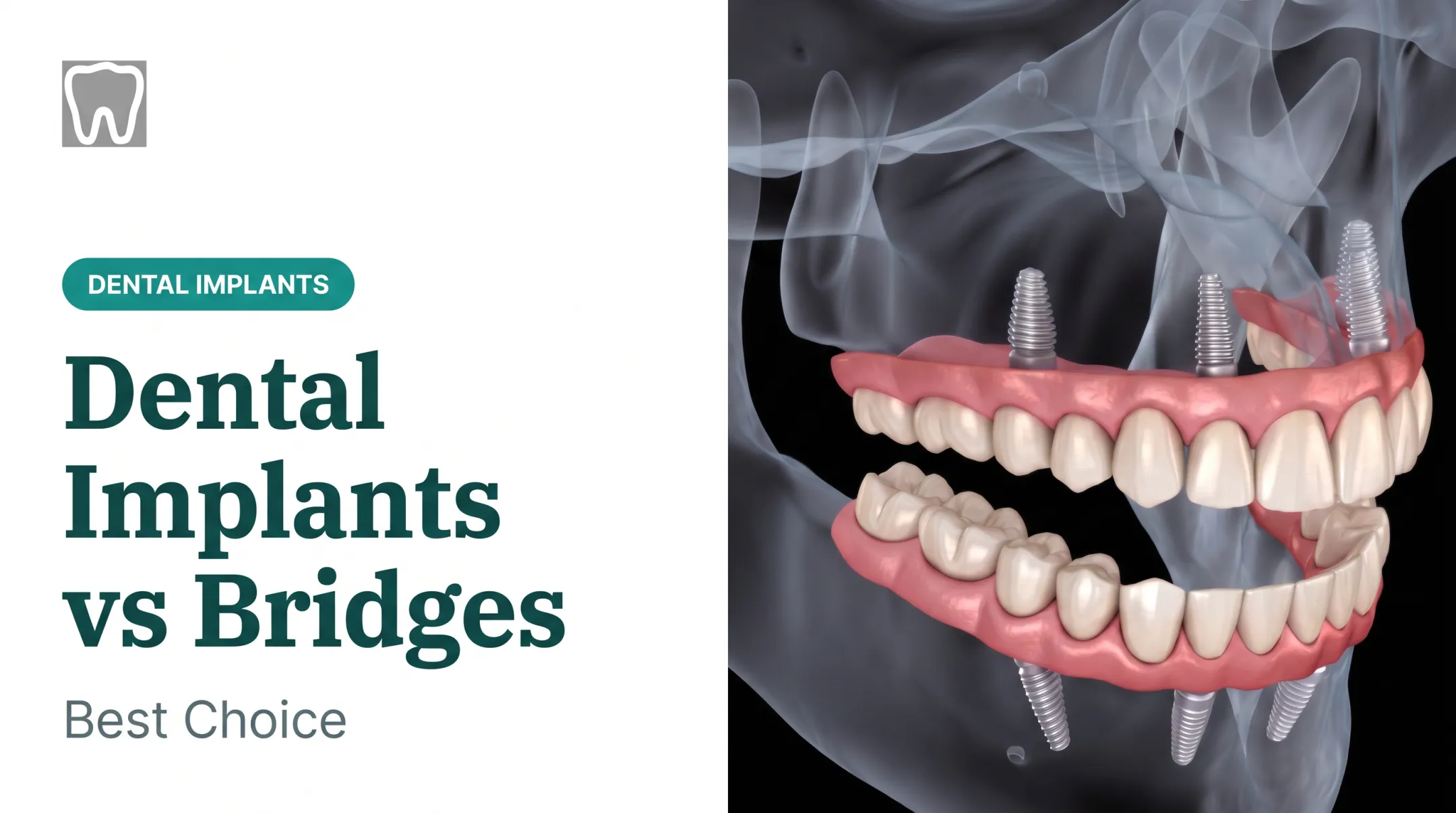
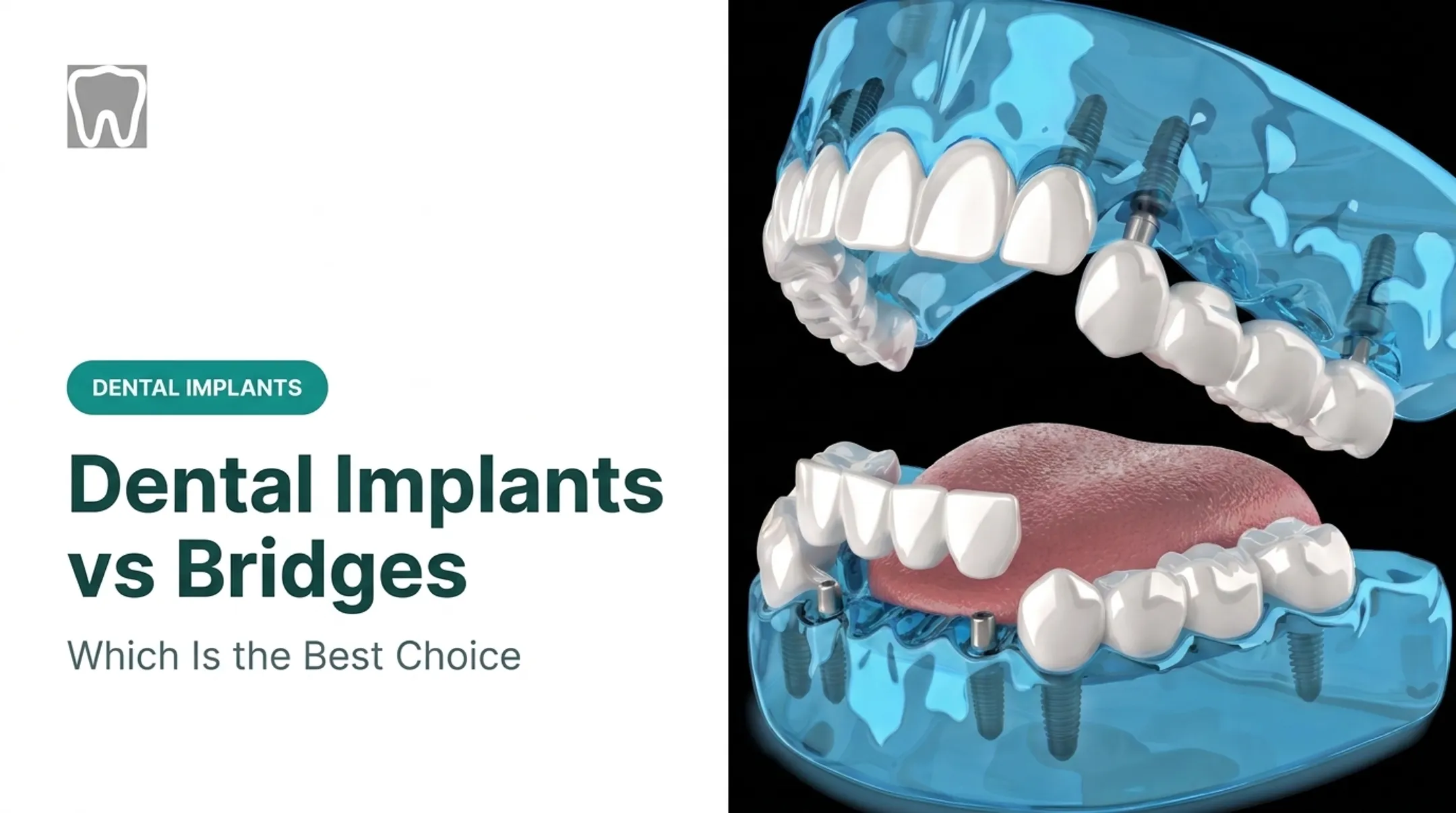
- Implant-supported bridges: Anchored to dental implants rather than natural teeth. These replace the tooth root itself for a stronger, longer-lasting foundation.

Types of Bridge Materials
Material choice affects both appearance and longevity:
- Porcelain-fused-to-metal (PFM): A 2022 systematic review found approximately 99.5% five-year survival for PFM restorations.
- All-ceramic/porcelain: More natural-looking, but the same review found roughly 92% five-year survival, slightly lower than PFM.
- Zirconia: Falls within the all-ceramic category in most research; valued for strength and aesthetics.
- All-metal: Least aesthetic but highly durable for back-of-mouth applications where appearance matters less.
Dental Bridge Cost by Type and Number of Teeth
Published US insurer estimates give a consistent picture of pricing across common bridge types.
| Bridge Type | Average US Cost Range |
|---|---|
| Traditional | $2,000-$5,000 |
| Cantilever | $2,000-$5,000 |
| Maryland (resin-bonded) | $1,500-$2,500 |
| Implant-supported | $5,000-$15,000 |

How Much Does a 1-Tooth Bridge Cost?
Delta Dental reports an average out-of-network cost of $3,600 for a three-unit bridge (two crowns plus one pontic) replacing a single missing tooth. That's the usual US baseline for a standard traditional bridge covering one gap.
How Much Does a 2-Tooth Bridge Cost?
Replacing two consecutive teeth generally requires additional abutment support or a longer pontic span, which raises both material and labor costs. Expect pricing above the single-tooth baseline, though there's no single validated US national average for this exact scenario.
How Much Does a 3-Tooth Bridge Cost?
Costs increase incrementally with each additional pontic. A three-tooth gap typically demands stronger abutment support (sometimes on both ends), pushing total costs well above the single-tooth range, especially if implant support is used.
Where you get treatment changes the total. The Academy of General Dentistry reports that US patients can save 40%-65% on dental treatment in Mexico, with prices often averaging about one-third of US equivalents. That gap widens further for implant-supported options.
What Factors Influence Dental Bridge Costs?
Several variables stack on top of the base bridge price:
- Number of missing teeth: More gaps mean more pontics, more abutment support, and more chair time.
- Material choice: Zirconia and porcelain cost more upfront than metal but deliver better aesthetics and comparable durability.
- Additional procedures: X-rays, extractions, cleanings, and bone grafting all add to the total.
- Clinic location and dentist expertise: Overhead costs, regional labor rates, and specialist credentials all factor into pricing.
Bone grafting alone can run $549–$5,148 in the U.S., according to CareCredit, depending on how much reconstruction you need. Traveling for care can cut those add-on costs without sacrificing quality.
At Dental Implants in Mexico, initial evaluations, virtual assessments, and diagnostic X-rays come without surprise add-on fees. Bone grafting is typically quoted separately at $500–$800, well below comparable U.S. ranges.
Dental Bridge vs. Dental Implant: Which Costs More and Which Is Better?
Upfront, bridges usually cost less. A traditional or cantilever bridge is typically cheaper initially than a comparable implant per missing tooth. Upfront price isn’t the whole story, though. Long-term value usually favors implants. Cleveland Clinic notes bridges typically last 5–15 years before replacement. Implants showed 96.4% survival at 10 years in a 2019 systematic review, and they preserve jawbone by replacing the tooth root—something a tooth-supported bridge cannot do.

Quick comparison:
- Upfront cost: Bridges are usually lower per missing tooth
- Lifespan: Bridges ~5–15 years; implants often last decades with high 10-year survival
- Jawbone: Implants help preserve bone; tooth-supported bridges do not
- Adjacent teeth: Traditional bridges require reshaping healthy neighbors; implants stand alone
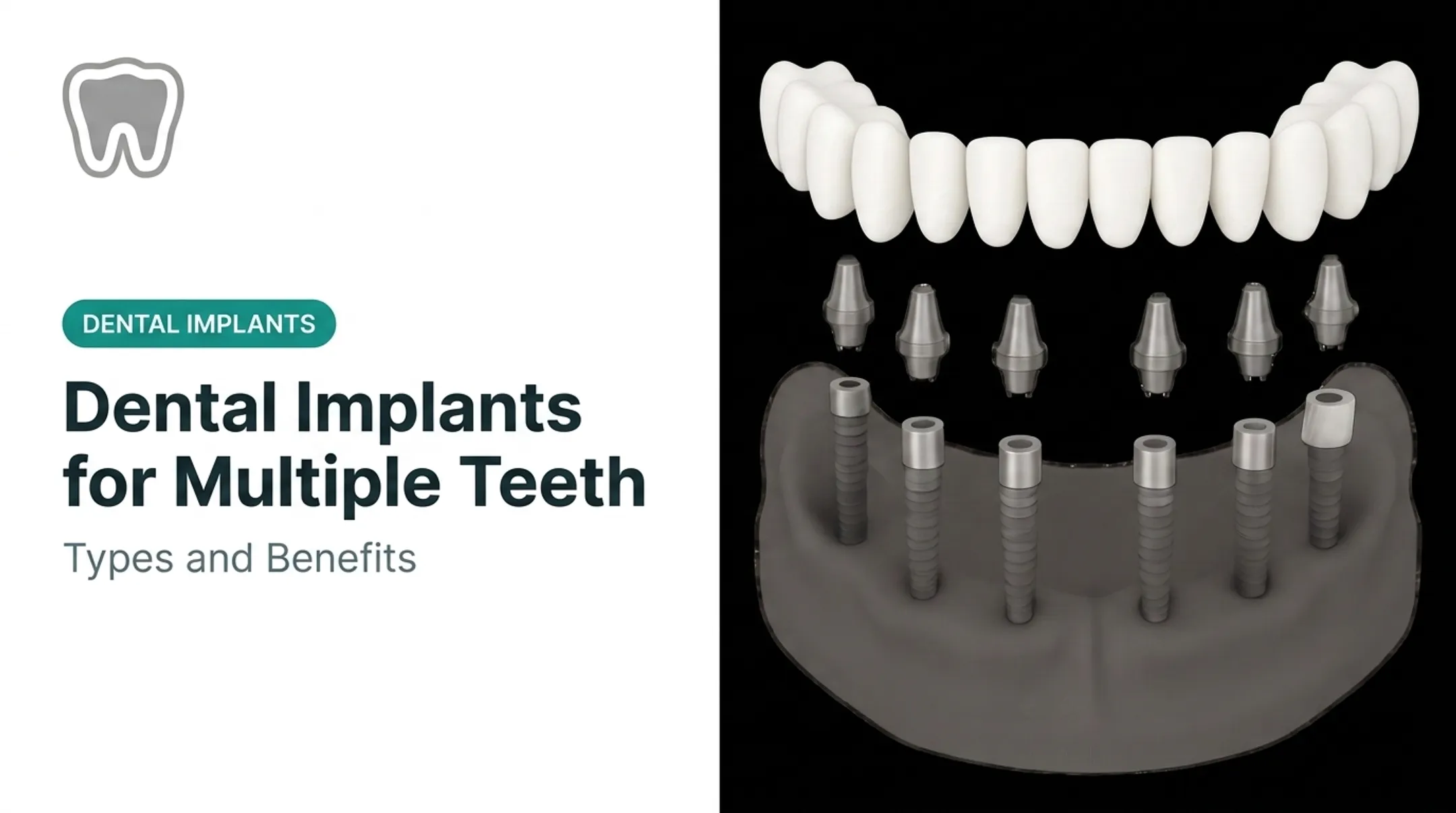
For multiple missing teeth, an implant-supported bridge can combine both approaches: implants anchor the restoration while a bridge design distributes the load, so you gain durability without an implant for every missing tooth.
That tradeoff—lower upfront cost versus longevity, bone health, and whether healthy teeth must be ground down—is exactly what a consult should clarify. At Dental Implants in Mexico, Dr. José Moguel, a board-certified periodontist with over 38 years of clinical experience and more than 17,000 implants placed, provides implant treatment at about 60–70% lower cost than typical US pricing.
Free consultations review your dental history, X-rays or 3D CBCT scans, and whether a bridge or implant-based plan fits your case.
Patients with several missing teeth, limited bone, or too much tooth loss for a standard bridge often need a full-arch discussion. Common options include:
- All-on-4: Four implants per arch supporting a fixed bridge
- All-on-6: Six implants per arch for added support
- 3-ON-8™: The clinic’s patented eight-implant full-mouth protocol
The right implant count depends on your bone map and functional needs.
Paying for a Dental Bridge: Insurance, Financing, and Affordable Options
Dental insurance can offset a large share of bridge costs, but coverage has limits:
- About 50% coverage for major services like bridges (NADP), once the work is deemed medically necessary
- Waiting periods of up to 12 months may apply before major work is covered
- Annual maximums near $1,500+ for about 65% of dental PPOs

Without enough insurance, dental credit cards or third-party medical financing can spread the balance over time.
What If I Can't Afford a Dental Bridge?
Practical options include:
- Choose a lower-cost bridge type — Maryland bridges cost less than traditional or implant-supported designs
- Seek lower-overhead clinics that pass savings on through lower fees
- Consider cross-border treatment for implant-supported options, where savings of 60-70% are common
Dental Implants in Mexico helps patients with US insurance reimbursement paperwork even though the clinic does not bill insurers directly.
Patients pay upfront, then submit an itemized statement with ADA procedure codes for out-of-network reimbursement, which often covers 40-50% of costs.
Frequently Asked Questions
Which is better for replacing missing teeth, an implant or a bridge?
Implants generally offer better long-term value with 10-year survival rates around 96%, plus jawbone preservation. Bridges cost less upfront but typically need replacement within 5-15 years.
Is a bridge cheaper than an implant?
Yes, in upfront cost. Traditional bridges start around $2,000, while implant-supported bridges often start at $5,000. However, bridges may require more frequent replacement over time.
How many missing teeth can a bridge replace?
Bridges typically replace 1-4 consecutive missing teeth, depending on the location in the mouth and the strength of the supporting teeth or implants.
How much does a bridge for teeth cost?
Costs range from roughly $1,500 for a Maryland bridge to $15,000 for an implant-supported bridge, depending on type, materials, and number of teeth replaced.
What if I can't afford a dental bridge?
Consider a lower-cost bridge design, ask about financing plans, or explore treatment in Mexico, where patients often save 60–70% compared with US pricing.
How much does a 3-tooth bridge cost?
A traditional three-unit bridge often costs about $3,000–$5,000, with many quotes near a $3,600 baseline for one pontic and two crowns. Implant-supported three-unit bridges usually cost more, often starting near $5,000 and rising with materials and implant count.