
Osseointegration — the fusion of the titanium implant with your jawbone — takes 3 to 6 months. That's the part patients often don't plan for.
If you're traveling to Los Algodones, Mexico for treatment, you need more than a general timeline. You need a roadmap that tells you when you can cross back over the border, when to schedule follow-up visits, and how much work leave to actually request. This guide covers exactly that.
Key Takeaways
- Soft-tissue healing takes 3-7 days; full osseointegration takes 3-6 months
- Recovery length depends on implant type: single-tooth, All-on-4, All-on-6, or the 3-ON-8™ full-arch protocol
- Desk-job patients often return to work in 1-2 days; physical labor may require a week or more
- Strict aftercare plus a board-certified implant specialist keeps swelling, infection, and delayed healing risk low
- Most standard treatments require two trips, spaced 3-6 months apart
What Happens Immediately After Dental Implant Surgery?
Your dentist places the implant under local anesthesia, and most patients describe the procedure itself as painless. Some clinics offer sedation for anxious patients, though local anesthesia is enough for most people.
Normal symptoms in the first few days include:
- Mild swelling and bruising around the surgical site
- Minor oozing or bleeding
- A dull, manageable ache as anesthesia wears off
Swelling typically peaks around day 3, then starts fading. Most patients see it drop off substantially within 7–10 days.
The First 48 Hours Matter Most
This window is critical for clot stability at the surgical site. Follow these steps closely:
- Avoid straws—suction can dislodge the clot and cause a dry socket
- Skip brushing directly over the site
- Start gentle warm salt-water rinses about 24 hours after surgery
- Rest with your head elevated
- Stick to cool, soft foods and liquids
Dental Implant Healing Stages and Timeline
Healing happens in three distinct phases, and knowing each one helps you plan travel and time off realistically.
Stage 1: Soft Tissue Healing (Days 1-7)
Gums close, swelling subsides, and stitches either dissolve on their own (usually within 2-3 days) or are removed at a follow-up. Most patients feel "back to normal" by the end of week one, though light exercise is still advised over intense workouts.
Stage 2: Osseointegration (3-6 Months)
This is the phase that determines whether your implant lasts. The implant fuses with the jawbone in three sub-phases:
- Weeks 1-4: Initial stability is established
- Weeks 5-12: Biological fusion progresses
- Months 3-6: Mature anchorage forms, strong enough for full chewing forces
You'll feel fine long before this phase completes. That's the tricky part: pain-free does not mean fully healed.
Stage 3: Abutment and Crown Placement
Once integration is confirmed, the abutment is attached, a digital scan is taken, and a custom porcelain or zirconia crown is fitted to match your natural teeth.
| Time Frame | Healing Stage |
|---|---|
| Days 1-7 | Soft tissue healing, swelling subsides |
| Weeks 1-4 | Initial implant stability |
| Weeks 5-12 | Biological fusion with bone |
| Months 3-6 | Mature anchorage, full integration |
| Post-integration | Abutment and crown placement |

Smoking, low bone density, diabetes, and the number of implants placed can all extend this timeline. A 2021 systematic review found implants in smokers face a 140% higher failure risk than in non-smokers, which is one of the strongest reasons to quit at least two weeks before surgery and six weeks after.
Even with those variables, long-term outcomes remain strong. A 2019 systematic review found 10-year implant survival rates at 96.4%. Dr. José Moguel, who has placed over 17,000 implants across 38 years, reports a clinical success rate above 98%.
How Long Does Recovery Take by Treatment Type?
Not every implant heals on the same schedule. Here's how it breaks down.
Single-Tooth Implants
Typically 3-4 months for full integration, with minimal downtime. Most patients resume normal routines within a few days. Surgery itself lasts under an hour.
All-on-4 and All-on-6 Full-Arch Implants
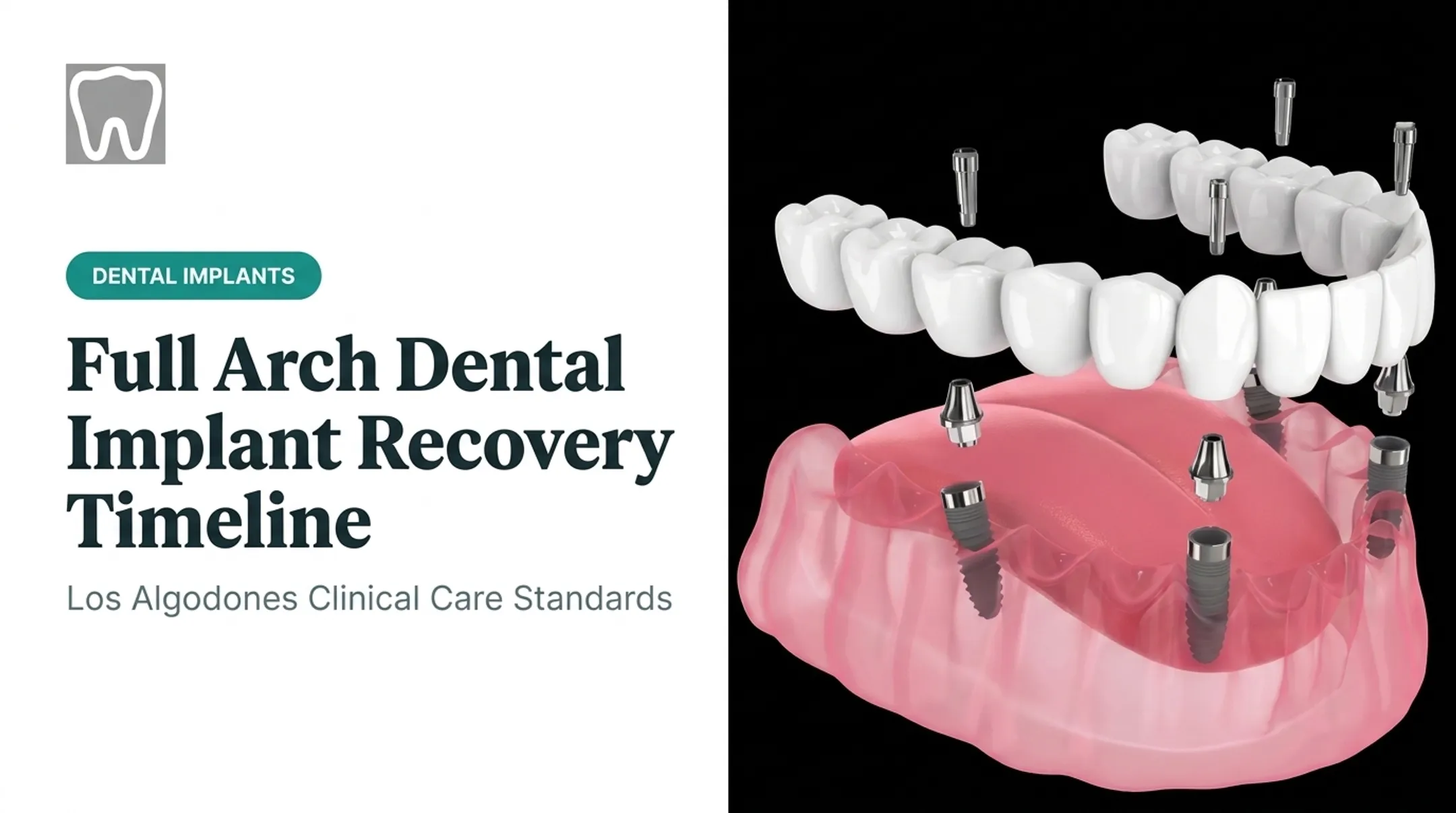
All-on-4: Bone healing runs 3-4 months. Many patients receive a temporary bridge the same day as surgery.
All-on-6: Six implants per arch extend healing to 4-6 months, with a fixed temporary bridge worn during recovery.
More surgical sites generally mean a longer bone-healing window, even when same-day temporary teeth cover the gap during healing.
The 3-ON-8™ Protocol
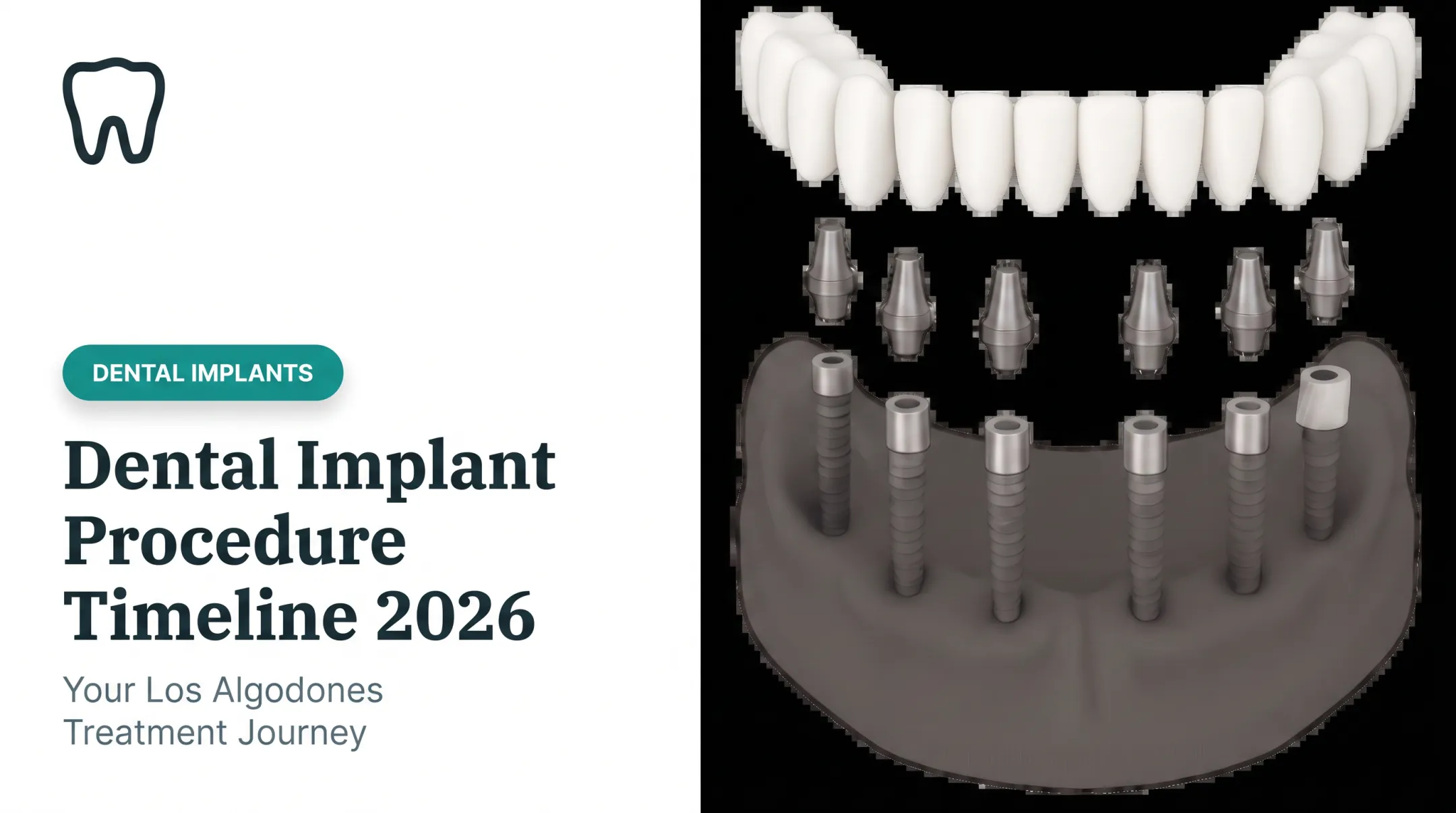
Dr. Moguel's patented approach uses eight implants per arch to support three independent zirconia bridges. Recovery runs 4-6 months, similar to All-on-6.
The design prioritizes durability and full-arch stability, which matters for patients who want fewer return trips across the border for adjustments later.

Bone Grafting or Sinus Lift Cases
If you need a graft, add time. Cleveland Clinic notes grafts need at least three months to heal before implants can even be placed, and larger grafts take longer.
Sinus lift cases can push implant placement out further still, depending on bone quality and healing response.
Every case is different. A free consultation with X-ray review is the only reliable way to get a timeline specific to your mouth.
Aftercare Tips for a Smooth Recovery
Good aftercare isn't complicated, but skipping it raises your risk of complications.
- Rest for the first 48 hours; resume normal activity gradually as you feel able
- Eat soft foods such as scrambled eggs, mashed potatoes, soups, and oatmeal through day 4, then expand gradually
- Avoid smoking and alcohol — nicotine restricts blood flow to healing bone, and alcohol can slow recovery and interact with pain medication
- Keep oral hygiene gentle with a soft-bristled brush, and use saltwater rinses only as directed, starting 24 hours post-surgery
When to Call Your Dentist: Warning Signs
Some discomfort is expected. These are not normal:
- Pain that worsens after the first week instead of improving
- Uncontrolled bleeding
- Increasing swelling, fever, or pus (possible infection)
- A loose or moving implant, which needs immediate evaluation
If any of these appear, don't wait for your next scheduled visit. Call your dentist or clinic right away.
Planning Your Recovery When Traveling for Treatment
Dental tourism adds a logistical layer most recovery guides skip entirely.
Most standard implant treatments require two trips:
- Trip one: Surgical placement, and often temporary teeth
- Trip two: Permanent crown or full-arch prosthetic 3–6 months later, once osseointegration is confirmed
For the initial trip, plan to stay in the area for at least the first few days of healing. The Los Algodones clinic sits roughly a three-minute walk from the Andrade, California border crossing, which makes short stays manageable.
Many patients stay in Yuma, Arizona, about a 15-minute drive away. Travel coordinators can arrange hotel accommodations and shuttle service.
Bilingual coordinators typically stay in touch to track healing progress remotely between visits, so you're not left guessing whether swelling or discomfort is normal. Follow-up visits get scheduled around your second trip, once your implant is ready for its permanent restoration.

Frequently Asked Questions
How long should I take off work for a dental implant?
Desk-job patients often return within 1-2 days. Physically demanding jobs may require 4-7 days off, and full-arch patients may need a bit longer depending on swelling and healing progress.
How long does it take for dental implants to heal completely?
Full healing, including osseointegration, takes 3-6 months. Complex cases involving grafting or multiple implants can take longer.
Does it hurt to recover from dental implant surgery?
Most patients report mild, manageable soreness that improves within the first week. Swelling typically peaks around day 3 before fading.
Can I smoke after getting dental implants?
Smoking is strongly discouraged. It restricts blood flow to healing tissue and raises the risk of implant failure. Quitting for at least two weeks before and six weeks after surgery is recommended.
What happens if my dental implant fails?
Failure is rare with proper planning and an experienced, board-certified specialist. If you notice looseness, pain, or swelling, contact your clinic immediately for assessment and next steps.
How many trips to Mexico will I need for dental implant treatment?
Most cases require two trips: one for implant placement and temporary teeth, and a second visit 3-6 months later for the permanent crown or prosthetic once healing is confirmed.