
Many patients now cross the border into Mexico for this procedure. Why? Access to board-certified specialists at a fraction of what US or Canadian clinics charge. According to a 2020 dental tourism report cited by the AGD, patients traveling for dental care can save between 40% and 65%.
This guide covers what 3 on 6 implants actually are, who qualifies, what the procedure involves, realistic costs, and how it stacks up against All-on-4 and the patented 3-ON-8™ protocol.
Key Takeaways
- 3 on 6 uses six implants supporting three separate bridges — no synthetic gum material involved
- Board-certified periodontist clinics in Mexico often cost 60–70% less than comparable US treatment
- Candidacy hinges on bone density, gum health, and lifestyle factors like smoking or grinding
- Comparing 3 on 6 with All-on-4 and 3-ON-8™ helps you find the right fit before committing
What Are 3 on 6 Dental Implants?
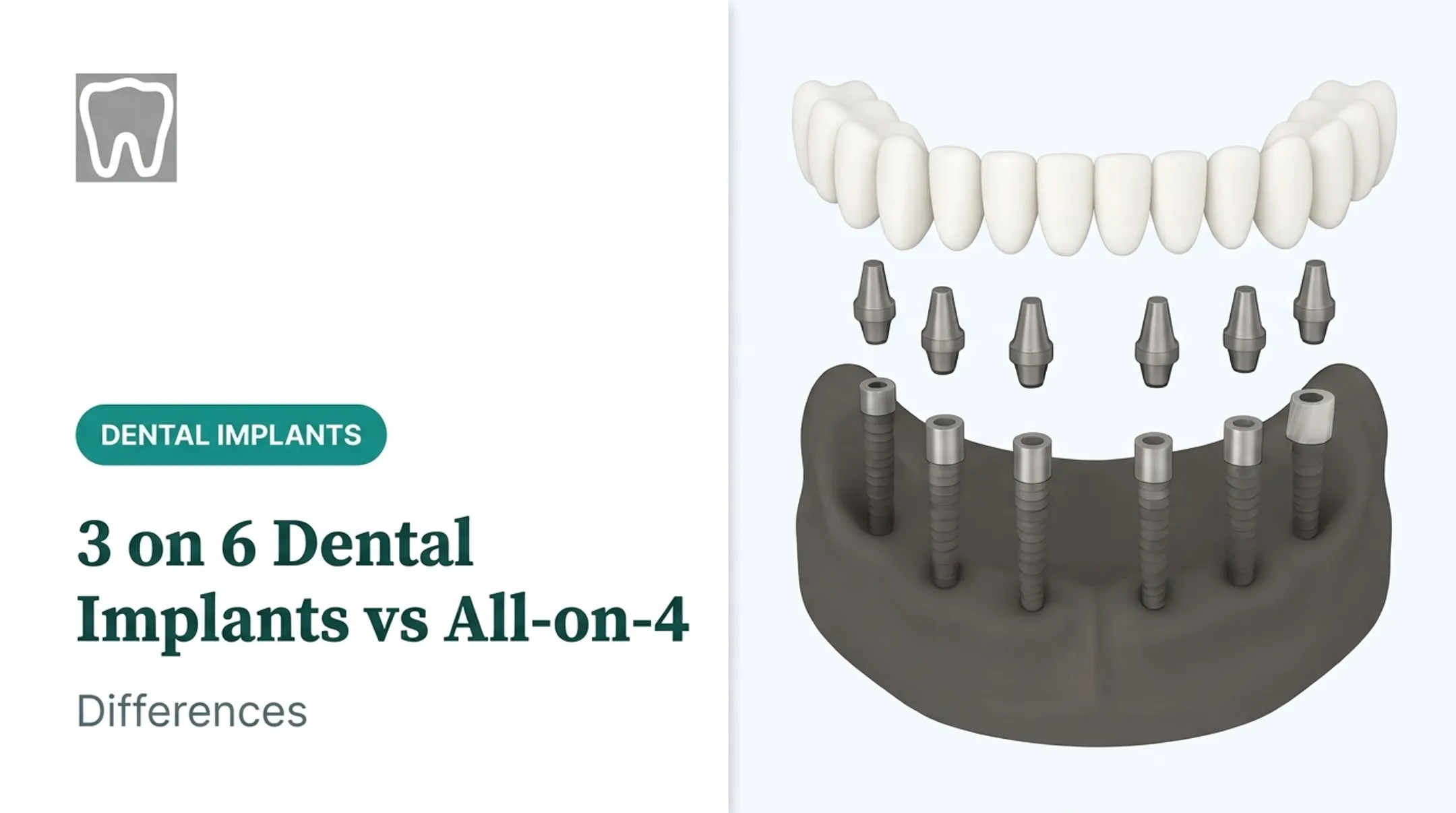
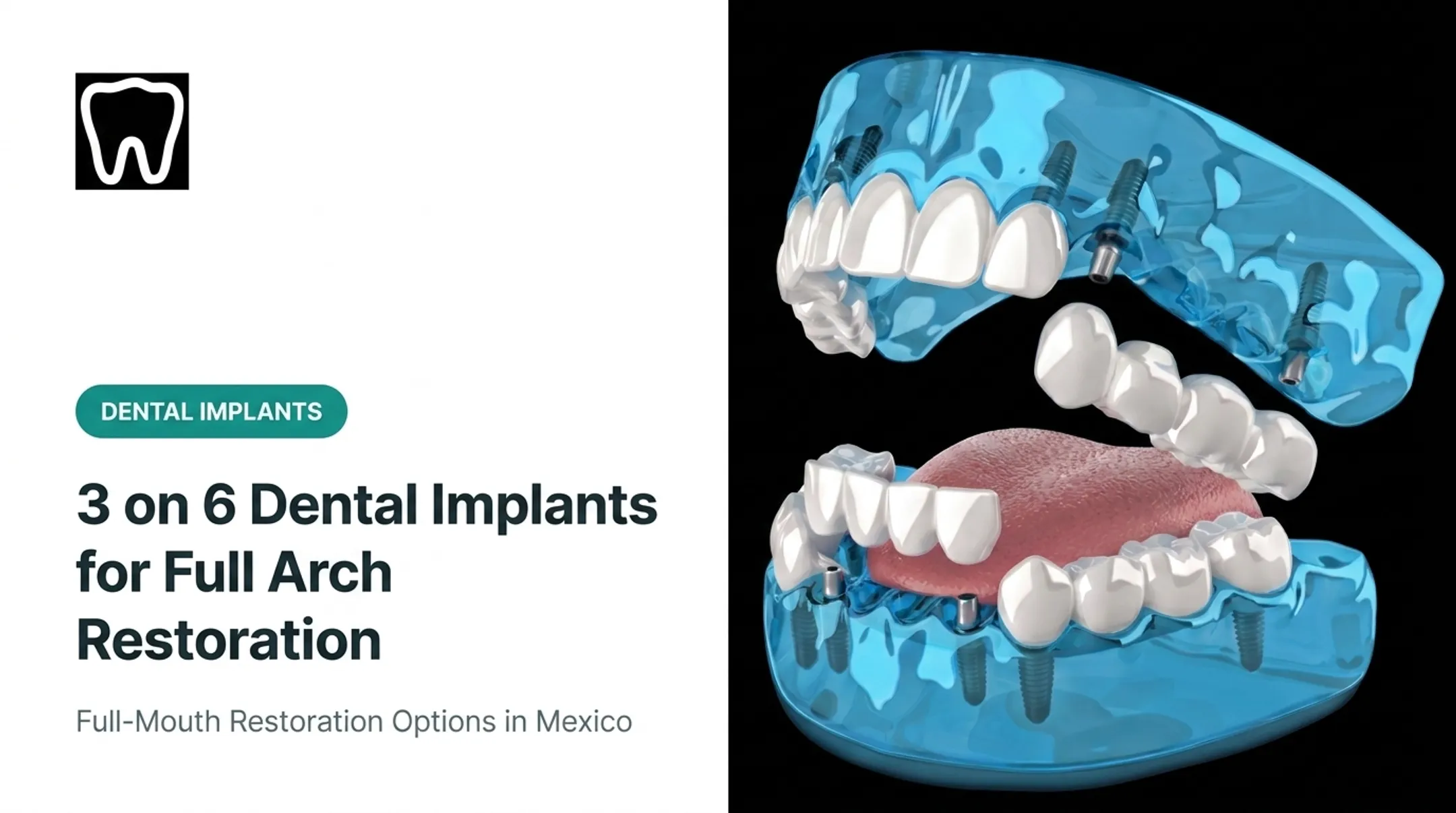
3 on 6 implants use six titanium fixtures to anchor three individual bridges across a single arch, with each bridge typically replacing four to five teeth.
Unlike traditional All-on-4 restorations that rely on one continuous acrylic prosthesis, this approach segments the arch into three separate zirconia bridges.
There's no artificial gum material here. The design is meant to look and function closer to your natural teeth.
Why segmentation matters:
- Bite forces distribute more evenly across each bridge section
- Cleaning around and beneath the restoration is easier
- If one section ever needs attention, the other two segments can often remain untouched
The tradeoff is that each bridge relies on just two implants for support—see the comparison section below before you decide.

Am I a Good Candidate for 3 on 6 Implants?
Candidacy comes down to bone, gums, and general health. Clinics typically look for:
- Adequate bone density and width to anchor implants securely
- Healthy gums, free of untreated periodontal disease
- Good general health with no uncontrolled chronic conditions
- Realistic expectations about healing time
Factors that can disqualify or complicate candidacy:
- Severe bone loss without grafting
- Uncontrolled diabetes — linked to impaired healing and higher failure risk in a 2016 systematic review
- Heavy smoking — 140% higher implant failure risk than nonsmokers (2021 meta-analysis)
- Untreated teeth grinding or clenching
- Immune-suppressing medications
A 3D CT scan and in-person consultation determine actual eligibility.
If bone volume is insufficient, grafting is often possible during the same surgical visit. A separate preparatory graft can add three to four months of healing before implants go in.

The 3 on 6 Dental Implant Procedure: Step by Step
Here's how the process typically unfolds:
- Initial consultation and 3D imaging — A 3D Cone Beam CT scan maps bone density, nerve locations, and ideal positioning for the six implants, confirming candidacy before surgery.
- Implant surgery — Performed under local anesthesia, oral conscious sedation, or IV sedation for larger cases. Temporary removable dentures are provided while healing takes place.
- Osseointegration — Implants fuse with the jawbone over roughly 3 to 6 months, depending on bone quality and whether grafting was needed. The ITI Academy notes healing phases can range from weeks to several months by case.
- Final restoration — Abutments are attached, and the three custom bridges are fabricated and fitted, with a follow-up visit for adjustments.

Dr. José Moguel's clinic pairs 3D Cone Beam CT imaging with digital scanning so each case is planned before patients travel. Most full-arch patients need two trips: one for surgery and temporaries, then a second three to six months later for the permanent bridges.
3 on 6 Dental Implant Cost: Mexico vs. the United States and Canada
Full-arch implant pricing varies widely depending on the source and what's included. Here's a snapshot:
| Location | Typical Range (per arch) |
|---|---|
| US (branded 3 on 6 provider) | $20,000–$28,000 |
| US (Aspen Dental, full-arch average) | ~$19,979 ($19,315–$30,878) |
| Ontario, Canada (All-on-6) | CAD 30,000–50,000 |
| Mexico (comparable All-on-6 treatment) | $12,000–$16,000 |
That gap lines up with the 60-70% savings many patients report when choosing treatment in Mexico. CareCredit's 2025 guide similarly places average US costs in the $9,700–$24,000 range.
Final pricing depends on several factors:
- Implant brand — Nobel Biocare, Straumann, and MegaGen are commonly used premium options
- Bone grafting needs — added if the CT scan shows insufficient volume
- Sedation choice — local, oral, or IV sedation carry different costs

What About Insurance?
Most dental insurance plans don't fully cover implant treatment. Delta Dental and Cigna both confirm implants aren't standard inclusions in most policies, though diagnostics or extractions may be partially covered.
Dr. Moguel's clinic supports patients with:
- Itemized treatment statements using standard ADA procedure codes
- Pre-treatment documentation for benefit pre-determination
- Digital X-rays and clinical records in English
- Letters of medical necessity for appeals
Getting There
Travel rarely wipes out the treatment savings when logistics stay simple. The clinic sits in Los Algodones, roughly a three-minute walk from the Andrade, California border crossing. Most patients park on the US side and cross on foot, avoiding the need for Mexican auto insurance. Staff can help coordinate hotel stays in Yuma, Arizona (about 15 minutes away) and local shuttle service.
3 on 6 vs. All-on-4 vs. 3-ON-8™: Which Full-Arch Option Fits You?
Choosing between full-arch systems comes down to implant count, feel, and how much redundancy you want.
| Feature | All-on-4 | 3 on 6 | 3-ON-8™ |
|---|---|---|---|
| Implant count | 4 (2 angled) | 6 (vertical) | 8 |
| Bridge design | One-piece prosthesis | Three segmented bridges | Three independent bridges |
| Gum material | Acrylic prosthesis | None — natural look | None — natural look |
| Redundancy if one implant fails | Affects entire arch | Affects one bridge segment | Greater redundancy across segments |
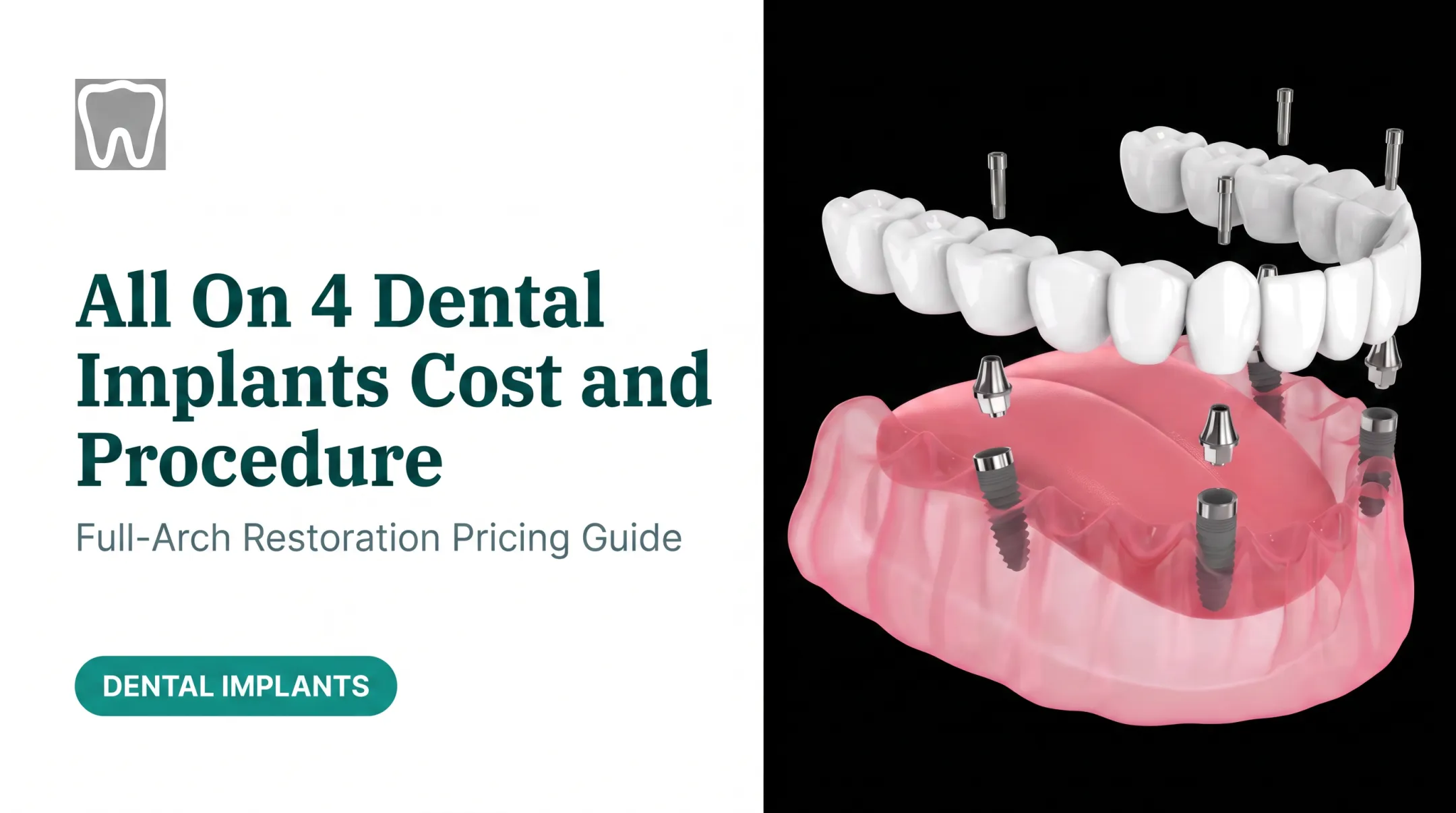
All-on-4 uses two straight anterior implants and two posterior implants angled up to 45 degrees. That design can avoid anatomical obstacles and shorten the cantilever.
A 2024 systematic review of 53 studies covering over 20,000 implants found survival rates of 98.5% for four-implant arches and 97.0% for six-implant arches, without a statistically significant difference between them.

3 on 6 trades some of that simplicity for a more natural feel and segmented bridges. Each bridge depends on just two implants, so losing one implant can affect that entire segment.
3-ON-8™, Dr. Moguel's patented protocol, adds two more implants per arch beyond the 3 on 6 configuration. The extra anchorage is designed to spread bite force across more support points and add redundancy: if one implant needs attention, the other segments can often stay unaffected.
There's no universal best option. The right choice depends on your bone density, budget, and how much long-term security you want. A consultation and CT scan review is the best place to sort that out.
Frequently Asked Questions
How much do 3 on 6 dental implants cost?
US pricing for comparable full-arch treatment often runs $19,000–$28,000 per arch, while Mexican clinics typically start in the $12,000–$20,000 range, depending on implant brand and case complexity.
Does insurance cover 3 on 6 dental implants?
Most dental plans don't fully cover implants, though some cover diagnostics or extractions. Dr. Moguel's clinic provides itemized documentation and ADA coding support to help with claims and appeals.
Who is a good candidate for 3 on 6 implants?
Good candidates have adequate bone density, healthy gums, and no uncontrolled chronic conditions. Heavy smoking, untreated bruxism, or severe bone loss can complicate eligibility.
Which is better, 3 on 6 or All-on-4 dental implants?
All-on-4 uses four implants; 3 on 6 uses six for added stability under the bridge. Bone density, budget, and aesthetics decide the better fit. Patients needing still more support may prefer the 3-ON-8™ protocol.
How long does it take for 3 on 6 dental implants to heal?
Implants typically need 3 to 6 months to fuse with the jawbone (osseointegration) before final bridges are fitted. Bone grafting, if needed, can extend this timeline.
How long do 3 on 6 dental implants last?
Titanium implants can last decades or a lifetime with proper hygiene and regular dental checkups, and Dr. Moguel's clinic backs them with a lifetime warranty. Bridges may need maintenance or replacement after roughly 10-15 years of normal wear.