
A single implant in the US can run $3,100 to $5,800 once you include the abutment, crown, and imaging, according to an AAID analysis of ADA Health Policy Institute data. Abroad, that same treatment can cost a few hundred to a couple thousand dollars. Add rising inflation and dental tourism's continued growth, and more patients than ever are crossing borders for care.
This guide breaks down the cheapest destinations, what actually drives implant pricing, and how to vet a clinic before you book a flight (or a short drive).
TL;DR
- US implants average $3,100–$5,800 total per tooth; low-cost destinations often run far below that range
- Mexico, Turkey, Thailand, Hungary, and Costa Rica are the main low-cost destinations
- Los Algodones, Mexico clinics advertise savings of roughly 60-70% versus US pricing
- Price depends on implant brand, material, number of implants, and whether grafting is needed
- Choose safely by verifying credentials, written quotes, and warranty terms before you book
Overview of Dental Implant Costs in 2026
A dental implant replaces a missing tooth root with a titanium or zirconia post, topped with a crown. Costs vary widely by country, the dentist's training, and the materials used.
The global dental tourism market — which includes implants, orthodontics, and cosmetic dentistry — was valued at $14.8 billion in 2025. It is projected to reach $17.6 billion in 2026, according to Grand View Research. That's the broader dental tourism category, not implants alone, but it signals how many patients are shopping internationally for care.
Below is a breakdown of the destinations patients research most often, along with what makes each one attractive (or logistically tricky).
Cheapest Places to Get Dental Implants in 2026
Before comparing countries, know what actually separates a good deal from a risky one:
- Price transparency: itemized, written quotes with no hidden fees
- Board certification: verifiable credentials, not just marketing claims
- Implant brand quality: FDA-approved, recognized manufacturers
- Warranty terms: what's covered, and for how long
- Travel convenience: how easy it is to get there from the US or Canada
Dental Implants in Mexico (Los Algodones)
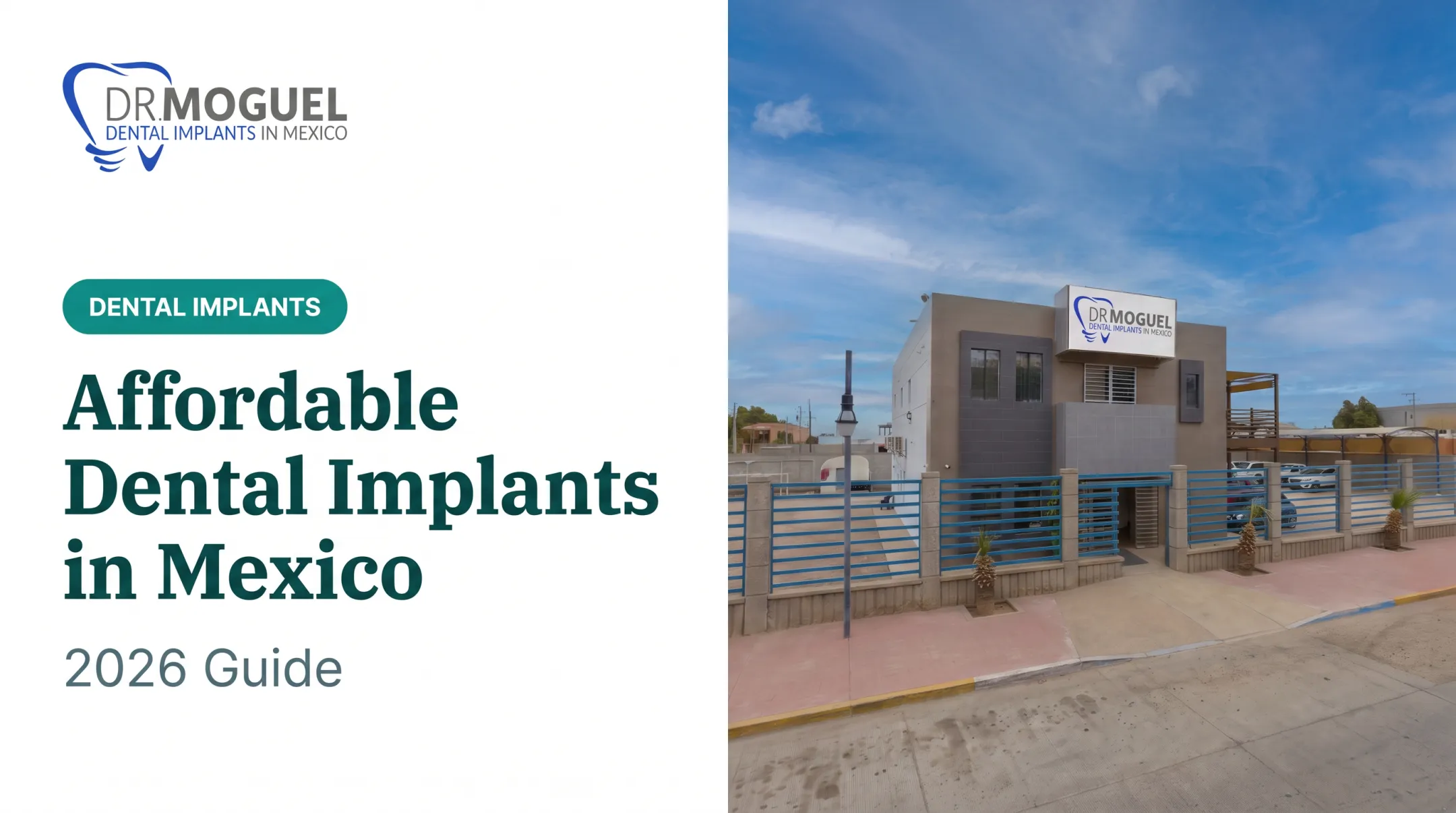
Los Algodones (nicknamed "Molar City") sits just across the Andrade, California border crossing near Yuma, Arizona—about a 3-minute walk from the US side. Dr. José Moguel, a board-certified periodontist with 38+ years of experience and 17,000+ implants placed, practices here at Dental Implants in Mexico.
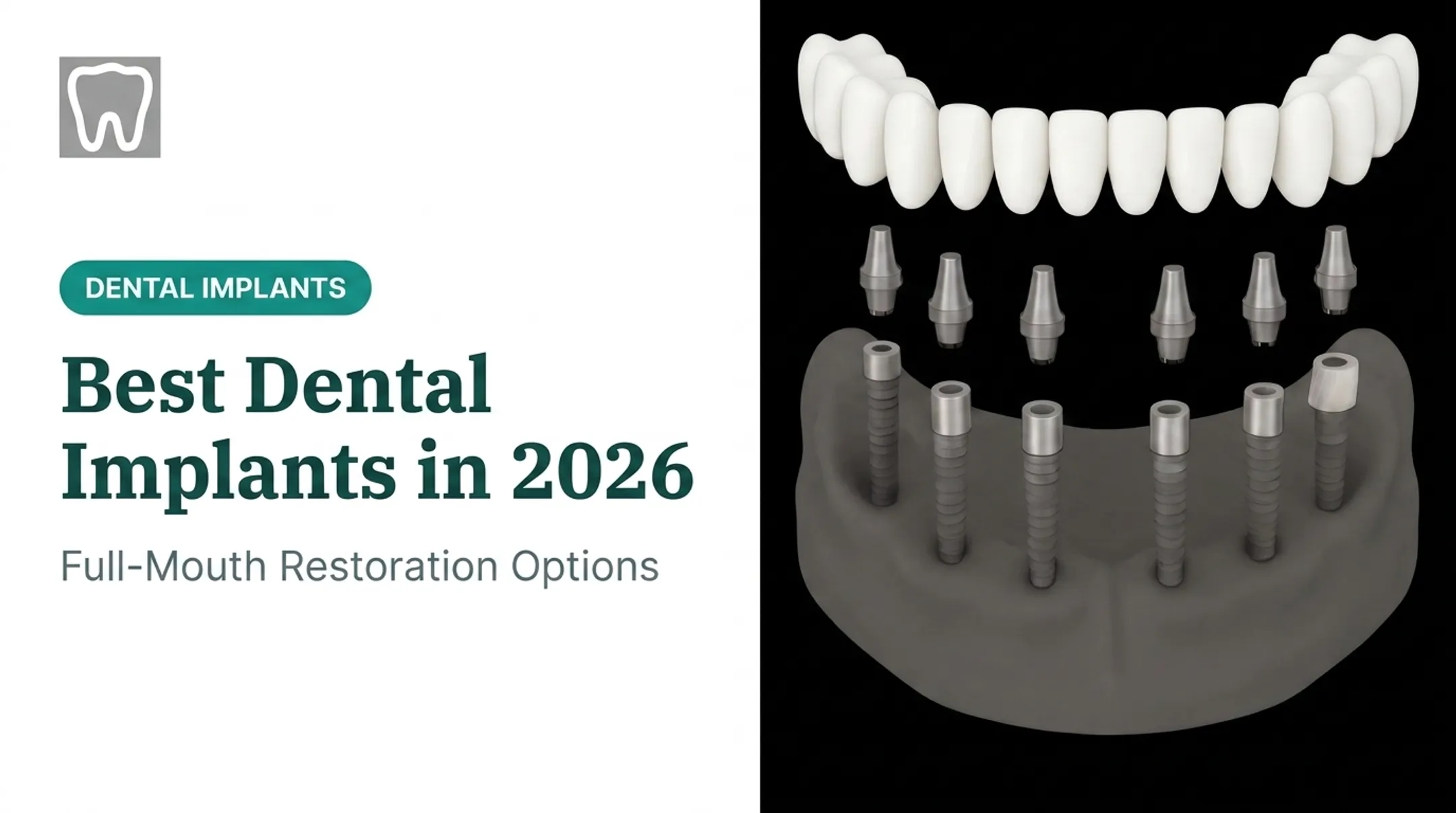
His clinic developed the 3-ON-8™ protocol, which uses eight strategically placed implants per arch (compared to four for All-on-4 or six for All-on-6) to support three separate zirconia bridges. The segmented design means if one section needs repair, the whole restoration doesn't have to be replaced.
| Category | Details |
|---|---|
| Pricing | Single implant from $1,500; All-on-4 from $6,000; All-on-6 from $8,000; 3-ON-8™ from $15,000 |
| Technology | 3D Cone Beam CT imaging, digital scanning, in-house CAD/CAM lab, laser surgery |
| Specialties | All-on-4, All-on-6, 3-ON-8™, full-mouth reconstruction, bone grafting, sinus lifts |
The clinic uses FDA-approved implant systems from Nobel Biocare, Straumann, and MegaGen. Free consultations and hotel coordination in Yuma are available for patients coming from further away.
Implant hardware carries a lifetime warranty. Crowns and zirconia arches are covered for five years.

Border access keeps Mexico simple for many US and Canadian patients. If you can travel farther for bundled trip packages, Turkey is the other high-volume option most shoppers compare next.
Turkey (Istanbul/Antalya Clinics)
Turkey remains one of the world's biggest dental tourism hubs, with all-inclusive packages that bundle treatment, hotel stays, and airport transfers. The Turkish Dental Association updated its official treatment tariff effective January 2025, which shows how structured the market has become.
| Category | Details |
|---|---|
| Pricing | Package-based pricing varies significantly by clinic; request itemized quotes before booking |
| Technology | Common brands include Nobel Biocare and Alpha Bio Tec |
| Considerations | Long-haul travel for North American patients; verify accreditation independently |
Hungary (Budapest Clinics)
In Europe, Hungary stands out on dentist supply rather than package tourism alone. It has one of the highest dentist-to-population ratios on the continent: over 7,180 practicing dentists as of 2023, per the US International Trade Administration. That density keeps competition, and pricing, favorable for patients.
| Category | Details |
|---|---|
| Pricing | Budapest clinics are known for competitive rates; get a written quote before committing |
| Technology | Imaging and lab support comparable to Western Europe |
| Considerations | Best suited for European patients; long travel time from North America |
Costa Rica
Closer to home than Europe or Asia, Costa Rica combines an established dental tourism industry with a tourism-friendly setting. Many dentists here train in the US or Europe, and clinics increasingly maintain ADA-style affiliations.
| Category | Details |
|---|---|
| Pricing | Package pricing varies by clinic; the national dental college publishes a minimum-fee tariff |
| Technology | Clinics commonly use Straumann and Nobel Biocare systems |
| Considerations | Travel logistics are more involved than a border-town clinic |
Thailand
Thailand has one of the largest concentrations of internationally accredited hospitals in Asia. Bangkok's BIDH Dental Hospital, for example, publishes transparent pricing through late 2026.
| Category | Details |
|---|---|
| Pricing | Implant body plus crown starting around 65,000-85,000 THB; All-on-4/ProArch from 300,000 THB per jaw |
| Technology | Multiple JCI-accredited facilities operate in the country |
| Considerations | Long-haul flights for US, Canadian, and European patients |

What Affects the Price of Cheap Dental Implants
Several factors determine whether a quote lands on the low end or the high end:
- Implant brand and material — titanium is the most-studied option; zirconia is metal-free but has less long-term evidence, per a peer-reviewed materials review
- Number of implants — a single tooth costs far less than All-on-4, All-on-6, or full-mouth protocols like 3-ON-8™
- Bone grafting or sinus lifts — often billed separately; in Mexico, grafting typically runs $400–$800 and a sinus lift $600–$900 ($1,000–$1,700 combined)
- Clinic overhead and location — border-town clinics generally cost less than big-city practices
A transparent quote should spell out every one of these line items before you travel. If a price seems too good, ask what it doesn't include.
One more factor pushing patients abroad: US and Canadian insurance rarely covers implants. Most plans classify them as cosmetic, and public coverage in Canada's dental plan doesn't clearly extend to implant placement. That gap is a major reason patients look outside their home country.

How to Choose a Trustworthy Provider for Cheap Implants
Cheap doesn't have to mean risky, but it does require homework. The ADA's own travel guidance warns that infection control standards and training oversight vary widely by country.
Credentials to verify before booking:
- Board certification with the country's dental association (ADA, ADM, or local equivalent)
- Years of experience and implants placed
- Specific implant brand being used — get it in writing
- Written treatment plan itemizing every procedure
Red flags to walk away from:
- No written treatment plan or itemized quote
- Vague or absent warranty terms
- Unclear travel or emergency-care logistics
- High-pressure sales tactics instead of consultation time
A British Dental Association survey found that 86% of dentists who responded had treated patients with complications following treatment abroad, most commonly involving crowns and implants. Those findings make careful provider vetting essential before you book.
Clinics offering free consultations, itemized quotes with ADA CDT procedure codes, and coordinated travel logistics cut much of that risk.

Dental Implants in Mexico, for instance, provides digital pre- and post-operative X-rays alongside itemized receipts patients can submit to their home insurer for potential reimbursement.
Conclusion
"Cheapest" only means something if it's paired with real credentials, quality materials, and a warranty that actually protects you. The lowest sticker price can turn expensive fast if complications arise later.
Before booking anywhere, request a detailed written quote and calculate your total trip cost — treatment plus travel, lodging, and follow-up care — not just the advertised implant price.
If you're comparing clinics, request a free consultation with Dental Implants in Mexico for a transparent, itemized quote built from your X-rays and dental history.
Frequently Asked Questions
Which country has the cheapest dental implants in 2026?
Mexico and Turkey typically offer the lowest prices, with single implants often 60–70% below US or Canadian rates. Always confirm pricing with a written, itemized quote rather than a marketing headline.
What is the average cost of a dental implant in the US vs. abroad?
US patients pay roughly $3,100 to $5,800 total per implant, according to AAID/ADA data. Comparable treatment abroad, including in Los Algodones, Mexico, often costs 60-70% less.
Are cheap dental implants abroad safe?
Safety depends on the clinic's accreditation, the dentist's credentials, and sterilization standards. Verify board certification and ask for the exact implant brand being used.
How much can I save by getting dental implants in Mexico?
Clinics in Los Algodones, including Dental Implants in Mexico, advertise savings of approximately 60-70% compared to US prices for comparable treatment.
Does insurance cover dental implants abroad?
Most US insurance plans don't directly cover treatment performed abroad, but many patients submit itemized receipts and ADA procedure codes for partial reimbursement. Check with your insurer before traveling.
How long do dental implants last?
A 2024 meta-analysis found implant survival rates around 88-92% over 20 years in well-maintained cases. With proper care and a legitimate warranty, implants can last decades. No provider should guarantee a lifetime outcome.