
That confusion matters. It affects your treatment timeline, your total cost, and whether you'll need one procedure or both before an implant can go in. Getting this wrong in your head can lead to sticker shock later or unrealistic expectations about how fast you'll walk away with new teeth.
This guide breaks down exactly how these procedures differ, when each one applies, and what to expect when a board-certified periodontist like Dr. Moguel plans your treatment.
TL;DR
- Bone grafting is the broad category: it rebuilds jawbone volume anywhere in the mouth
- A sinus lift is one specific type of bone graft, used only in the upper back jaw
- Both need months of healing before implants go in, though timelines differ by technique
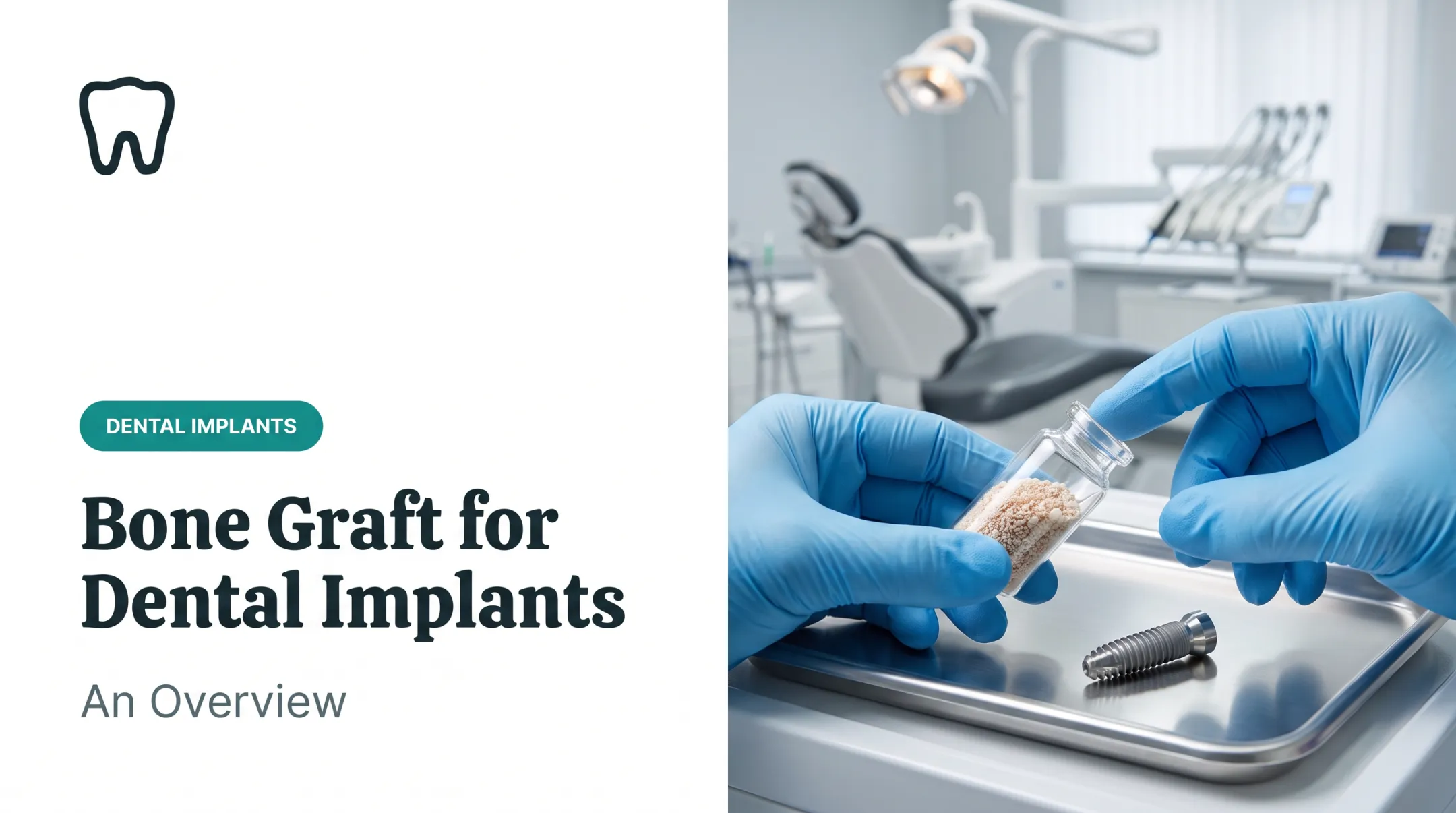
- Material options (donor bone, synthetic bone, or bone from another site) apply to both
- CBCT imaging determines which approach (or combination) fits your case
Bone Graft vs Sinus Lift: Quick Comparison
| Factor | Bone Graft | Sinus Lift |
|---|---|---|
| Purpose | Rebuilds bone volume, width, or height anywhere in the jaw | Raises the sinus floor for height in upper molar/premolar region |
| Location | Upper or lower jaw, any deficient site | Upper jaw only, near the maxillary sinus |
| Complexity | Ranges from simple socket preservation to block grafts | Elevates the sinus membrane (lateral window or transcrestal) |
| Healing time | 3-4 months (socket preservation) to 4-6 months (block grafts) | Often 6-9 months for full graft maturation |
| Cost (Mexico) | $500-$800 | $600-$900 |

A sinus lift typically costs about $100 more than a standard graft. It is more technically demanding because it involves elevating the sinus membrane itself.
US pricing commonly runs $2,500–$4,000 for a sinus lift alone. Treatment in Los Algodones, Mexico can cut that cost by roughly 60–70%.
What Is a Bone Graft?
A bone graft is a surgical procedure that adds material to your jaw to rebuild bone lost after an extraction, injury, or years of missing teeth.
Think of it as scaffolding. The graft gives your own bone cells a surface to grow on, and your living bone gradually replaces it through a process called creeping substitution.
There are three main types:
- Socket preservation — placed right after a tooth extraction to stop the socket from collapsing
- Ridge augmentation — rebuilds width or height along a longer stretch of jaw
- Block graft — a solid piece of bone used for more severe deficiencies
The core benefit is practical: patients who lack enough bone for implants often become viable candidates once the graft matures.
Use Cases for Bone Grafts
Grafting commonly comes up for:
- Extraction sites where bone hasn't been preserved
- Long-edentulous ridges (gaps left untreated for years)
- Periodontal bone loss or denture-related resorption
A 2020 retrospective study following 397 implants in 240 patients found a 96.4% cumulative survival rate in regenerated bone, compared to 97.5% in native bone, with no significant difference between the two. Grafted bone, done properly, performs nearly as well as bone that was never lost.
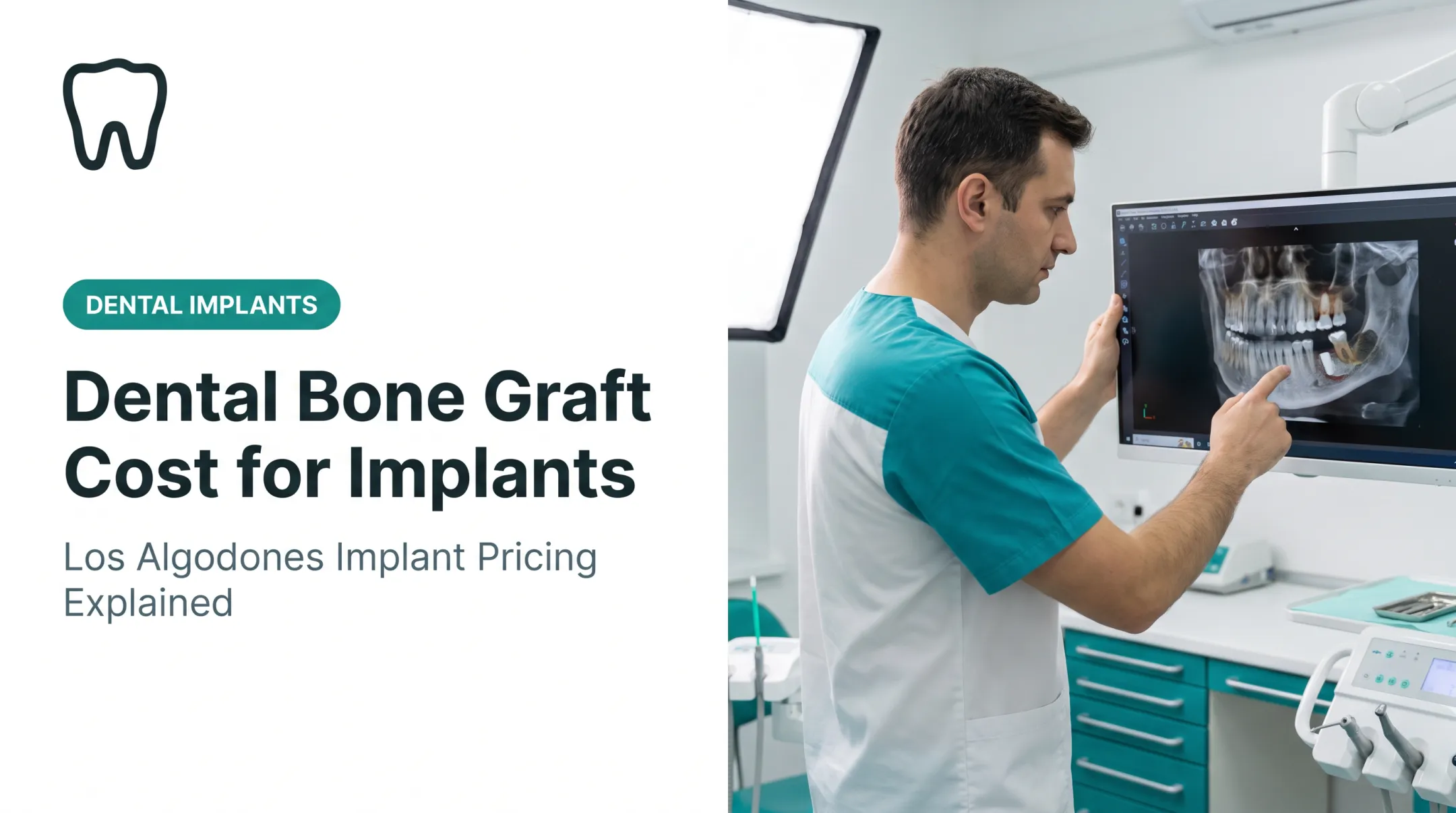
Dr. Moguel evaluates every grafting case with an in-office 3D Cone Beam CT scan before recommending a graft type. The scan maps bone depth, width, and density in three dimensions so the graft type is chosen from hard data, not estimation.

What Is a Sinus Lift?
A sinus lift is a specialized bone graft used exclusively in the upper back jaw. It elevates the sinus membrane and packs graft material underneath it, building the vertical bone height an implant needs.
Why it's needed: After you lose an upper molar or premolar, the maxillary sinus tends to expand downward over time (a process called pneumatization). One 2021 study found mean pneumatization of 1.56mm following extraction, with second-molar sites affected most. That drop can leave too little bone to anchor an implant safely.
There are two techniques:
- Lateral window — used when residual bone is under 5mm; involves accessing the sinus through the side of the jaw
- Transcrestal/osteotome — used when 5-8mm of bone remains; less invasive, accessed from the top

Without this procedure, implant placement in the upper back jaw would be anatomically impossible for many patients.
Use Cases of Sinus Lift
The classic scenario: a patient needs an upper molar or premolar implant, but imaging shows the sinus floor sitting too close to the ridge crest.
A 2022 systematic review and meta-analysis of sinus-lift approaches reported 96.9% implant survival with the lateral-window technique and 97.0% with the transcrestal approach. The study found no statistically significant difference between the two methods.
One documented case at the clinic involved a patient with over 15 years of missing upper molars and significant sinus pneumatization. The team performed bilateral lateral-window sinus lifts and placed six implants in the same visit. Follow-up CBCT confirmed more than 1.5cm of posterior bone height gained, enough to fully stabilize the implants.
Dr. Moguel's CBCT-based evaluation determines which technique (if any) applies, avoiding unnecessary surgery for patients who might only need a less invasive approach.
Bone Graft vs Sinus Lift: Which Do You Need?
The honest answer: it depends on where your missing tooth is and how much bone you've lost. A few general rules of thumb:
- Front teeth or lower jaw bone loss → a standard bone graft is usually sufficient
- Upper back jaw with less than 8-10mm of bone height → a sinus lift is likely required
- Both width loss and vertical height loss → some patients need a ridge graft and a sinus lift in the same treatment plan
There's no universal cutoff that applies to every patient. Bone quality, the planned implant size, and your overall health all factor in. That's why a free consultation backed by 3D imaging is the only reliable way to know which procedure, or combination, fits your case.
Traveling for Treatment: What to Expect at a Los Algodones Clinic
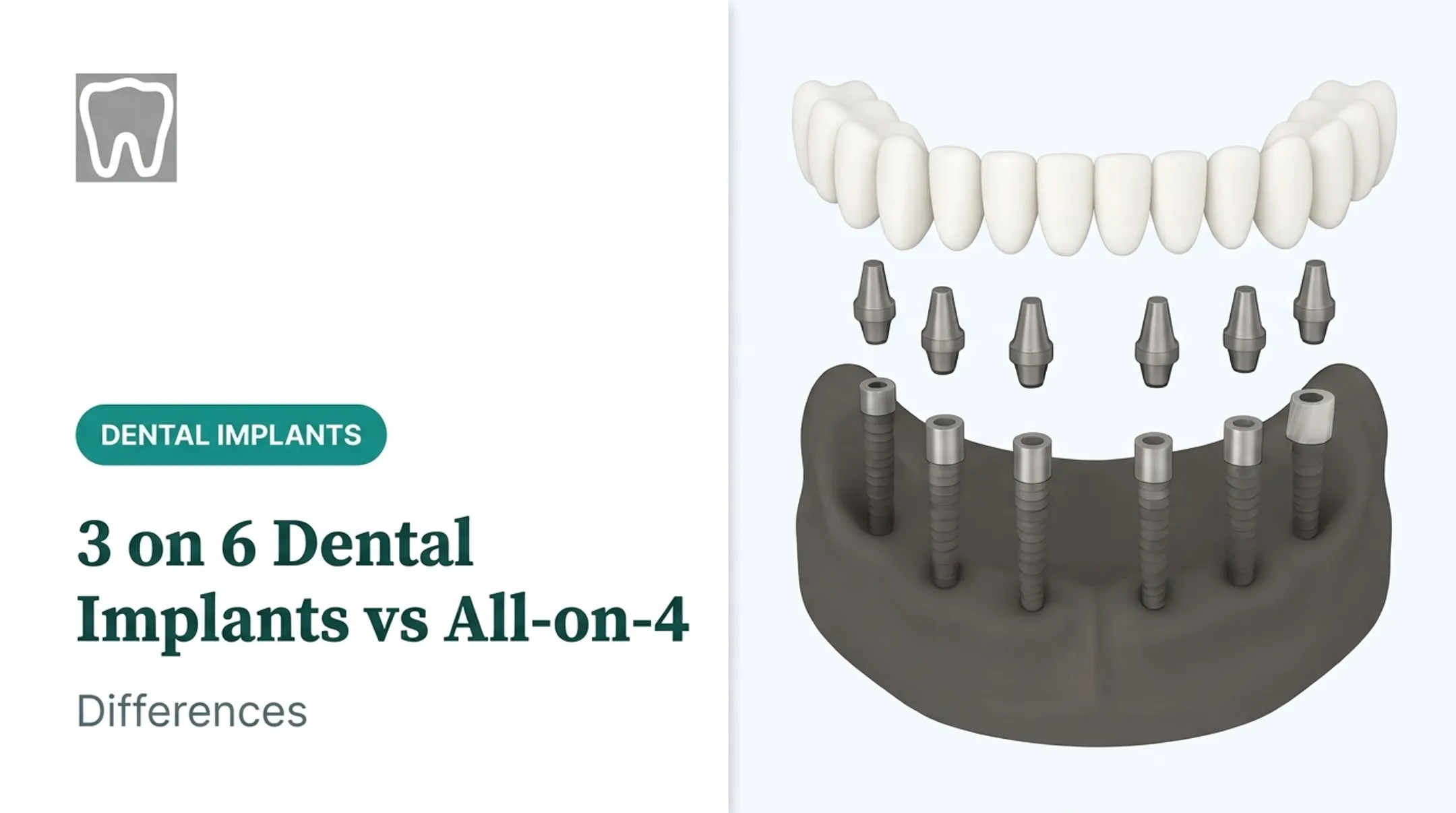
Patients from the US and Canada often combine bone grafting or sinus lift procedures with full-arch treatment plans like All-on-4 or All-on-6 when they travel to Los Algodones. Treatment planning uses the same 3D Cone Beam CT imaging and FDA-approved graft materials found in American clinics.
Most treatment plans require two clinic visits:
- First visit — bone graft or sinus lift procedure
- Second visit — implant placement, once the graft has matured (typically 3-6 months for standard grafts, 6-9 months for sinus lifts)

Getting there is straightforward:
- About a three-minute walk from the Andrade, California border crossing
- Park on the US side (about $5–$10/day) and walk across with a passport or enhanced driver's license
- Yuma International Airport is roughly 15 minutes away
- Hotel and local transportation coordination available on request
Cost savings run approximately 60-70% compared to US prices. A free, no-obligation consultation can clarify what your case needs before you commit to travel.
Conclusion
A bone graft and a sinus lift solve different problems and often work together. Which one (or both) you need depends entirely on the specific site and degree of bone loss—something only 3D imaging and a specialist evaluation can confirm.
Proper planning upfront shortens your overall treatment time, protects your implant's long-term success, and helps you avoid paying for surgery you don't need.
Frequently Asked Questions
How painful are sinus lifts and bone grafts?
Both are performed under local anesthesia and are generally well-tolerated. Expect moderate swelling and discomfort for a few days, managed with prescribed medication.
How long do sinus lifts and bone grafts take to heal?
Simpler bone grafts typically heal in 3-4 months. Sinus lifts often take 6-9 months. Follow-up imaging confirms bone maturation before implant placement.
How much does a sinus lift with bone grafting cost?
In Mexico, a sinus lift runs $600-$900, versus $2,500-$4,000 in the US. Standard bone grafts run $500-$800. Exact cost depends on technique and materials used.
What happens after a sinus lift and bone graft?
Expect mild swelling and nasal precautions (no forceful blowing or sneezing), plus prescribed antibiotics. Follow-up imaging confirms the bone has matured properly.
Can a bone graft and implant be placed at the same time?
Sometimes. If residual bone offers enough stability for the implant, Dr. Moguel may place both simultaneously, reducing your total number of surgeries.
What is the success rate of bone grafts and sinus lifts?
Published research shows survival rates in the 95-97% range for both procedures. Smoking and uncontrolled diabetes are known to lower these odds significantly.