
Mixing them up isn't just a semantics issue. Picking the wrong type can mean premature failure, wasted money, or a restoration that doesn't hold up to your bite. This matters even more for patients missing several teeth, where the stakes and the price tag both climb.
This guide breaks down the main implant types, the common crown materials, and how the two combine depending on your mouth's condition.
Key Takeaways
- Implants replace the root and crown together; crowns alone only cap an existing tooth
- Options span single-tooth posts to full-arch systems like All-on-4, All-on-6, and 3-ON-8™
- Crown materials (zirconia, PFM, all-ceramic) vary based on strength needs and location in the mouth
- Bone density, budget, and aesthetic priorities determine which implant-crown combination fits your case
- Get bone health assessed with periodontist imaging before locking in any plan
Understanding Dental Implants and Crowns
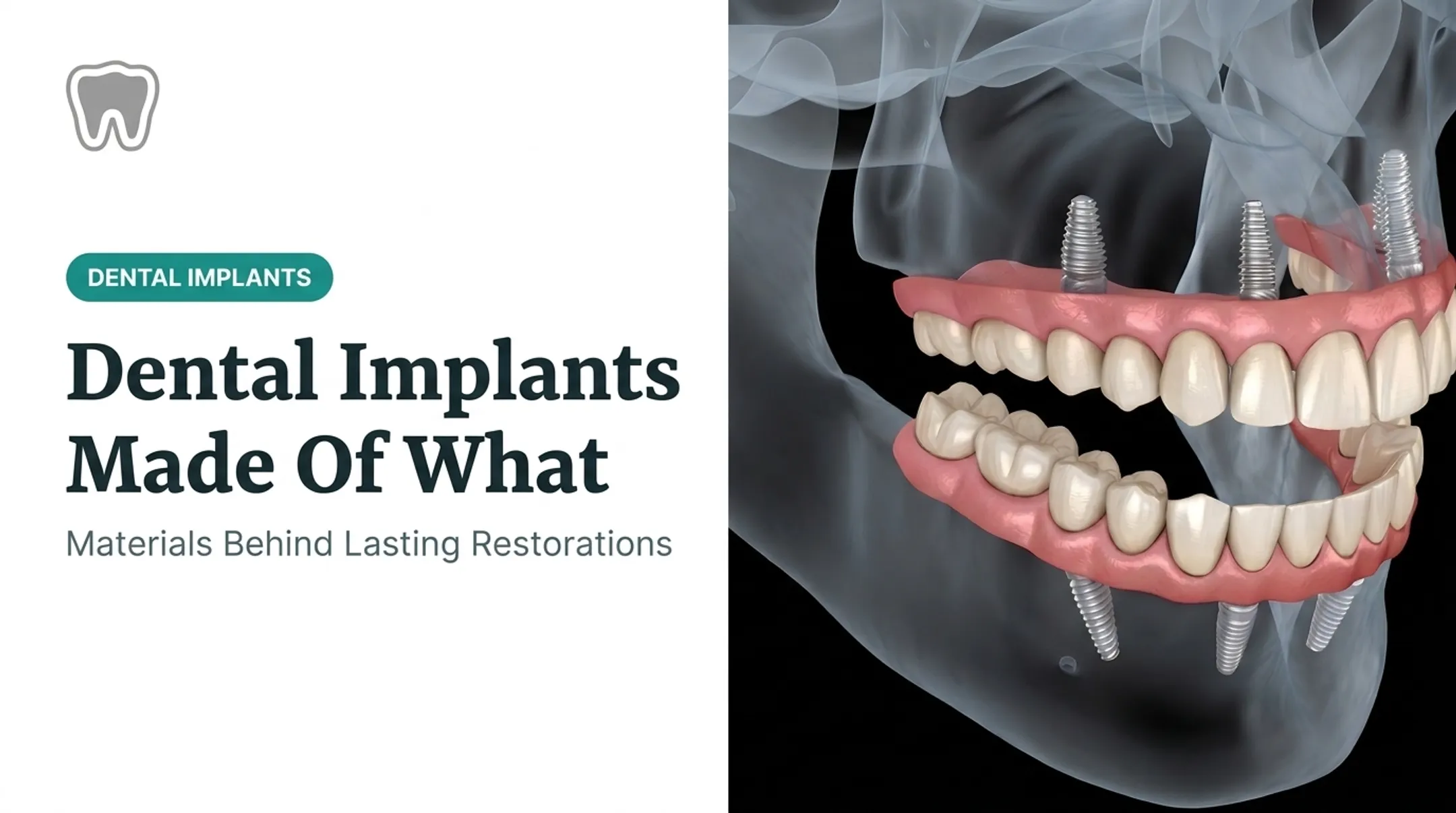
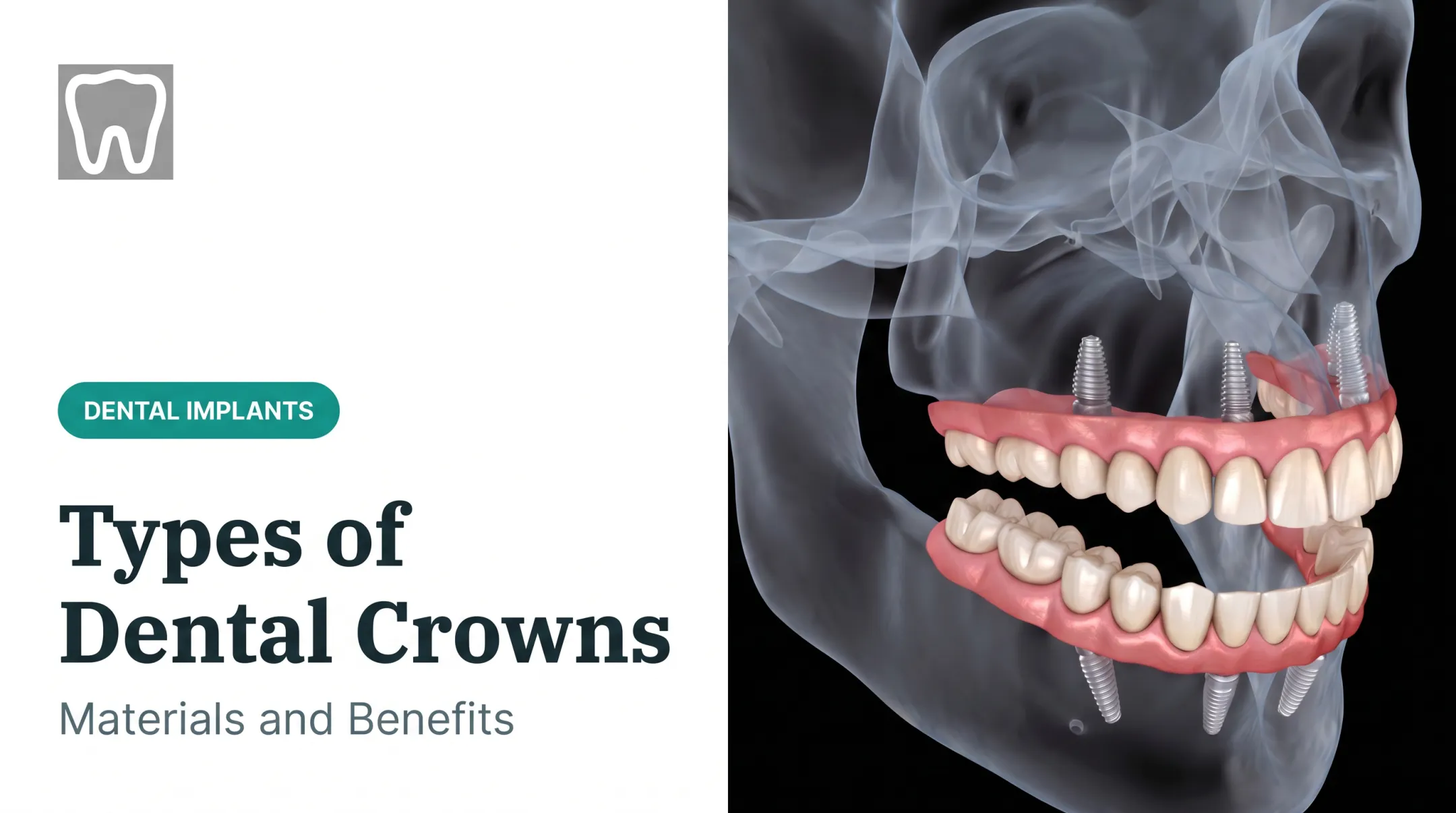
A dental implant is a titanium post placed surgically into the jawbone. It replaces the missing tooth root and, once healed, a crown is attached on top. The American Academy of Implant Dentistry defines it as a device that retains or supports a prosthesis via an abutment.
A dental crown, on the other hand, is a cap. It restores shape and strength to a damaged but salvageable natural tooth. It's also the visible piece that sits on top of an implant abutment.
Here's the source of most confusion: crowns aren't a competing treatment to implants. They're a shared component. Every implant needs a crown to function; not every crown needs an implant underneath it.
Why the Right Choice Matters
Choosing incorrectly creates real consequences:
- Premature crown failure from selecting a weaker material for a high-bite-force area
- Implant complications when bone density wasn't assessed before placement
- Unnecessary cost from over-treating a case a simpler option could fix
A 2022 review links early implant failure to poor bone quality, infection, and lack of primary stability. The types below help you match implants and crowns to bone health, bite force, and budget—so fit, longevity, and chewing function hold up the first time.
Types of Dental Implants
Implants aren't one-size-fits-all. The right type depends on how many teeth are missing and how much bone you have to work with.
Single-Tooth Implants
A single titanium post and abutment support one crown, replacing exactly one missing tooth without touching the neighbors.
- Best for: Patients missing one or two isolated teeth with adequate bone density
- Strengths: Preserves surrounding healthy teeth; looks and functions like a natural tooth
- Limitations: Not cost-effective if you're missing many teeth; requires sufficient bone volume to place If bone is thin, a scan will typically reveal whether a simple graft is needed before placement.
All-on-4 and All-on-6 Implants
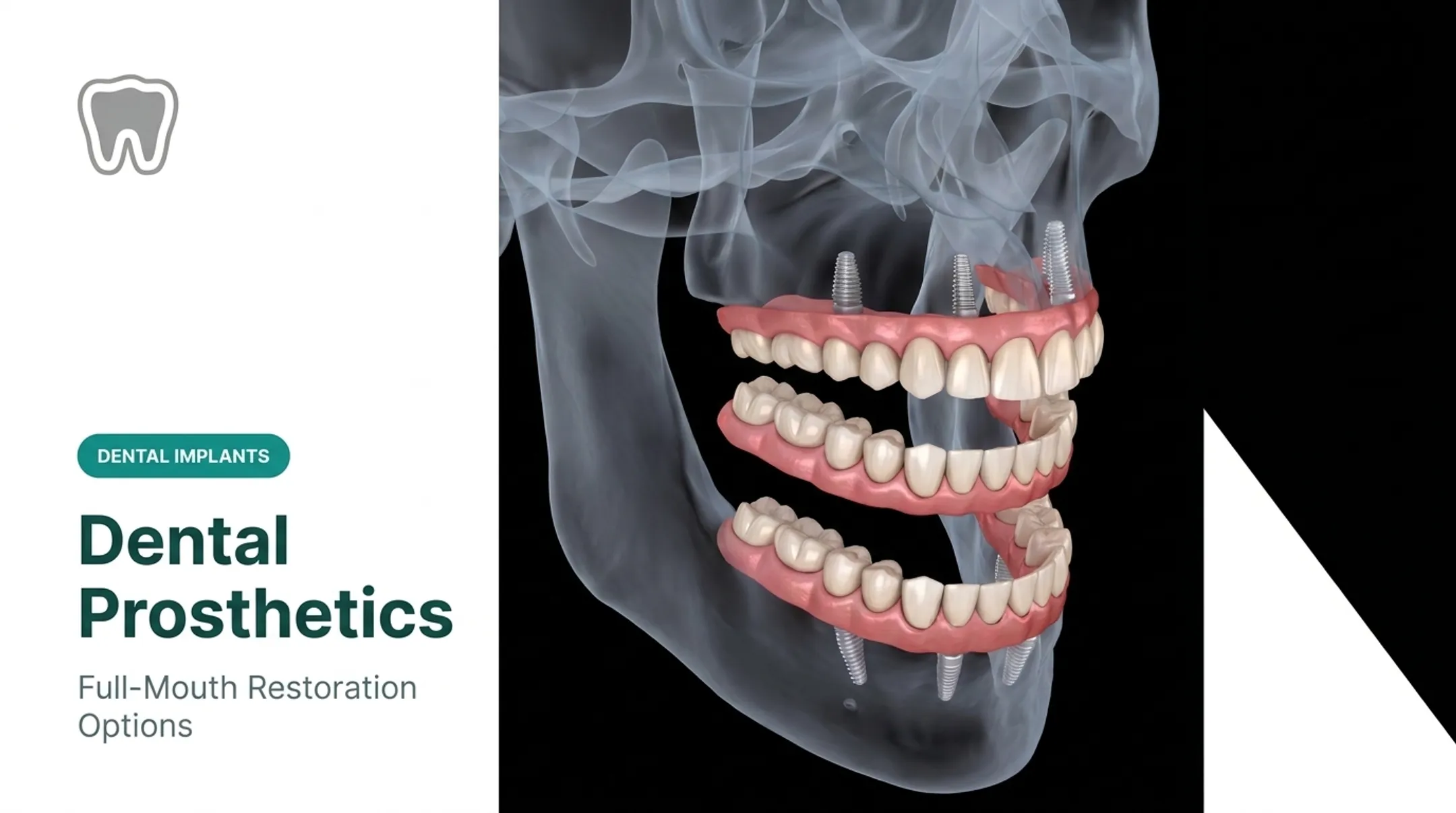
These protocols use four or six strategically placed implants to support a full arch of fixed replacement teeth in one procedure.
- How it works: Implants are angled to maximize existing bone, often reducing the need for grafting
- Best for: Patients missing most or all teeth in an arch who want a fixed, non-removable solution
- Strengths: Shorter treatment timeline, immediate function in many cases, strong chewing stability A 2016 randomized controlled trial tracking 40 patients over five years found 98.75% implant survival for All-on-4 versus 95.0% for All-on-6—a difference researchers noted wasn't statistically significant. All-on-6 generally needs more available bone per arch. Localized grafting or a sinus lift may be recommended depending on what a 3D bone map shows.

3-ON-8™ Full-Mouth Protocol
This is our clinic's patented full-arch protocol, developed by Dr. José Moguel over 38 years of practice. It uses eight implants per arch, sixteen total for a full-mouth case, to support fixed zirconia bridges.
- How it differs: More support points distribute bite force more evenly than a four- or six-implant arch
- Best for: Patients wanting maximum stability, especially those with heavier bite forces or bruxism
- Strengths: Added structural redundancy designed to reduce long-term failure risk
- Trade-off: Greater upfront planning and cost compared to simpler full-arch options Outcomes in practice track with that design goal. One patient, Robert T., came in with severe periodontitis, nine failing upper teeth, and seven failing lower teeth. He received sixteen implants across both arches with custom zirconia bridges and reported eating steak and apples again for the first time in a decade. Another patient, Sarah K., described her restoration as feeling "completely natural" while saving more than $30,000 compared to what she'd been quoted in the US.

Types of Dental Crowns
Crown material and design vary based on where the crown sits in the mouth, how much bite force it needs to withstand, and whether it caps a natural tooth or an implant abutment.
Zirconia Crowns
A strong, tooth-colored ceramic known for durability. A 2024 review of zirconia crowns recommends monolithic zirconia specifically for posterior teeth handling heavier chewing forces.
- Best for: Front and back teeth, and implant-supported restorations needing both strength and appearance
- Strengths: Highly durable, chip-resistant, biocompatible
- Limitations: Costs more than metal-based options; stronger zirconia formulations are less translucent than natural enamel
Porcelain-Fused-to-Metal (PFM) Crowns
A metal substructure covered with porcelain, combining strength with a reasonably natural look.
- Best for: Molars under heavy chewing load
- Strengths: Strong, reliable, moderate cost
- Limitations: The metal edge can show at the gumline over time; less natural-looking than all-ceramic options
All-Ceramic/Porcelain Crowns
Made entirely of ceramic, no metal, prioritizing a natural translucent look that mimics real enamel.
- Best for: Front teeth, where appearance matters most
- Strengths: Closest visual match to a natural tooth
- Limitations: Less impact-resistant than zirconia; not ideal for heavy grinders
A 2016 evidence review found five-year survival rates of 94.7% for metal-ceramic crowns and 90.7%–96.6% for all-ceramic crowns, depending on the specific material used.

How to Choose the Right Combination for You
Your anatomy, the number of teeth involved, and your long-term goals determine the right implant-and-crown combination. Factors that actually determine your plan:
- Number of missing or compromised teeth (single tooth vs. full arch)
- Jawbone density and whether grafting or a sinus lift is needed
- Aesthetic priorities (front-tooth visibility versus back-tooth strength)
- Budget, noting that treatment in Mexico can run roughly 60–70% less than comparable US pricing
- Long-term durability goals and willingness to stage treatment over time Common mistakes to avoid:
- Choosing 3-ON-8™ when a simpler single implant would do the job
- Ignoring bone density limitations and hoping grafting won't be necessary
- Picking crown material purely on price without considering where it sits in your mouth Dr. José Moguel evaluates every case with 3D Cone Beam CT imaging, which maps bone width, density, and nerve pathways before recommending anything. That level of detail is what separates a durable outcome from a guess. Consultations are free and start with a simple form submission. A coordinator typically responds within 24 hours to arrange a virtual review of your scans.

Conclusion
Implants and crowns work together in restorative dentistry. One rebuilds the root; the other restores the visible tooth structure, whether on a natural root or an implant post. Within each category, multiple types exist to match different degrees of tooth loss and bone health. A single implant suits an isolated gap. A full-arch protocol suits widespread failure. Crown material shifts based on where it sits and how hard it needs to work. Guesswork doesn't produce durable results. A proper evaluation, backed by imaging, does.
Frequently Asked Questions
Will all my teeth be extracted at once for dental implants?
It depends on your treatment plan. Full-arch protocols like All-on-4 may involve same-day extraction and implant placement, while other cases are staged over several months.
Is placing a crown on an implant painful?
No. Once the implant has healed, attaching the abutment and crown is typically painless. It's a fitting procedure, not surgery, and local anesthesia is used if needed.
What type of crown is best for dental implants?
Zirconia is often preferred for its strength and biocompatibility, though the ideal choice still depends on where the tooth sits and how much bite force it handles.
How long do implant-supported crowns last compared to traditional crowns?
Implant crowns often match or outlast traditional crowns because the implant underneath can't decay. Longevity still depends on regular cleanings and good oral hygiene.
Can a damaged tooth with a crown eventually need an implant?
Yes. If the natural root beneath a crown fractures or fails, an implant may become the only option to replace the full tooth structure.
How do I know if I need a single implant or a full-arch solution?
It depends on how many teeth are missing or failing. A professional evaluation with 3D imaging is the only reliable way to assess your bone and remaining teeth.