
But "affordable" varies wildly. A basic acrylic partial might run $1,738 on average, while a fixed full-arch implant solution can climb past $25,000, according to CareCredit's 2024 procedural cost study. This guide breaks down the types, real price ranges, and what pushes costs up or down. We'll also cover why many patients now look beyond their home country for the same quality care at a fraction of the price.
Key Takeaways
- Economy partials can cost a few hundred dollars; implant-supported full arches often top $25,000
- Full, partial, immediate, flexible, and implant-supported dentures sit at very different price points
- Extractions, fittings, X-rays, and relines can add hundreds or thousands beyond the base fee
- Insurance usually covers only 40–50% at best, so many patients use financing or care abroad
Types of Dentures Explained
Full and Partial Dentures
Full (complete) dentures replace every tooth in an arch. They rest directly on the gums, use an acrylic resin base, and suit patients who've lost all natural teeth in that jaw.
Partial dentures fill gaps while healthy teeth remain. Three common options:
- Resin/acrylic partials – budget-friendly, but bulkier
- Cast-metal partials – more durable, with visible metal clasps
- Flexible (nylon) partials – thin, lightweight, better aesthetics
Immediate, Implant-Supported, and Fixed Options
Immediate dentures are placed the same day as extractions, so patients never go without teeth. They require relining later as healing gums shrink and shift.
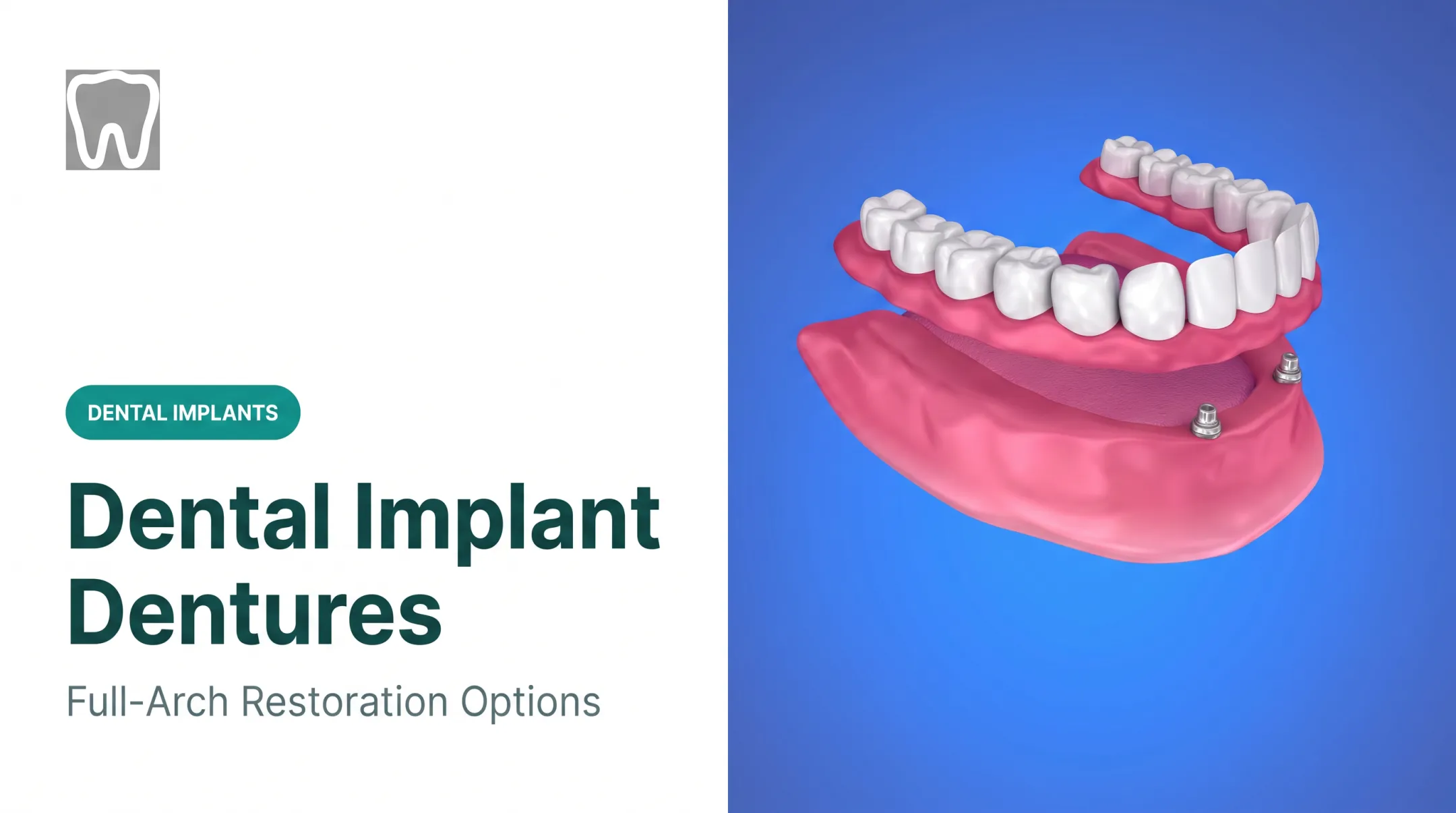
Implant-supported (snap-in) dentures anchor to titanium implants, typically two to four per arch. Unlike conventional dentures, they help preserve jawbone density instead of letting it deteriorate.
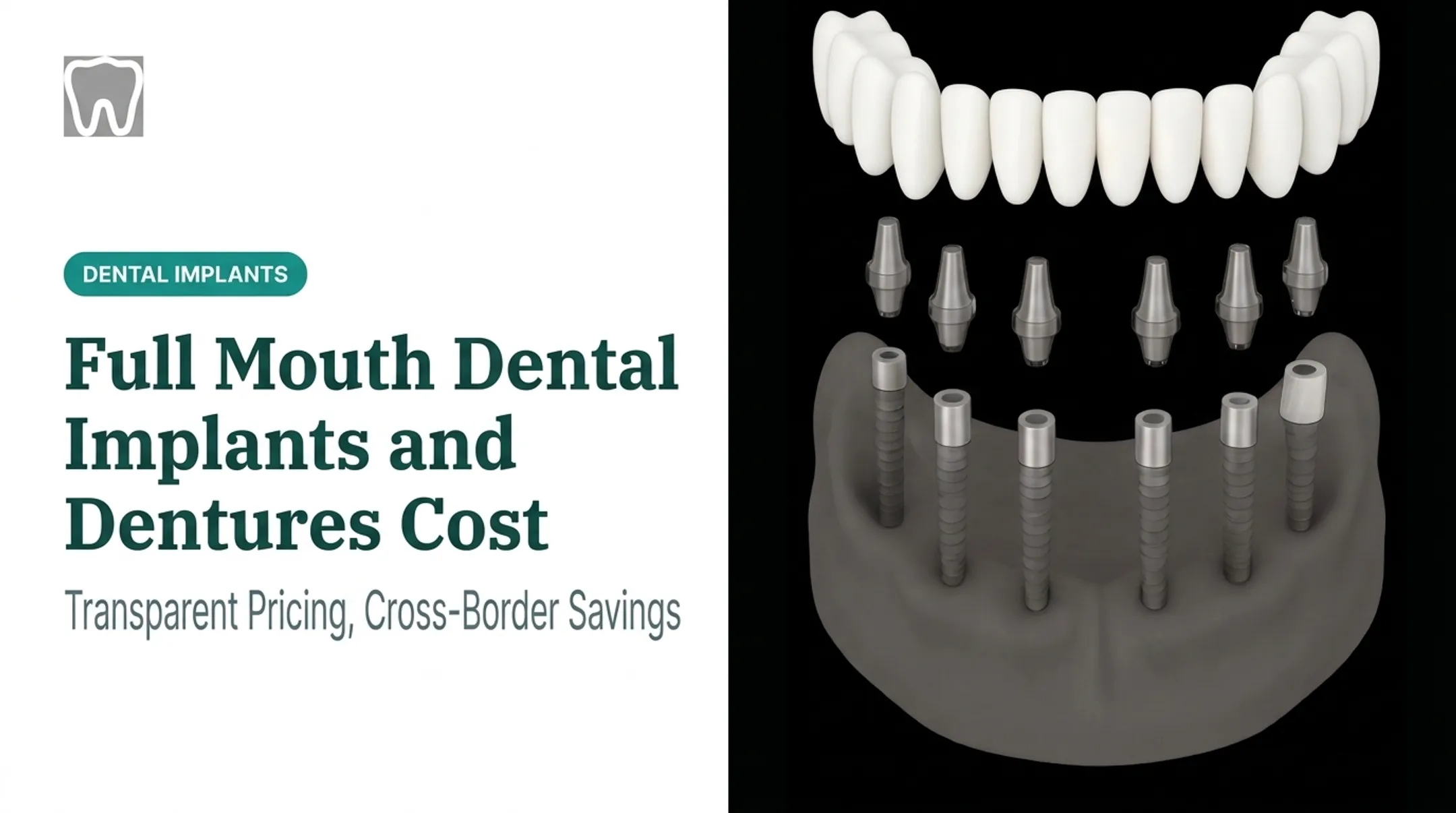
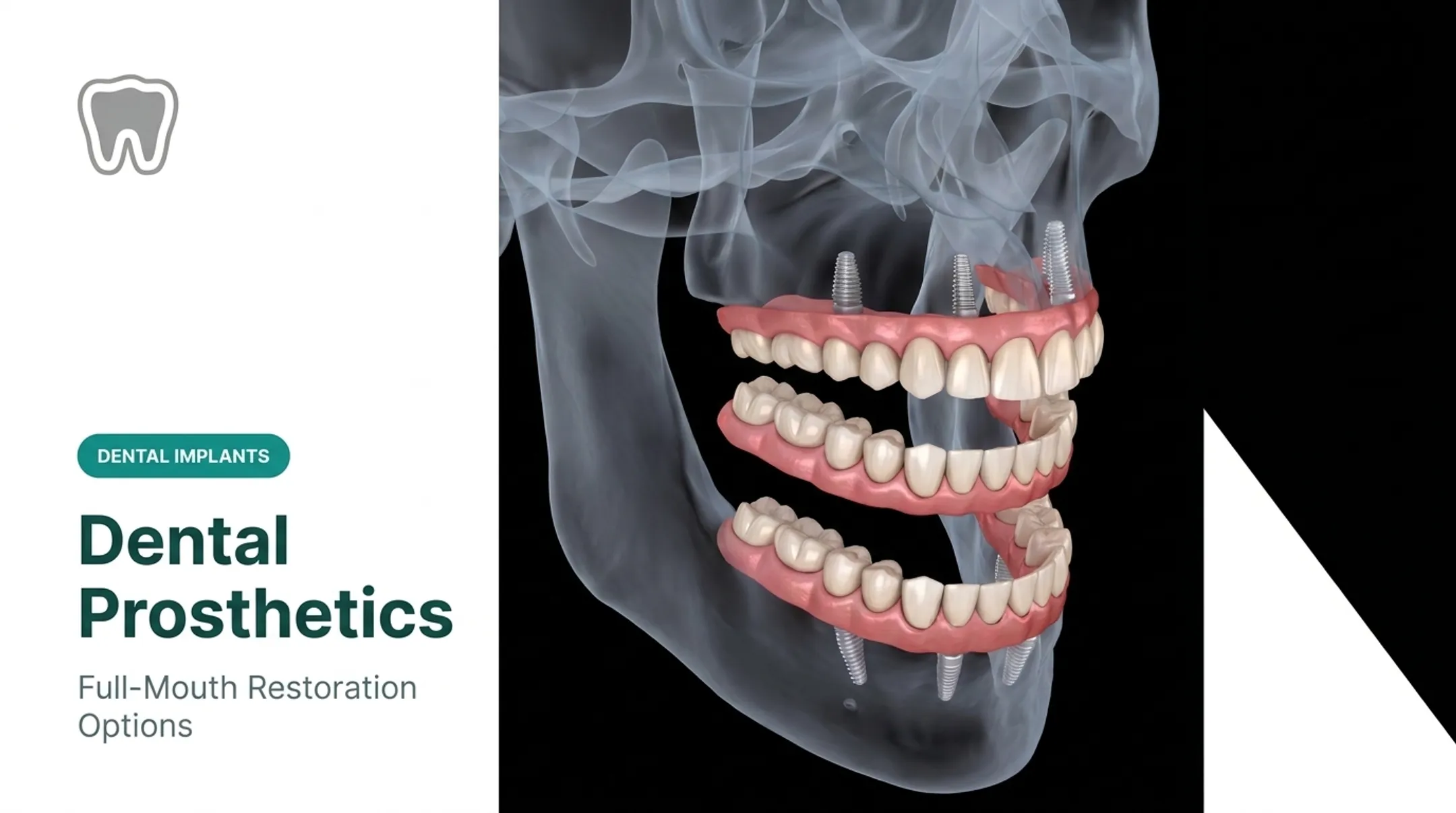
Fixed full-arch dentures (All-on-4 style) are permanent and non-removable. They deliver the most natural feel and stability but require adequate bone and surgical placement.
Flexible vs. Traditional Dentures
Flexible thermoplastic bases feel more comfortable for some wearers, but the clinical evidence is mixed. A 2019 crossover study found only modest quality-of-life differences between acrylic and flexible partials.
A broader NIH evidence review noted flexible dentures may actually have lower retention and are harder to repair or reline once damaged.
Acrylic tends to last longer and hold better; flexible tends to feel lighter and look better—neither wins for every patient.
Denture Prices and Costs by Type
Here's a snapshot of average U.S. pricing according to the 2024 CareCredit/Synchrony benchmark:
| Denture Type | Average Cost | Typical Range |
|---|---|---|
| Traditional full/removable | $1,968 | $1,520–$3,648 |
| Resin/acrylic partial | $1,738 | $1,333–$3,283 |
| Cast-metal partial | $2,229 | $1,728–$4,203 |
| Flexible nylon partial | $1,761 | $1,360–$3,451 |
| Immediate | $2,178 | $1,707–$3,540 |
| Snap-on (implant) | $2,480 | $1,901–$4,729 |
| Implant-supported | $3,976 | $3,055–$7,294 |

Fixed full-arch solutions (All-on-4 style) aren't captured in that table. They commonly run $15,000–$25,000+ per arch in the U.S., largely due to surgical placement, implant hardware, and lab fees.
Implant rows above often reflect the prosthetic only—surgical implant placement is billed separately and pushes real totals much higher.
Costs Beyond the Denture Itself
Budget for these add-ons:
- Simple tooth extractions: ~$177 average per tooth
- X-rays: panoramic ~$200; cone-beam CT up to $466
- Exams and consultations: ~$203 average
- Fittings, adjustments, and relines: billed as needed after delivery
- Denture adhesives: ongoing supply cost
Where you get treated changes the bill. Urban clinics generally charge more than rural practices, and pricing shifts significantly across states and provinces.
The Cross-Border Alternative
Patients increasingly compare U.S. prices against clinics in Mexico. At Dental Implants in Mexico, starting prices include:
- All-on-4: from $8,000 (vs. $20,000–$35,000 in the U.S.)
- All-on-6: from $12,000 (vs. $25,000–$40,000 in the U.S.)
- 3-ON-8™ full reconstruction: from $16,000 (vs. $30,000–$45,000 in the U.S.)
- Implant-supported snap-on dentures: $3,500–$5,500 (vs. $10,000–$14,000 in the U.S.)
That's roughly 60–70% savings, based on the clinic's own price comparisons against typical U.S. averages. One patient, Arthur, paid $28,500 for full-mouth treatment versus a $65,000 quote he'd received in California.

What Affects the Cost of Dentures
Several factors shape the final price:
- Material quality: Acrylic costs less than porcelain or metal frameworks, with a trade-off in durability
- Case complexity: More missing teeth or preparatory surgery (grafts, sinus lifts) raises the total
- Clinic overhead: Labor, facility, and insurance costs vary widely by location and drive quote differences
- Customization level: Digitally fabricated or premium dentures cost more than standard economy versions
If your treatment includes implant-supported dentures, material and clinic overhead usually matter more than brand name alone. Dental Implants in Mexico uses FDA-approved systems from Nobel Biocare, Straumann, and MegaGen, with grade-5 titanium and zirconia options. Lower quotes typically reflect reduced facility, labor, and insurance overhead—not lower-grade materials.
If bone loss is a concern, expect these add-ons:
- Bone grafting: $400–$800
- Sinus lift surgery: $600–$900 (plus 6-9 months of healing before implant placement)
Does Insurance Cover Dentures?
Original Medicare doesn't cover dentures. Medicare.gov confirms that routine dental services, extractions, and dentures fall outside standard coverage. Some Medicare Advantage plans offer partial dental benefits, but benefits vary, so check your policy.
Private dental insurance typically covers 40-50% of denture costs as a "major service," often subject to:
- Annual maximums (commonly $1,500 or less)
- Deductibles of $50-$100
- Waiting periods of 6-24 months before major work is covered
Given these gaps, many patients use financing plans, dental schools, community clinics, or cross-border treatment.
For U.S. patients treated in Mexico, Dental Implants in Mexico helps with reimbursement paperwork, including:
- Itemized receipts and ADA procedure codes
- X-rays and letters of medical necessity for insurance appeals
The Denture Process: Extractions, Healing, and Fitting
For conventional dentures, fabrication typically starts 8-12 weeks after extraction, once initial gum healing occurs. Complete healing can take 3-6 months.
Your dentist then takes impressions, builds a wax try-in to check fit and appearance, and delivers the final denture with follow-up adjustments as needed.
Implant-supported and fixed full-arch options follow a longer multi-step protocol—typically 3-6 months with two main clinical visits:
- Initial exam – 3D CBCT scan evaluates bone density and plans implant placement
- First visit – Extractions, implant placement, and a fixed temporary bridge, often same-day
- Healing period – 3-6 months of osseointegration on a soft-food diet
- Second visit – Digital impressions and permanent zirconia bridge fitting

Both paths often begin with extractions. Is extraction painful? Modern local anesthesia handles most discomfort during the procedure itself. The ADA's 2024 pain management guideline recommends nonopioid medications like NSAIDs as the first-line option for post-extraction pain, reserving stronger medication for cases that need it.
Dentists only recommend full extraction when teeth truly can't be saved, after a comprehensive exam and imaging review.
Frequently Asked Questions
What's the average cost of dentures?
Economy partials start around $1,300, while traditional full dentures average close to $2,000. Implant-supported and fixed full-arch options run much higher, often $15,000-$25,000+ in the U.S.
How much do partial dentures cost?
Resin partials average $1,738, cast-metal partials average $2,229, and flexible nylon partials average $1,761, based on 2024 U.S. benchmark data.
How much do metal partial dentures cost, and what are their advantages and disadvantages?
Metal partials average $2,229, higher than resin options. They're more durable and thinner, but the metal clasps can be visible when smiling or talking.
How much does it cost to have all your teeth removed and get dentures?
Extractions average $177 per tooth, plus denture costs starting around $2,000 for conventional options or $8,000+ for implant-supported full arches. Get a written quote covering both procedures separately.
Does Medicare pay for dentures?
Original Medicare doesn't cover dentures, extractions, or implants. Some Medicare Advantage plans include partial dental benefits, so check your specific plan's coverage.
Is it painful to have your teeth removed for dentures?
Local anesthesia manages pain during extraction, and most discomfort afterward responds well to over-the-counter NSAIDs. Recovery discomfort typically fades within a few days.