
Dental implants replace missing teeth with a titanium post, a connector called an abutment, and a custom crown. The process happens in stages, not overnight. If you're weighing your options, including treatment abroad, understanding each step helps you make a confident, informed decision.
This guide walks through the full procedure, realistic timelines, and options like same-day fixed arches and full-mouth restoration.
Key Takeaways
- Treatment follows 5 stages: consultation, prep work, placement, healing, and final restoration
- Full treatment takes 3–9 months, longer if bone grafting is required
- All-on-4, All-on-6, and same-day fixed arches can cut months off the wait for teeth
- Board-certified, high-volume providers deliver stronger long-term success rates
What Is the Dental Implant Procedure?
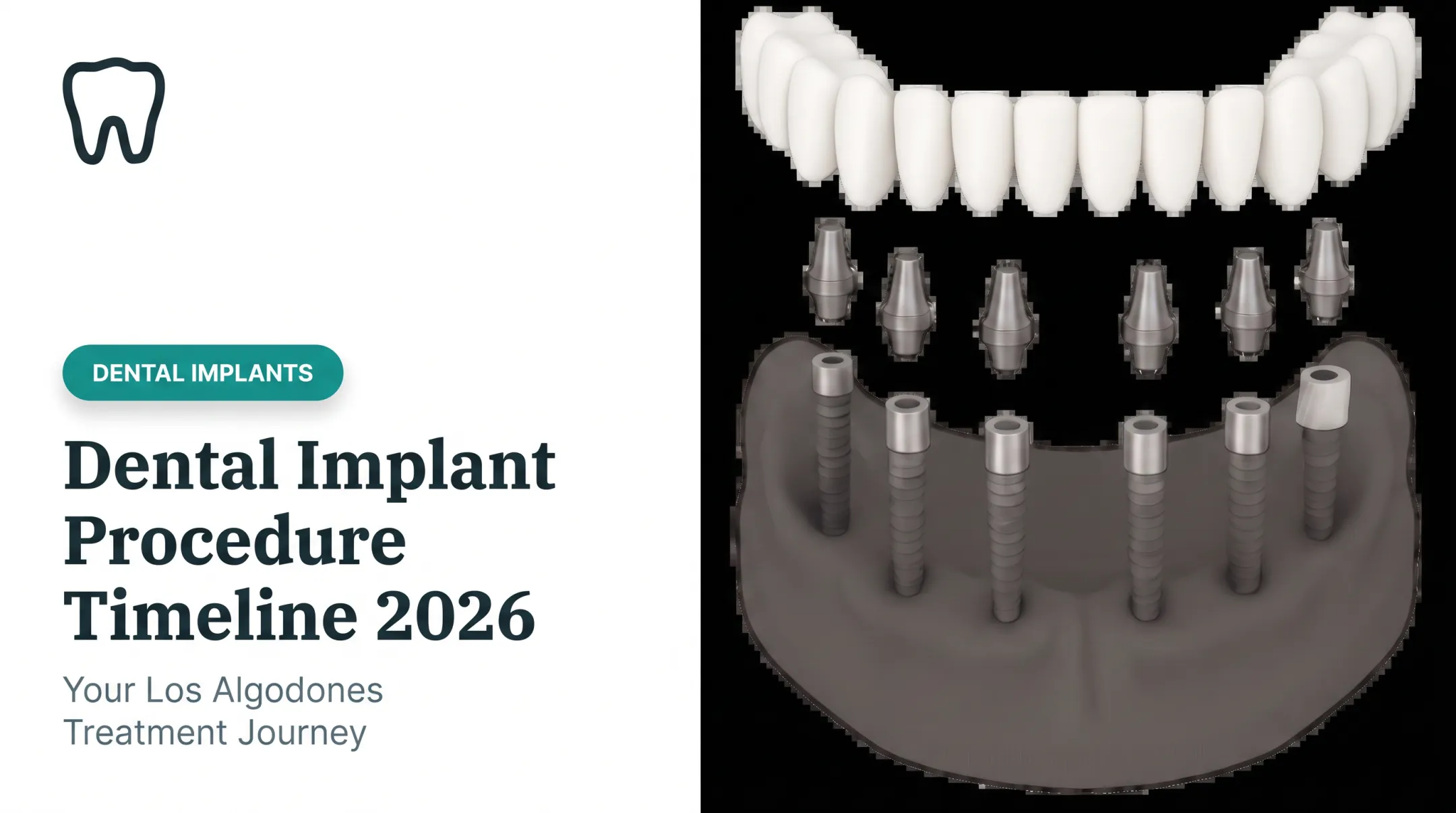
The dental implant procedure places a titanium post surgically into the jawbone to act as an artificial tooth root. Once that post fuses with the bone, it can support a crown, bridge, or full denture.
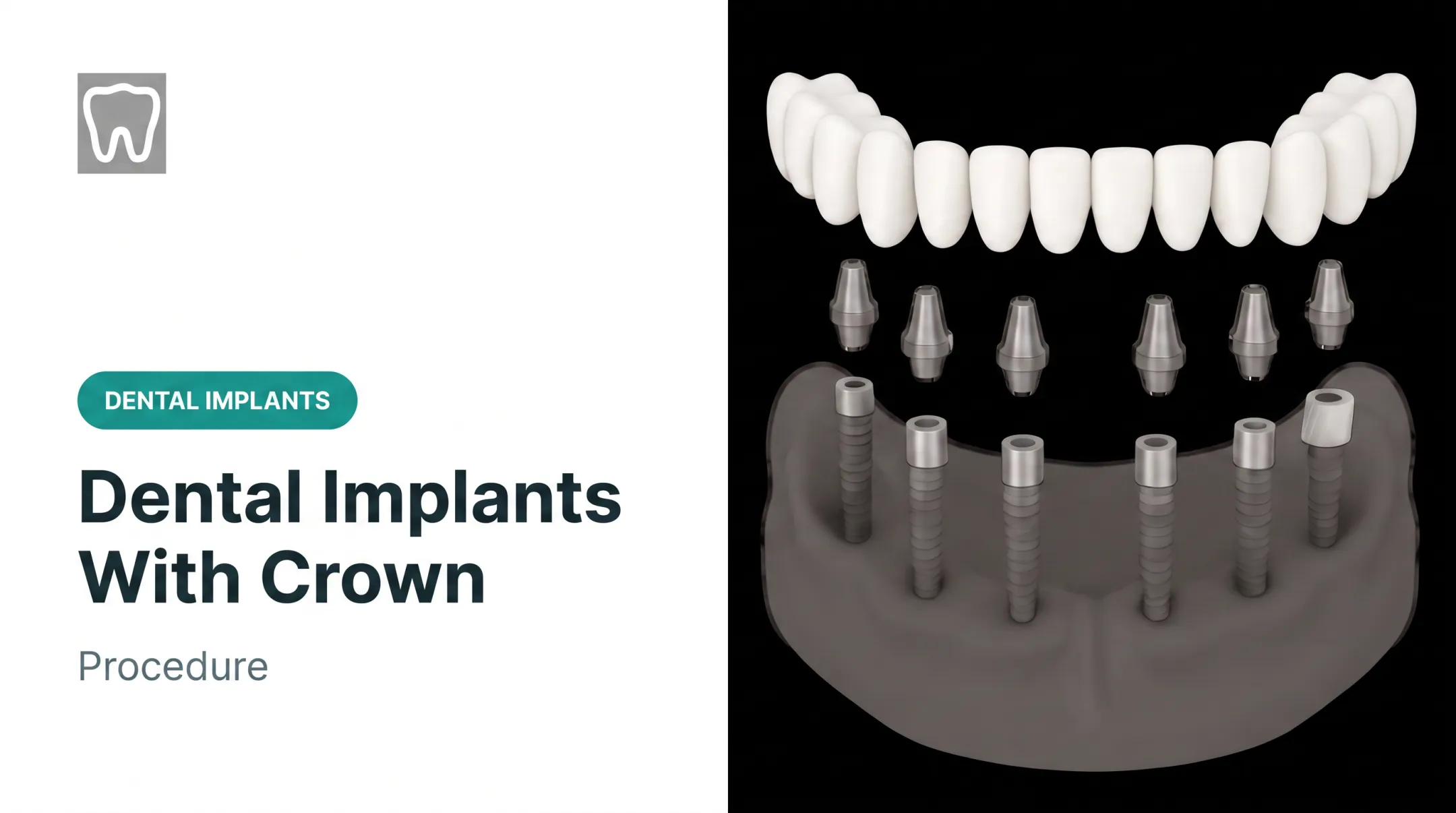
Three components work together:
- Implant post — the buried titanium foundation
- Abutment — the connector piece linking the post to your new tooth
- Crown or prosthesis — the visible replacement, custom-matched to your bite and smile
Unlike bridges or dentures, implants don't rely on adjacent teeth for support. They also preserve jawbone density by mimicking a natural root, which supports long-term oral health.

Not every patient is automatically a candidate. Bone quality and overall health both matter.
The Step-by-Step Dental Implant Process
Step 1: Initial Consultation and Diagnostic Evaluation
Everything starts with imaging. A 3D Cone Beam CT (CBCT) scan gives your dentist a three-dimensional view of bone density, width, and nerve pathways that a flat X-ray simply can't show.
From there, you'll receive:
- A personalized treatment plan based on your bone health and gum condition
- A transparent cost estimate
- A realistic timeline for your specific case
Patients traveling for care can often submit existing panoramic X-rays or CBCT scans for a remote review before booking travel.
Step 2: Preparatory Procedures (If Needed)
Not everyone needs this step, but many do. If bone volume is insufficient, or a failing tooth needs to come out first, expect one of these:
- Tooth extraction — soft tissue typically heals in 2-4 weeks
- Bone grafting — graft material generally needs 3-6 months to integrate with the jawbone before an implant can be placed safely
- Sinus lifts — often the longest preparatory step, requiring roughly 6-9 months for the graft to mature
Gum tissue may look healed within a couple of weeks, but that's not the same as the underlying bone being ready. Rushing this stage is one of the more common causes of implant failure later on.

Step 3: Implant Placement Surgery
The post is placed under local anesthesia, and most patients feel pressure rather than pain. Sedation options (oral conscious sedation or IV sedation with an anesthesiologist monitoring vitals) are available for anxious patients or longer procedures like full-arch placement.
Immediate aftercare typically includes:
- Head elevated, resting for the first 48 hours
- Cold, soft-liquid diet (no straws)
- Gauze pressure for any bleeding, 30-60 minutes
- No rinsing on surgery day; gentle salt-water rinses starting 24 hours later
Step 4: Healing and Osseointegration
This is the biological heart of the process: bone fuses to the implant surface. Traditional timelines run about 3 months in the lower jaw and up to 6 months in the upper jaw, though individual factors shift this window.
Timing research from a 2025 clinical review shows placement protocols range from immediate loading to waiting more than 6 months, depending on bone and infection status.
Skipping ahead of this stage risks implant failure. There's no shortcut around biology, even with same-day cosmetic options (more on that below).
Step 5: Abutment Placement
Once integration is confirmed, a minor procedure attaches the abutment connector. Gum tissue around it generally heals within 1-2 weeks, after which digital impressions can be taken for your final crown.
Step 6: Custom Crown Fabrication and Attachment
Impressions, often digital scans rather than messy trays, are used to design a crown matched to your natural tooth shade and bite. Clinics with an in-house CAD/CAM lab can design and mill crowns without shipping cases to an outside lab, which shortens the wait between your final visits.
The crown is cemented or screwed into place, then your bite is adjusted. Treatment complete.

Advanced Implant Options for Full-Mouth Restoration
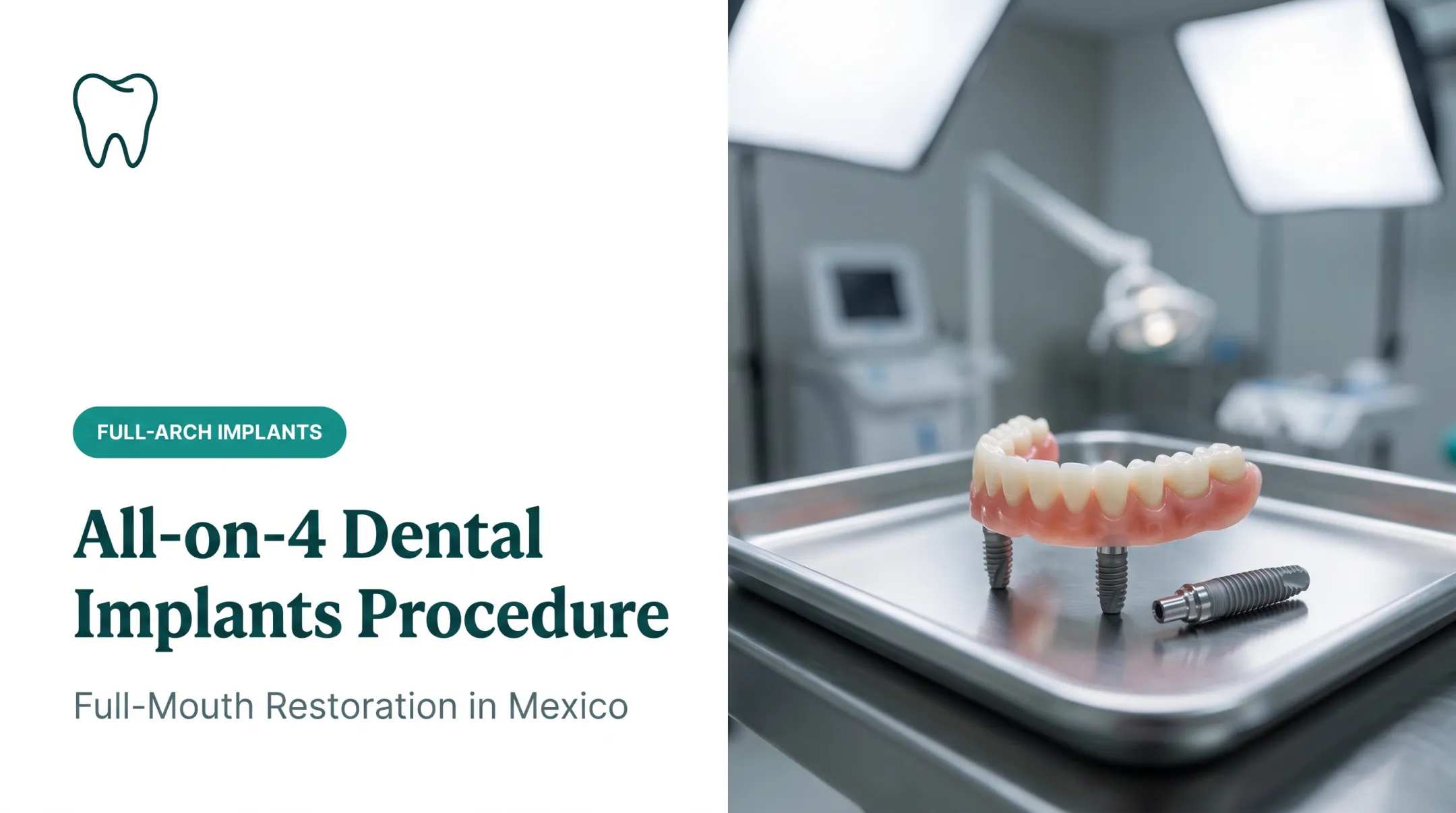
If you're missing most or all of your teeth, replacing them one by one isn't practical. Full-arch protocols solve this differently:
| Protocol | Implants per arch | Notes |
|---|---|---|
| All-on-4 | 4 | Two angled posterior implants; often works with low-to-moderate bone density |
| All-on-6 | 6 | Requires moderate bone availability; a 5-year randomized study found no statistically significant survival difference versus All-on-4 |
| 3-ON-8™ | 8 (three separate bridges) | Patented protocol distributing chewing forces across more implants; typically supports 12-14 teeth |
Same-day fixed teeth (sometimes called "Teeth in a Day") are possible when implants achieve enough initial stability. Failing teeth can be extracted, implants placed, and a temporary fixed bridge secured in the same 2-3 hour visit. That bridge is only provisional, though. The permanent zirconia or ceramic bridge follows after 4-6 months of osseointegration.

More implants don't automatically mean a better outcome. Anatomy and bone stability matter more than the number itself.
Patients seeking savings on full-arch or full-mouth treatment often look at board-certified clinics in Los Algodones, Mexico. These clinics use the same American-standard materials (Nobel Biocare, Straumann, MegaGen) at a fraction of U.S. pricing.
Single implants there can start around $1,500, versus $4,000-$6,000 in the U.S., with All-on-4 arches starting near $6,000 compared to $20,000-$30,000 north of the border.
Factors That Affect Timeline and Success
Several variables determine how fast and how well your treatment progresses:
- Bone density and quality — directly affects implant stability at placement
- Grafting needs — adds months but improves long-term anchorage
- Number of implants — full-arch cases require more surgical planning
- Smoking — more than doubles failure risk (odds ratio 2.4) versus non-smokers, per a 2021 meta-analysis
- Provider experience — high-volume clinicians tend to plan more accurately and catch complications earlier
A lifetime warranty on the implant post itself (separate from a typical 5-year warranty on crowns and bridges) shows a provider stands behind long-term outcomes. Premium, FDA-approved materials such as grade-5 titanium or metal-free zirconia also support durability.

Recovery and Long-Term Aftercare
Immediately After Surgery
- Mild swelling and oozing are normal as anesthesia wears off
- Stick to cold liquids and soft foods for the first 48 hours
- NSAIDs are usually enough for pain; stronger medication is prescribed only when needed
- An antibacterial rinse may be used twice daily for the first two weeks
Long-Term Maintenance
Implants can last decades. A 2024 meta-analysis found survival rates above 90% at the 10-year mark. Maintenance is straightforward but essential:
- Brush twice daily and floss around the implant crown
- Use an antibacterial mouthwash if recommended
- Keep up with professional cleanings and checkups
Skipping maintenance is one of the fastest ways to shorten the life of an otherwise successful implant.
Frequently Asked Questions
How many days should I rest after a dental implant?
Most patients need 2-3 days of downtime, though full-arch surgery or sedation can extend this. Follow your surgeon's specific instructions rather than a generic timeline.
Will I have temporary teeth while waiting for dental implants?
Yes. Depending on your case, you may receive a temporary crown, a removable flipper, or a temporary fixed bridge while your permanent restoration is being made.
How long after tooth extraction can I get dental implants?
It varies. Immediate placement is possible in some cases, while others wait 4-16 weeks or longer for soft tissue and bone to heal. Your implant dentist decides based on imaging.
Is a dental implant a major surgery?
No. It's typically an outpatient procedure done under local anesthesia, similar in invasiveness to a tooth extraction. Full-arch cases with grafting are more involved but still outpatient.
How long do dental implants last?
With proper care, implants can last a lifetime. The crown on top may need replacement or adjustment roughly every 10-15 years depending on wear.
Can I have all my teeth pulled and get implants?
Yes. Full-mouth reconstruction, All-on-4, All-on-6, 3-ON-8, and same-day fixed-arch options are all designed for patients who need most or all teeth replaced at once.