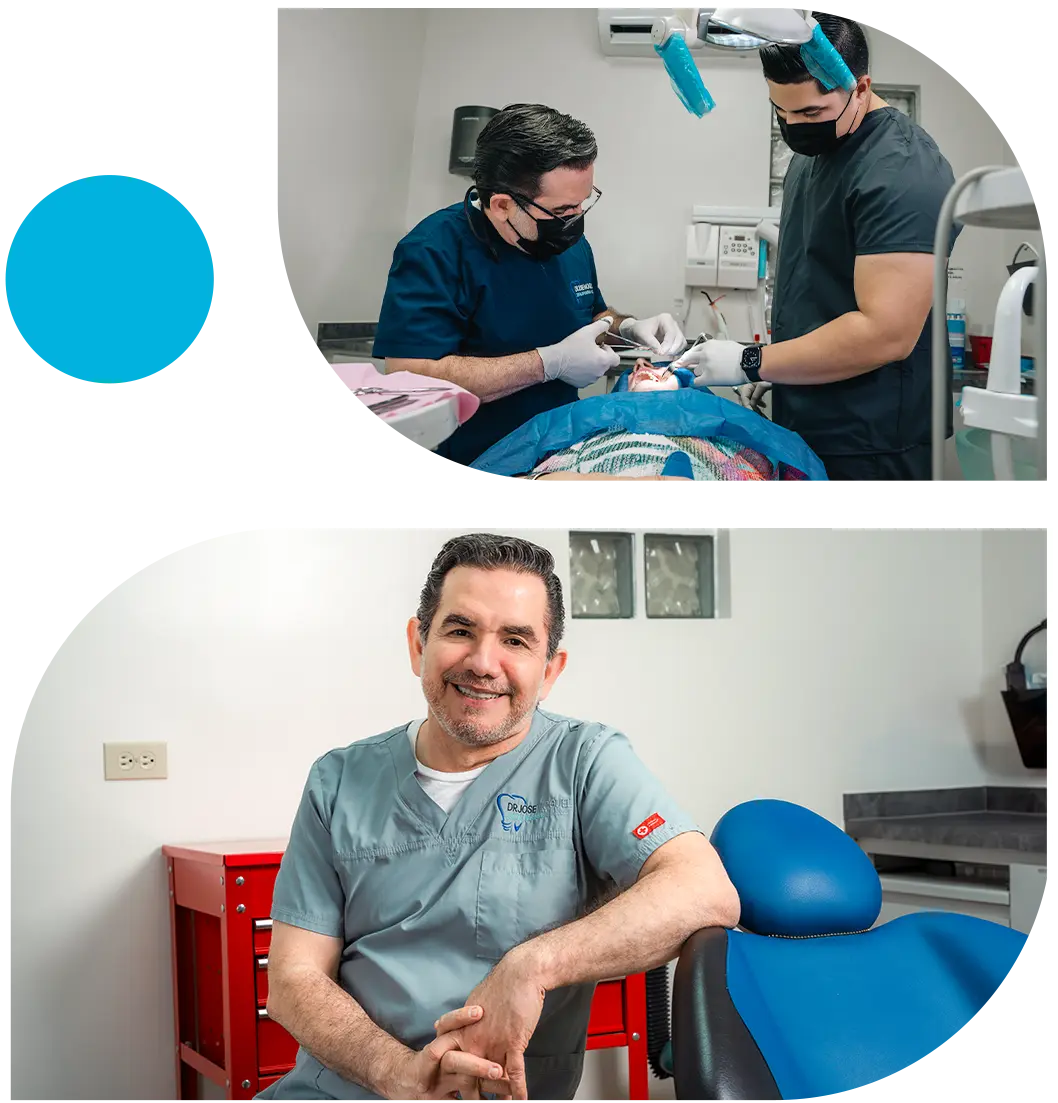
A single-tooth dental implant commonly includes an implant, abutment, and crown. It can replace a missing tooth without preparing adjacent teeth, but candidacy, appearance, function, healing, and longevity depend on the site and patient.
One of the greatest advantages of a single tooth implant over a traditional dental bridge is the preservation of adjacent teeth. A traditional bridge requires grinding down and capping the healthy neighboring teeth to support the suspended replacement tooth. This can permanently weaken those teeth and make them susceptible to decay. In contrast, a dental implant stands independently, requiring no alteration to your surrounding teeth. Furthermore, the titanium post stimulates the jawbone, preventing the natural bone loss and gum recession that inevitably occur after tooth loss, thus maintaining your facial structure.
The single tooth implant process at Dr. Moguel's clinic begins with a comprehensive evaluation and a 3D CT scan to assess the bone quality at the extraction site. If there is insufficient bone, a minor bone graft may be performed. The titanium post is then surgically placed into the jawbone, where it undergoes osseointegration—a natural process where the bone fuses with the implant surface over 3 to 4 months. Once fully integrated, a custom abutment and a hand-crafted crown are attached. This results in a replacement tooth that looks, feels, and functions exactly like a natural tooth, built to last a lifetime with proper care.
In addition to cosmetic benefits, replacing a single tooth protects your entire bite. When a gap is left empty, neighboring teeth will naturally shift and tilt into the space, throwing off your bite alignment and leading to jaw joint (TMJ) issues and uneven wear. By placing an implant, you secure the position of your surrounding teeth and ensure long-term dental health.