Periodontal disease affects the tissues supporting teeth and can increase implant-related risks. Active infection, plaque control, smoking, diabetes, and maintenance should be evaluated before implant treatment. Disease control reduces risk but cannot guarantee an implant outcome.
Gum disease begins with plaque buildup on the teeth, which hardens into tartar. Bacteria in tartar cause inflammation of the gums (gingivitis), which can progress to periodontitis, where the gums pull away from the teeth, forming deep pockets that harbor destructive bacteria. To treat this, Dr. Moguel utilizes advanced periodontal therapies. The first line of defense is scaling and root planing, also known as deep cleaning. This involves using specialized instruments and ultrasonic scalers to remove plaque and tartar from deep beneath the gumline, and smoothing the tooth roots to prevent bacteria from re-adhering.
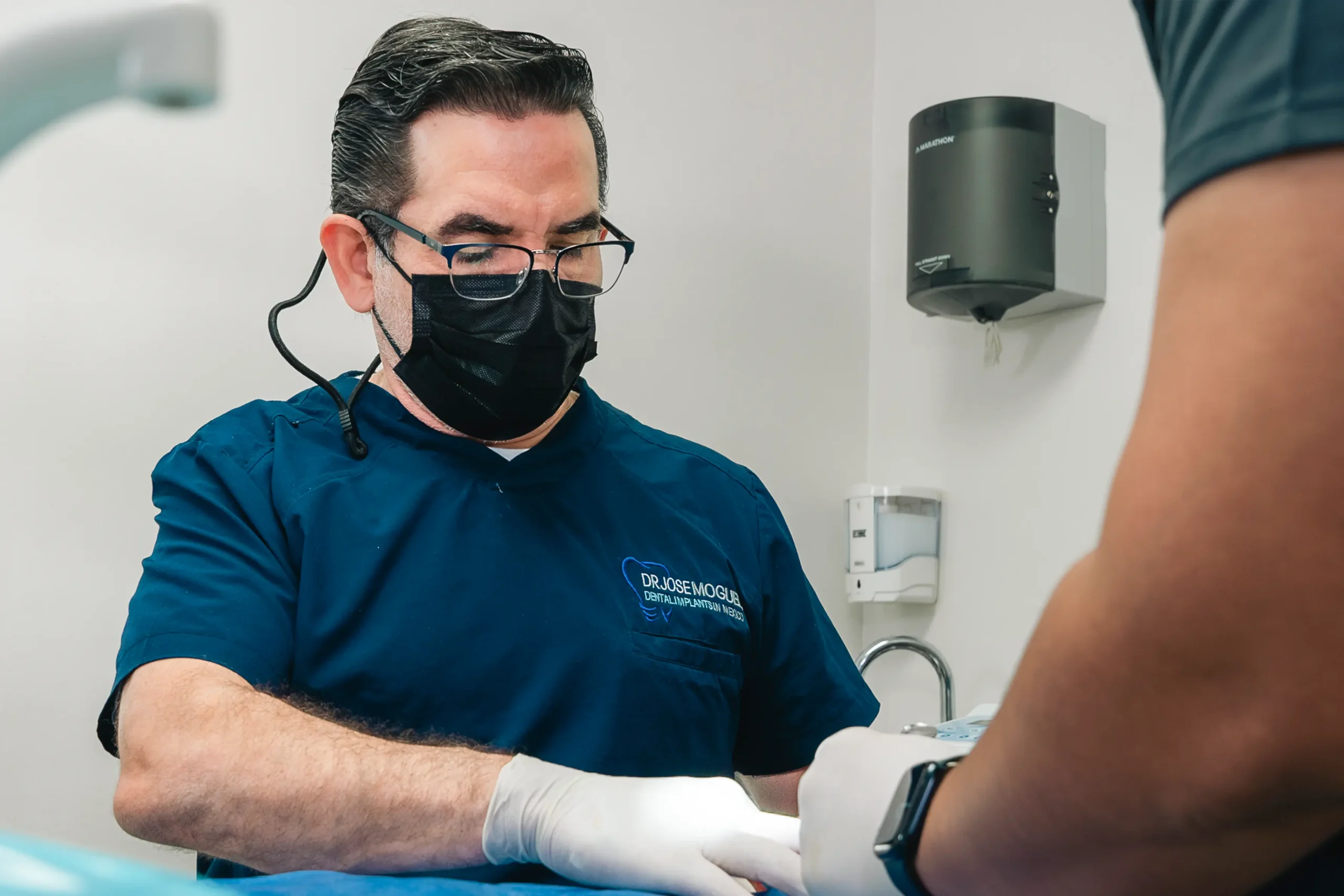
For more advanced periodontal disease, treatment may include laser-assisted therapy or osseous surgery when clinically indicated. The goal is to reduce infection and improve the periodontal foundation before implant treatment. Outcomes, timing, and cost depend on the examination, imaging, and extent of disease.
Laser-assisted treatment may reduce bleeding or postoperative discomfort in selected cases, but it is not appropriate for every patient and does not replace diagnosis, plaque control, or maintenance. The clinician will explain expected healing, whether sutures are needed, and when implant treatment can safely proceed.